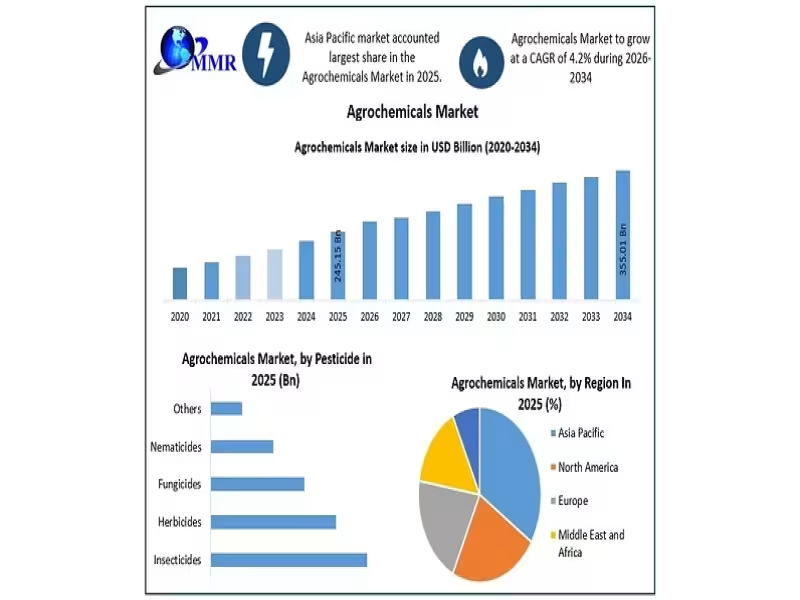
Pune – September 28, 2026 -- The global agrochemicals market was valued at $245.15 billion in 2025 and is projected to reach $355.01 billion by 2034, growing at a 4.2% compound annual rate from 2026, according to a new report from Maximize Market Research.
Pest and disease pressure continues to drive nearly 40% of annual crop losses worldwide
Bayer noted in 2026 that plant diseases and pests can destroy up to 40% of global crops each year, while weeds alone can cut yields by close to 34%. This sustained pressure keeps demand elevated for herbicides, insecticides, fungicides, fertilizers and seed-treatment products across cereal, grain, fruit and vegetable production.
Biological crop protection gains traction as fertilizer markets face volatility
The FAO flagged bioinputs in 2026 as a strategic response to fertilizer-market swings and climate stress, fueling farmer interest in biopesticides, biofertilizers and integrated pest management. Precision agriculture tools -- sensors, digital platforms, data analytics and variable-rate nutrient application -- are reshaping how growers deploy chemical and biological inputs to cut waste while protecting yields.
Europe's stricter pesticide rules raise compliance costs for manufacturers
Tighter environmental regulations and product restrictions, particularly in Europe, are lengthening and raising the cost of regulatory approval for crop protection products. Declining farm subsidies and rising input costs are also making growers more cautious about adopting premium agrochemical products, pressuring companies reliant on legacy herbicide and pesticide portfolios.
Asia Pacific leads regional demand on the back of China, India and Southeast Asia farming scale
Asia Pacific remains the largest regional market, underpinned by large-scale cereal and grain production across China, India, Japan, South Korea, Australia and Southeast Asia. Rising fertilizer use and expanding adoption of biological crop protection and precision farming technologies are supporting productivity gains as growers manage weeds, pests and diseases under shifting growing conditions.
Herbicide-resistant weeds and supply-chain risk complicate manufacturer strategy
Continuous cropping and limited crop rotation are weakening soil health and intensifying resistance problems, forcing growers toward more advanced protection strategies. The FAO's 2026 Food Outlook linked fertilizer markets closely to energy prices, adding trade and geopolitical exposure to supply security concerns. Companies combining effective chemical actives with biological solutions, precision-application technology and sustainable formulations -- including recent moves tied to BASF, Syngenta, Bayer, UPL and Corteva -- are positioned to manage these compounding risks through 2034.