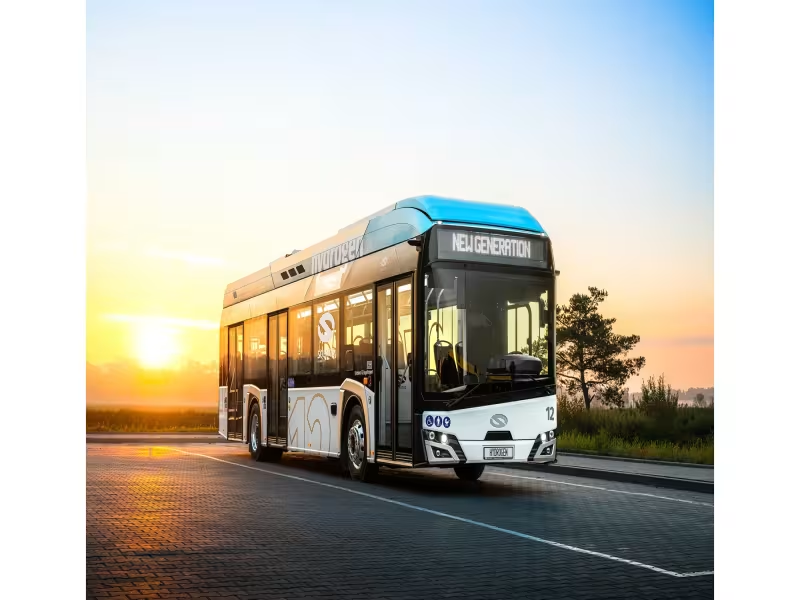
VANCOUVER – – November 05, 2026 -- Ballard Power Systems (NASDAQ: BLDP; TSX: BLDP) will debut its FCmove-SC fuel cell engine in series production in the new-generation Solaris Urbino 12 hydrogen transit bus, with the engine rated at up to 80kW and a specified lifetime above 25,000 operating hours.
The milestone follows an extension of the long-term supply agreement between Ballard and Solaris. The extension also broadens the scope of their cooperation.
FCmove-SC raises power density 57% and cuts part count 40%
Ballard says the engine is designed for city transit duty cycles. Integrated DC/DC packaging lifts volumetric power density by 57%. An internal DC/DC converter and power controller reduce external interfaces, which simplifies vehicle integration.
Maximum radiator outlet temperature rises from 60°C to 75°C. This reduces cooling requirements and allows more waste heat to be used for cabin heating. A 40% reduction in total part count is intended to lower maintenance requirements. Revised stack-enclosure geometry adds passive protection against hydrogen-related risks.
The engine reaches 57% peak efficiency and supports freeze-start operation down to -30°C. Remote diagnostics help operators identify maintenance needs.
Solaris Urbino 12 drops the engine tower for more rear seating
The new Urbino 12 hydrogen is built on the unified platform shared by the latest Urbino buses. Removing the conventional engine tower frees space for additional rear seating. Flexible positioning of roof-mounted components improves service access.
The fuel cell is the bus's primary energy source and feeds a centrally mounted traction motor. A traction battery covers peak demand and stores energy recovered through regenerative braking.
Oben Uluc, Ballard's Chief Revenue Officer, said the integration gives manufacturers simpler installation and design flexibility. He said it gives operators efficiency and serviceability, "making hydrogen buses an increasingly competitive option for zero-emission public transport."
Ballard cites 2,500 buses and 300 million km of operation
Ballard describes itself as the leading supplier of fuel cell engines for transit vehicles. It says it has powered more than 2,500 fuel cell buses worldwide, which have collectively exceeded 300 million kilometres of operation.
Fleet support comes through Ballard Fleet360°, which combines remote performance monitoring, data analytics, maintenance planning and service expertise. Availability and coverage are agreed separately for individual fleets in coordination with the vehicle manufacturer. Ballard also offers hydrogen production, logistics, refuelling and Energy-as-a-Service solutions.