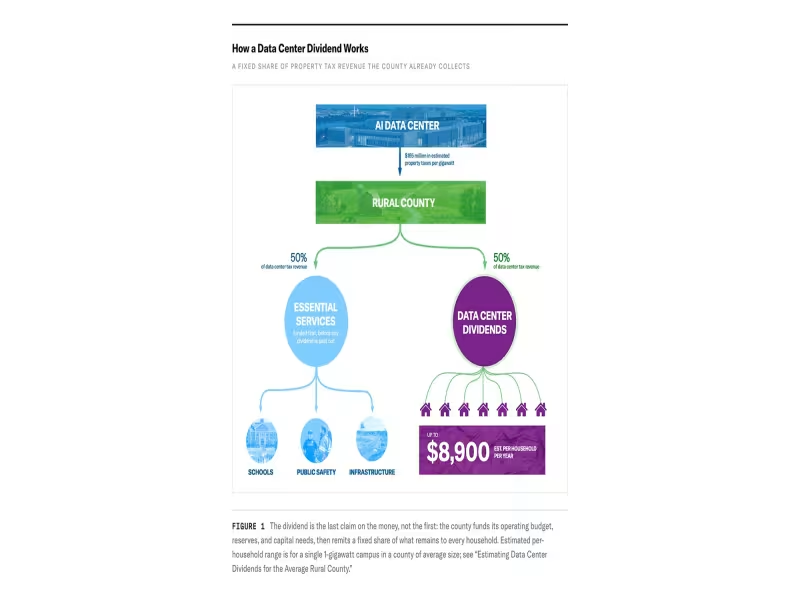
Washington – September 15, 2026 -- Rural counties hosting AI data centers could pay every household between $4,500 and $8,900 a year without raising taxes or imposing new costs on developers, according to a report published by the Bitcoin Policy Institute (BPI).
Local Opposition Now Outpaces Energy Supply as the Top Barrier to Data Center Construction
The number of local data center moratoria enacted across the U.S. rose from six in 2024 to 294 in 2026, the report states. A March Gallup poll found 71% of Americans would oppose an AI data center in their area, compared with 53% who would oppose a nuclear power plant nearby.
Louisiana Parish Nearly Adopted a Cash Dividend Worth Up to $11,200 Per Household
In West Feliciana Parish, Louisiana, a developer agreed to pay roughly $90 million a year to a jurisdiction of 4,026 households whose current annual budget is about $41 million. The Louisiana Legislature passed Act 434 this spring to let the parish return data center revenue to residents, but a House committee amendment stripped out the cash-payment option before final passage, leaving only a credit against property tax bills. BPI estimates that if the cash option had survived, households would have received $5,600 to $11,200 annually.
Loudoun County Data Sets a Per-Gigawatt Benchmark for Rural Dividends
BPI derived a general revenue estimate using tax and load data from Loudoun County, Virginia, the most data center-dependent jurisdiction in the country and one of the few that discloses both facility tax payments and electrical draw. Based on that dataset, the average rural county hosting a 1-gigawatt data center campus could distribute $4,500 to $8,900 per household each year, funded entirely by property tax revenue counties already collect.
Model Borrows From Alaska Permanent Fund's 44-Year Dividend Record
The proposed structure mirrors sovereign wealth fund mechanics used by the Alaska Permanent Fund, which is financed by state oil royalties, holds $91.3 billion in assets under management, and has paid Alaska residents an annual dividend for 44 consecutive years, averaging about $1,500 per year over the past decade.
"Rural counties are sitting on a digital goldmine,