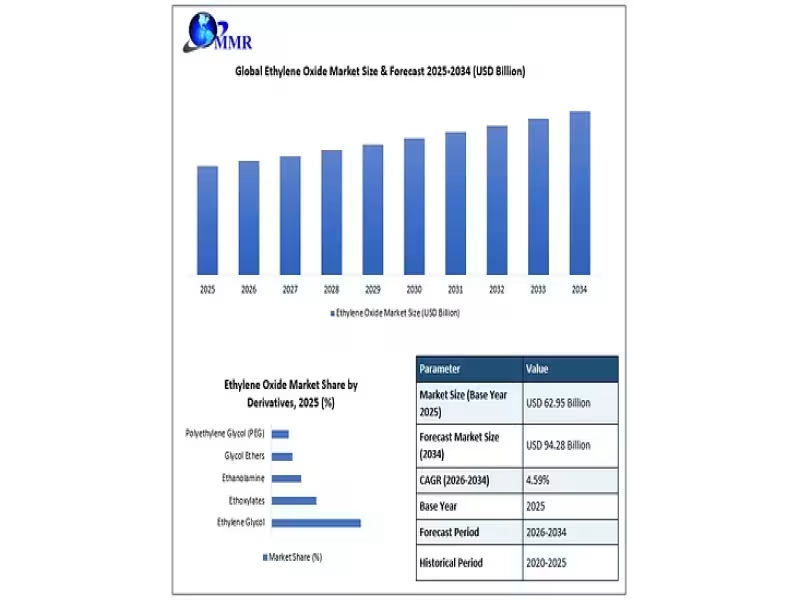
Pune – September 28, 2026 -- The global ethylene oxide market reached USD 62.95 billion in 2025 and is forecast to grow at a 4.59% CAGR through 2034, hitting USD 94.28 billion, according to a new report from Maximize Market Research.
Asia-Pacific dominates production and consumption, led by China, India, Japan and South Korea
The region's scale in petrochemical manufacturing, PET resin output and polyester fiber production has made it the largest ethylene oxide market as of 2025. Continued capital deployment into petrochemical facilities, healthcare infrastructure and industrial manufacturing is expected to sustain the region's lead through the forecast period.
North America holds steady demand on established petrochemical and healthcare sectors
The United States and Canada continue to consume ethylene oxide across antifreeze formulations, industrial chemicals, pharmaceuticals, personal care products and medical device sterilization. Producers in the region are prioritizing emission reduction and safer production processes as regulatory scrutiny tightens.
Ethylene glycol demand for PET packaging and polyester fibers anchors market growth
Ethylene oxide serves as the core feedstock for ethylene glycol, ethanolamine, ethoxylates, glycol ethers and polyethylene glycol (PEG), products used in antifreeze, sterilization, fumigation and specialty chemical manufacturing. Rising packaged food and beverage volumes, polyester-based textile output, and automotive cooling system demand are driving downstream consumption, particularly in emerging manufacturing economies.
Medical device sterilization emerges as a key growth opportunity for producers
Ethylene oxide remains the preferred method for sterilizing heat- and moisture-sensitive medical devices, surgical instruments and pharmaceutical packaging. Manufacturers are responding to tighter emission rules by investing in advanced catalysts, energy-efficient production and lower-emission sterilization technologies.
Strict safety regulations and feedstock volatility weigh on producer margins
Ethylene oxide's classification as a hazardous chemical subjects production, storage and transport to strict environmental and workplace safety rules, raising compliance costs and complicating capacity expansion. Feedstock pricing tied to crude oil and natural gas markets, along with geopolitical supply disruptions, continues to pressure manufacturer profit margins. Companies operating in the sector face an ongoing balancing act between cost efficiency, regulatory compliance and sustainable production investment.