Dusseldorf – October 28, 2026 -- Germany's industrial health economy generated about EUR 101.5 billion in gross value added in 2025, but slow certification and thin growth capital are keeping innovations out of clinical practice, according to a new paper from the Innovationsrat Deutschland.
The sector employs roughly one million people and accounts for about 7 percent of German exports. More than half of the medical device manufacturers surveyed in a study commissioned by the European Commission wait over 19 months for certification under the EU Medical Device Regulation.
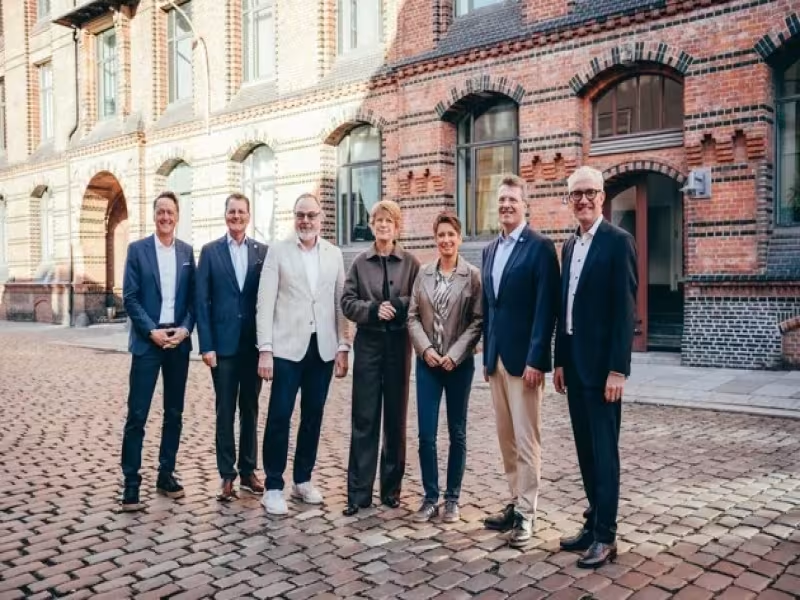
The independent council adopted the paper, titled "Intelligente Medizin als Wachstumsmotor" (Intelligent Medicine as a Growth Engine), on 17 October 2026. It addresses politics, science and industry ahead of the planned health structure reform. The eight-member body includes VDI President Lutz Eckstein, economist Veronika Grimm, Max Planck director Dietmar Harhoff and former Monopolies Commission chair Jürgen Kühling.
Council calls for central health data access office and unified privacy oversight
The council recommends rapidly setting up a central data access and coordination office, called DACO, for medical research and product development. To give legal certainty on access to representative health data while protecting patients, it urges Germany to centralize data protection supervision. It also wants authorities to designate trusted health data holders generously.
Kühling said high protection standards and fast procedures currently exclude each other in Germany, but not in neighboring European countries. In his view, data protection, data security and cybersecurity requirements only become a quality feature if products can be developed, certified and approved in competitive time. State rules that adapt too slowly to practice become a brake on innovation, he added.
US companies hold 12 of the top 25 medtech patent filer slots, Germany four
German companies show high research intensity, but US competitors are pulling ahead in absolute R&D spending. Of the 25 medical technology companies with the most filings at the European Patent Office, 12 are American and only 4 are German.
The council says the phase between clinical validation and industrial scaling needs substantial, long-term capital. It recommends stable conditions for growth capital and closer links among research institutions, clinics, start-ups, established companies and investors. It also calls for predictable tax incentives for research and depreciation, less bureaucracy, and flexible, legally secure frameworks for research-intensive development projects.
Council wants AI, data and software skills built into medical and nursing training
Studies show a gap between the importance of digital and AI skills and their place in medical education. The council recommends systematically integrating AI, data and software competencies into training and continuing education for medicine and nursing. It also says patients and medical staff should be involved early in developing and testing new technologies.
Eckstein said Germany conducts medtech research at world level but lacks speed and investment in turning it into successful innovations. The health structure reform, he argued, should aim not only at better care and lower system costs but also at creating companies, products and industrial value added in Germany.