WASHINGTON – October 28, 2026 -- The Heart Failure Society of America (HFSA) has called for right heart failure (RHF) to be recognized as a distinct clinical syndrome rather than a secondary complication of left-sided heart disease, in a Scientific Statement published in the Journal of Cardiac Failure.
The statement, titled Right Heart Failure: An HFSA Scientific Statement, consolidates current evidence into a structured framework for earlier recognition and more consistent management. It cites longer hospitalizations, heavier ICU use and frequent readmissions as consequences that strain the healthcare system.
Statement sets a three-pillar approach to acute RHF in the ICU
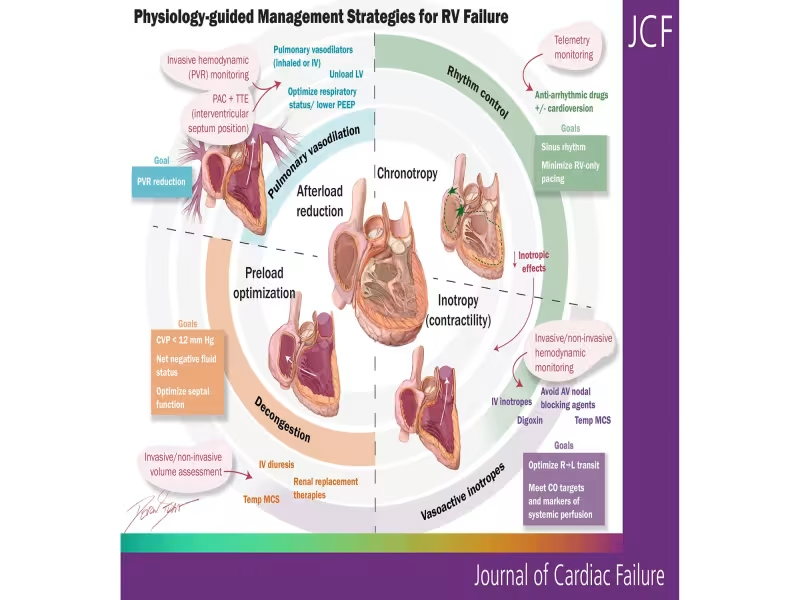
Acute RHF management must address three pillars at once: optimizing preload, reducing right ventricular (RV) afterload, and supporting contractility and systemic perfusion. Rhythm management and an RV-protective ventilatory strategy are also key components in the ICU.
The guidance covers the settings where RHF most often arises: cardiogenic shock, pulmonary arterial hypertension (PAH), chronic left heart failure, and after mechanical circulatory support or transplantation.
PAH therapies are not recommended routinely for left-heart-disease pulmonary hypertension
PAH-targeted therapies improve outcomes in appropriately classified PAH. In pulmonary hypertension associated with left-heart disease, however, trials have generally shown no benefit and, with some agents, fluid retention or harm. The statement therefore makes accurate hemodynamic classification a prerequisite for treatment.
In advanced PAH, progressive RV dysfunction is the principal determinant of symptoms, hospitalization and death. The authors recommend serial multiparametric risk assessment, including REVEAL 2.0 or guideline-based models, to guide timely therapy escalation and referral for advanced therapies.
Device and valve guidance targets selected patients
Temporary mechanical circulatory support may be considered in selected patients with refractory RHF and cardiogenic shock. Options include percutaneous RV assist devices, surgical right ventricular assist devices and venoarterial extracorporeal membrane oxygenation (VA-ECMO). The statement says device choice should reflect dominant physiology, oxygenation needs and therapeutic destination.
Transcatheter tricuspid interventions improve symptoms and quality of life in appropriately selected patients with severe tricuspid regurgitation, though survival effects remain uncertain. The authors advise considering surgical or transcatheter intervention before advanced RV dysfunction, severe pulmonary vascular disease or end-organ injury makes benefit unlikely.
RHF is also an important complication after left ventricular assist device implantation and heart transplantation. Reported incidence varies substantially with the definition and severity threshold used.
Authors flag unquantified economic burden and thin trial evidence
The statement says the incremental economic burden of RHF, and how far current coding and reimbursement systems capture it, remains incompletely characterized. It describes RHF as inadequately studied and calls for consensus definitions, standardized patient-centered trial endpoints, deeply phenotyped registries, validated prediction models and adequately funded RHF-specific trials.
"Right heart failure has too often been treated as an afterthought of left heart disease," said corresponding author Manreet K. Kanwar, MD, of the University of Chicago. Senior author Ryan J. Tedford, MD, of the Medical University of South Carolina, said the framework is meant to help clinicians act earlier and give researchers a foundation to close gaps.
HFSA has also published a Top Ten Take-Home Messages slide deck, designed by the statement's lead author, as a quick-reference guide for clinicians.