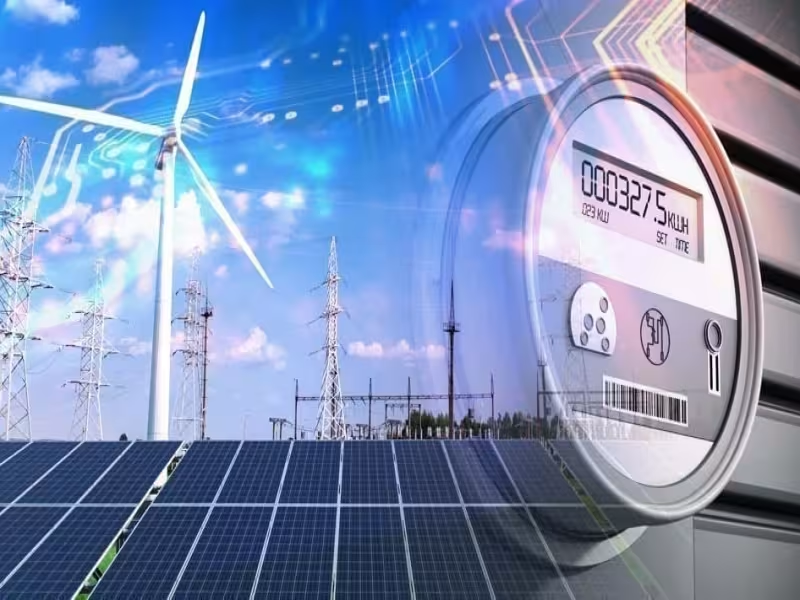
Global – October 28, 2026 -- Global energy demand will grow 11% to 18% by 2050, according to McKinsey's 2024 Global Energy Perspective, and Telit Cinterion says integrated IoT systems are essential for utilities to maximize efficiency and resilience under that load.
LPWAN and NB-IoT carry long-range utility data at minimal power draw
Low-power wide-area network technologies, including narrowband IoT (NB-IoT), enable long-range communication while consuming minimal power. That makes them suited to large-scale utility deployments. Some organizations are also adding high-bandwidth 5G connectivity for more demanding applications.
Water and waste sensors target leak detection and flood response
Sensors on water pipes, drains and treatment infrastructure supply real-time data, so utilities can detect anomalies earlier, prevent losses and react quickly to emergencies such as flooding. At household level, sensors on pipes track water pressure and detect leaks, while temperature monitoring flags freeze risks.
Cities are also adopting sensor-based waste management. Bins alert operators when full, which allows more efficient truck routing and saves time and fuel.
Smart grids use AI analytics to balance load and detect outages
Smart grids are digitally managed electricity networks that use IoT sensors to balance supply and demand. Utilities apply them to predictive maintenance and real-time monitoring, with automated responses to changing conditions. AI-powered analytics process large volumes of sensor data to optimize load distribution, detect outages and support responses to wildfires or severe weather. Over time, the same systems help forecast demand, monitor renewable energy integration and identify potential cybersecurity threats.
In emergencies, first responders can use smart grids to direct traffic or cut off and restore power.
IoT lighting adjusts output to real-time conditions
Smart lighting adjusts levels to real-time needs and to conditions such as fog or rain. LPWAN-enabled systems simplify maintenance across streets and parking structures and alert maintenance teams to failures.