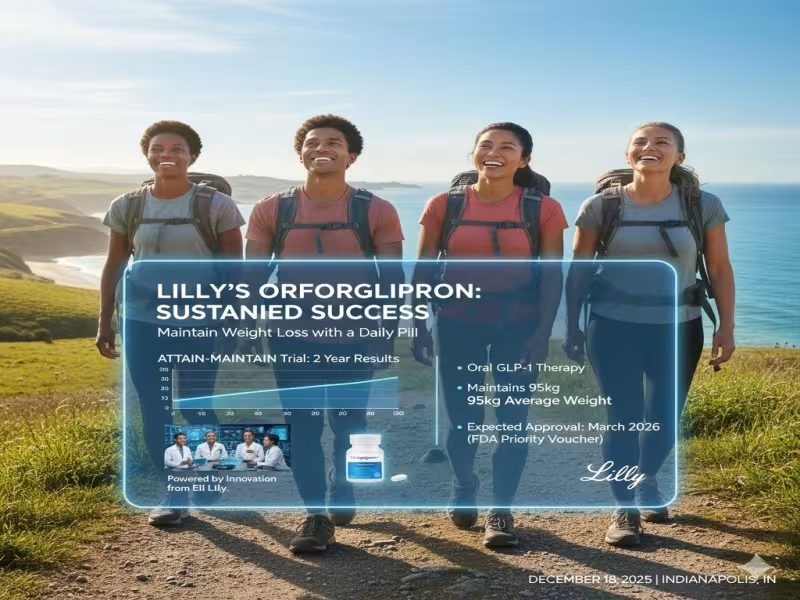
SHERIDAN, WYOMING - December 19, 2025 - Eli Lilly's experimental daily oral obesity medicine orforglipron posted Phase III data suggesting it can help patients maintain weight loss after long-term treatment with injectable GLP-1 therapies-an outcome with direct implications for adherence, payer strategy, and competition with Novo Nordisk's coming oral semaglutide filing.
A maintenance strategy after GLP-1 injections
The Phase III ATTAIN-MAINTAIN trial enrolled participants who had already completed 72 weeks of initial therapy with either Novo Nordisk's Wegovy or Lilly's Zepbound. Patients were then re-randomized to daily oral orforglipron or placebo and followed for another 52 weeks.
This design targets a practical market need: many patients regain weight after stopping GLP-1s, so manufacturers are positioning "maintenance" regimens as a long-duration commercial pathway rather than a short-course intervention.
What the topline numbers signal
At the time of the switch, participants who moved from Wegovy to oral orforglipron averaged 95 kg (209.4 lbs) and increased only slightly to 95.9 kg (211.4 lbs) at one year. Patients transitioning from Zepbound began the maintenance phase at 90.9 kg (200.4 lbs) and rose to 95.9 kg (211.4 lbs) after 52 weeks.
From a buyer perspective-health systems, employers, and payers-the business question is whether oral maintenance can reduce discontinuation and improve long-term outcomes enough to justify continued coverage at scale.
How analysts are framing the commercial angle
In a Thursday morning note to investors, Truist analysts wrote that the study's results were "in-line with our expectations that orforglipron is able to maintain significant weight loss for patients over an extended period given prior use of Wegovy or Zepbound."
"We think the data support use of orforglipron as a maintenance therapy that will appeal to many individuals who prefer a convenient oral daily pill to achieve their ongoing weight loss goals," the analysts added.
BMO Capital Markets also pointed to competitive pressure on Novo, writing: "All in, today's data is supportive of increased orforglipron uptake, setting Lilly up for continued future growth at Novo's expense," they wrote in a note to investors Thursday morning.
Regulatory timing: narrowing gap to market
The timing matters because both companies are pushing to define the first wave of oral obesity options. Novo is "poised to narrowly win the race to market," with its application accepted in May and expectations for a decision by the end of 2025, according to analysts cited in the report. Lilly has filed for orforglipron and, per analysts at William Blair, has an FDA action date in March 2026.
Lilly's path may shorten further because the FDA granted orforglipron a Commissioner's National Priority Voucher, which can compress review to 1-2 months from the standard 10-12 months.
Why "maintenance" could reshape competitive positioning
Even if Novo reaches the market first, a credible maintenance label for an oral agent can be a differentiator-especially for multi-site provider organizations and DSOs/clinics managing high patient volumes, where convenience often drives persistence. The strategic upside for Lilly is positioning orforglipron not just as a weight-loss initiator, but as a long-term therapy anchor across obesity and type 2 diabetes populations as oral GLP-1 adoption expands.
For more information on Lilly and its research focus areas, visit https://www.lilly.com/.