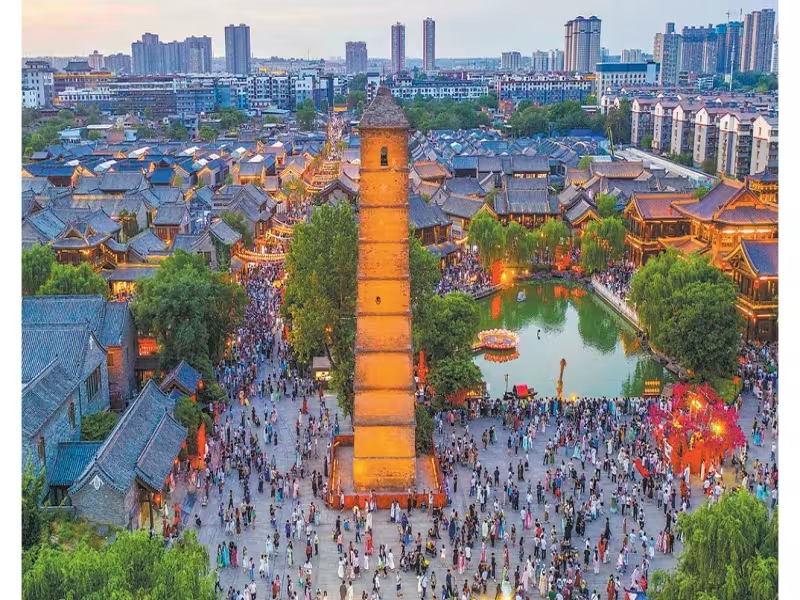
Luoyang – October 12, 2026 -- Luoyang relocated 973 households, nearly 3,300 villagers and 63 enterprises between 2007 and 2024 to clear the Sui-Tang Luoyang City site, freeing 62 hectares in its palace core zone for heritage display. The city presented the results at the seventh International Ancient Capitals Forum and the 2026 Global Mayors Dialogue in Henan province, held from Friday to Sunday.
Sui-Tang site relocation balanced heritage protection with residents' living conditions
The Sui-Tang Luoyang City site served as a capital or secondary capital for more than 530 years, across the Sui, Tang, Five Dynasties and Ten Kingdoms, and Northern Song periods. Around 2005, low-rise dwellings, enterprises and factories dotted the site. Residents wanted better living conditions and enterprises wanted to expand production, while the site needed standardized protection.
The city also integrated urban green spaces, ecological zones and water-source reserves into a botanical garden of nearly 200 hectares.
Luoyang builds new urban areas away from the old town
Luoyang has turned protected cultural relics into archaeological parks. It has built new urban areas away from the old town and drawn up tailored plans for individual sites. The forum featured releases on archaeological site protection and the creative use of cultural heritage.
Longmen Grottoes Research Institute advances conservation against water seepage and weathering
The Longmen Grottoes, a UNESCO World Heritage Site first carved after Emperor Xiaowen of the Northern Wei Dynasty (386-534) moved the imperial capital to Luoyang, are under the care of the Longmen Grottoes Research Institute. The institute conducts conservation and restoration work, technical research, heritage monitoring and digital preservation.
Projects addressing water seepage, unstable rock masses and weathering are advancing steadily and gradually forming an overarching conservation framework for the grottoes.