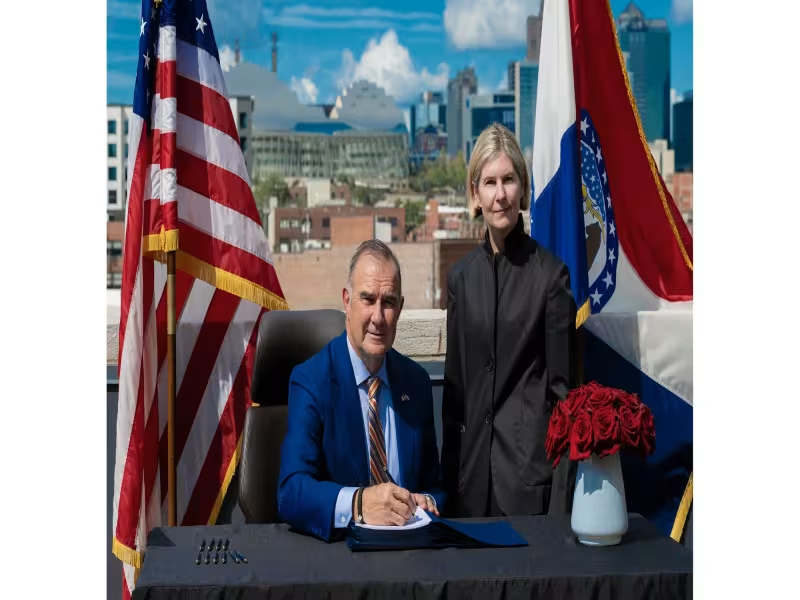
Kansas City, Mo. – September 16, 2026 -- Missouri Governor Mike Kehoe joined nonpartisan think tank United WE at its Kansas City headquarters on September 10 for a ceremonial signing of House Bill 2974, a law that shortens licensing wait times for out-of-state professionals and clarifies telehealth rules for providers with reciprocal Missouri licenses. The bill was formally signed on July 13 and took effect August 28.
HB 2974 resolves ambiguity blocking telehealth providers from treating Missouri patients
The law confirms that a health care provider granted a Missouri license based on an out-of-state credential is fully licensed in the state, including for delivering care to Missouri patients via telehealth. The previous statute, in place since 2018, had left that question unresolved.
Three new interstate compacts bring Missouri's total to twelve
HB 2974 adds physician assistants, athletic trainers and dietitians to Missouri's interstate licensing compact network, expanding coverage from nine compacts to twelve since 2016. Professions outside a compact remain covered under Missouri's general license-recognition law, which already applies to military spouses.
Archbridge Institute ranks Missouri lowest in occupational licensing burden nationally
The Archbridge Institute's 2026 State Occupational Licensing Index places Missouri first for the lowest licensing burden in the country, with Kansas ranked second. HB 2974 extends that trajectory by easing the path for qualified professionals to deploy existing credentials in the state.
Bill passed committees unanimously before clearing both chambers
Sponsored by Rep. Melanie Stinnett of Springfield and carried in the Senate by Sen. Jamie Burger of Benton, HB 2974 cleared the House Professional Registration and Licensing Committee 21-0 and the Rules-Administrative Oversight Committee 6-0. United WE testified in support during committee hearings.
Governor Kehoe said the legislation cuts red tape for employers while expanding telehealth opportunities and adding interstate compacts. Wendy Doyle, President and CEO of United WE, said unnecessary licensing barriers keep skilled workers—particularly women—from entering, reentering or advancing in the workforce, and credited the law with removing barriers without lowering standards.
United WE cited U.S. Bureau of Labor Statistics data showing 25.1% of employed women held a professional license in 2025. The organization launched a national taskforce in April 2026, backed by the Ewing Marion Kauffman Foundation, to identify further opportunities to modernize Missouri's licensing practices as part of a multi-year research initiative begun in 2025.