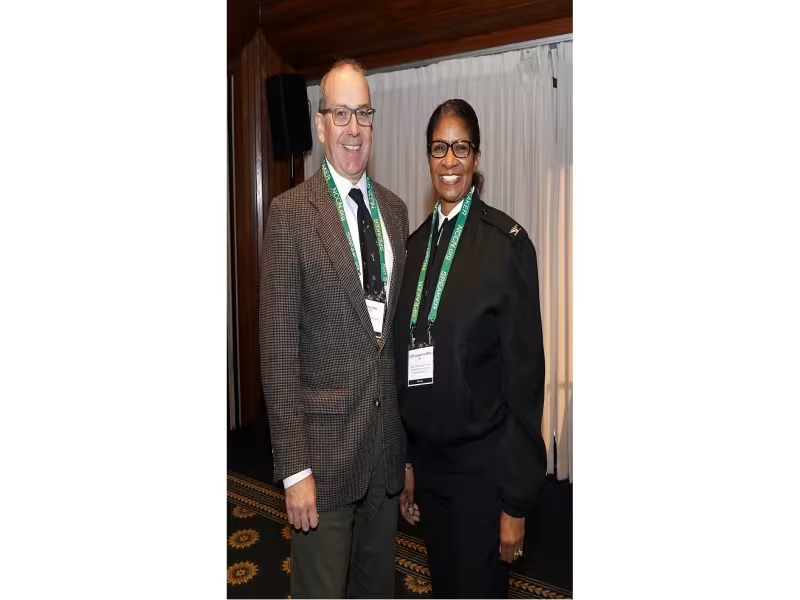
Washington, D.C. – October 07, 2026 -- Established cancer prevention and screening strategies have the power to eliminate nearly half of all cancer deaths, yet fragmented delivery systems risk deepening existing disparities, according to policy experts convened at the National Comprehensive Cancer Network (NCCN) Oncology Policy Summit held October 5-6, 2026, at the National Press Club in Washington, D.C.
NCI and CDC leaders join policymakers to address screening access gaps
The two-day summit featured keynote presentations from Anthony Letai, MD, PhD, Director of the National Cancer Institute, and Captain Jacqueline Miller, MD, Acting Division Director of the CDC Division of Cancer Prevention and Control. Panels brought together patients, providers, payers, and advocacy groups including LUNGevity Foundation, Susan G. Komen, FORCE, and the LGBTQIA+ Cancer Network to examine policy solutions at both population and individual levels.
Medical mistrust worsened for 75% of LGBTQIA+ patients in 18 months
Scout, PhD, Executive Director of The LGBTQIA+ Cancer Network, cited new data showing medical mistrust as a top screening barrier has worsened notably for 75% of the LGBTQIA+ community over the past 18 months. Chyke Doubeni, MD, MPH, Chief Health Equity Officer at Ohio State University Wexner Medical Center, warned that new screening technologies will not be realized equitably without addressing fragmented delivery processes.
Day one targets infrastructure, vaccines, and AI-driven screening efficiencies
The first day of the summit covered broad population-level strategies spanning tobacco cessation, vaccines, blood-based tests, and AI-driven efficiencies in screening infrastructure. The second day shifted to system-level solutions for higher-risk populations, addressing hereditary risk, follow-up diagnostics, out-of-pocket costs, and continuity of care.
Susan G. Komen's policy center has passed dozens of state breast-imaging bills
Molly Guthrie of Susan G. Komen noted the organization's Center for Public Policy has led the introduction and passage of dozens of state bills removing barriers to affordable breast imaging, though gaps remain at both state and federal levels. Brandon Leonard of LUNGevity Foundation called for eliminating cost-sharing and utilization management requirements that block continuity of care from screening through survivorship.
Kaiser Permanente leverages value-based care to drive screening uptake
Mishellene McKinney, Vice President of Clinical Programs at Kaiser Foundation Health Plan and Hospitals, said value-based care models allow the organization to proactively engage members in cancer prevention through personalized outreach. Jody Hoyos, CEO of the Prevent Cancer Foundation, said the field is shifting from reactive diagnosis to proactive risk identification, with patients demanding less invasive and more accessible screening options.
Experts urge access to care after genetic testing, not just testing itself
Tuya Pal, MD, Vice-Chair of the NCCN Guidelines Panel for Genetic/Familial High-Risk Assessment, emphasized that expanding genetic testing access alone does not improve outcomes unless patients also gain access to recommended follow-up screening and preventive measures. Ernest Hawk, MD, MPH, of MD Anderson Cancer Center, cautioned that emerging multicancer detection tests require rigorous evidence of outcome improvements before enthusiasm outpaces proof of benefit.
NCCN distributed free NCCN Guidelines for Patients covering breast, colorectal, lung, and prostate cancer screening and genetic testing, available in English and Spanish through National Comprehensive Cancer Network Foundation funding. NCCN will host its annual Patient Advocacy Summit on October 07, 2026, in Washington, D.C., focusing on family-centered cancer care and caregiver support gaps.