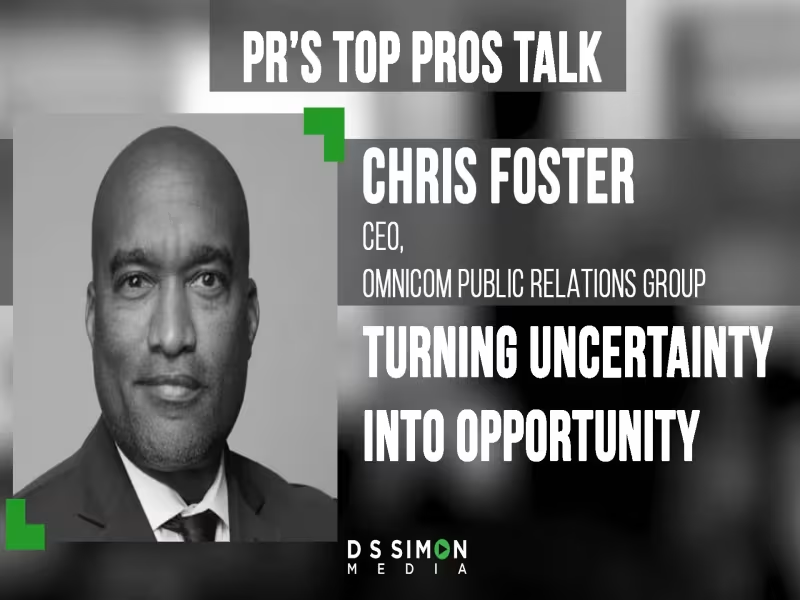
Global – October 23, 2026 -- Seven months into the Omnicom PR integration, the executive leading it, identified in the podcast only as Chris, says unresolved ambiguity costs more than change itself. People adapt to change faster than leaders expect, he said, but not to open questions, and the longer decisions linger the more time staff spend speculating instead of serving clients.
Chris ranks leadership and people above financial synergies in consolidation
Integration is "a leadership exercise, not a financial one," in Chris's account. Financial and regulatory transactions close in due time, he said, while building one organization takes longer. He named three lessons: keep people and clients at the center, lead visibly through uncertainty, and extend leadership across the whole business rather than concentrating it in one person. Every integration decision should answer one question: does it make the company a stronger partner for clients?
Chris urges faster decisions and open communication during the Omnicom PR integration
Employees experience a deal emotionally, Chris said, asking where they fit, whether their role changes and who their manager will be. Unanswered, those questions get filled with assumptions. In his words, communication "is the work," not a work stream. He said he does not have every answer at month seven, but staff want to see his strategic thinking. He added that good decisions made quickly often beat waiting for perfect ones.
Chris advises changing the operating model before it breaks
Operating models are designed for a moment in time, while markets, clients, technology and talent keep changing. Chris said leaders err by waiting for the model to fail. The clearest trigger, he said, is client needs changing faster than the organization can respond.
To keep a large enterprise nimble, he pointed to leaders of individual departments, practices, divisions and markets, who sit closest to the work. Structure gives them guardrails to "run fast" within a framework, though he said it should never be the strategy itself.
Chris recasts PR as reputation readiness, with customers, investors and policymakers as participants
PR does not own an organization's reputation, Chris said. Every customer experience shapes it, and PR's role is to help the company understand, influence and strengthen it. He described reputation as a team sport involving leadership, employees, customer service, customers, investors and policymakers, built by consistent action rather than statements. Strategy is shifting from managing blow-up moments to readiness: identifying vulnerabilities, testing risk scenarios and listening to the millions of daily social and digital conversations about brands.