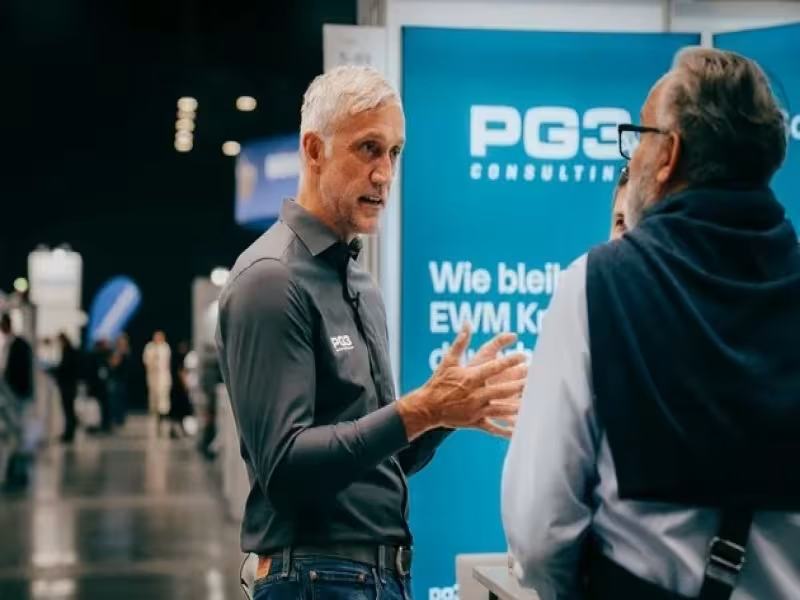
Steyr-Gleink – October 29, 2026 -- PG3 Consulting says it can usually start work on critical SAP warehouse logistics problems within one to two weeks, as ZEISS realigns its SAP S/4HANA transformation.
The Register reported on 10 September 2026, citing a company spokesperson, that ZEISS will first transfer its existing ERP landscape to SAP S/4HANA. The company named faster progress and better coverage of its business units' differing requirements as goals. PG3, an Austrian SAP warehouse logistics specialist, uses the case to argue that stalled SAP projects demand verifiable results rather than additional promises.
Faulty SAP EWM setup disrupted spare-parts supply at an industrial client
According to PG3, errors in warehouse process design or SAP Extended Warehouse Management (SAP EWM) configuration can affect goods supply, delivery capability and, in extreme cases, production. The firm says it was called into one industrial project after a poorly designed and configured warehouse system significantly disrupted spare-parts supply and production-relevant processes.
In another project, PG3 first proved its capability through two concrete system adjustments. Both were completed within two weeks. PG3 states that comparable changes had taken considerably longer at the client's previous service provider.
PG3 targets a one-to-two-week start for critical assignments
PG3 has organized itself around long-term client relationships and ongoing support of existing SAP EWM landscapes. This lets it prioritize planned work with supported clients and free capacity for urgent deployments, the company says. Managing Director Peter Gruber argues that companies facing threats to delivery capability or production cannot wait months for suitable specialists.
Lifecycle Solution aims to keep warehouse system knowledge in-house
PG3 sees a core weakness in SAP logistics projects: companies often cannot trace how their actual warehouse activities are mapped in the system, which decisions were made and what knowledge remains once external consultants leave. Its Lifecycle Solution covers introduction, operation and further development of SAP EWM systems, with the aim of keeping that knowledge available over the long term.
Gruber says replacing the incumbent consulting partner is often unnecessary. Supplementing existing project teams with experienced specialists is frequently the more sensible route, he argues.