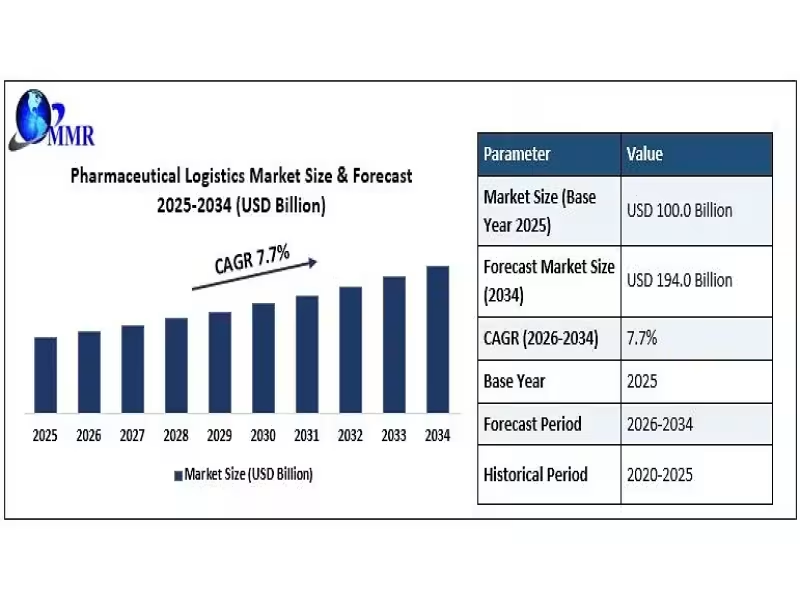
Pune, India – September 21, 2026 -- The global pharmaceutical logistics market is set to nearly double from approximately $100.0 billion in 2025 to $194.0 billion by 2034, expanding at a 7.7% compound annual growth rate, according to a new report from Maximize Market Research.
Cold-chain demand for biologics and vaccines drives infrastructure investment
Growth is being fueled by rising volumes of biologics, vaccines, specialty medicines and clinical trial materials that require validated temperature control. Logistics providers are investing in refrigerated transportation, specialized cold storage warehousing and real-time temperature monitoring to protect product integrity across international drug distribution networks.
IoT tracking and automated warehousing reshape supply-chain visibility
Adoption of IoT-enabled monitoring, GPS tracking, track-and-trace systems and digital supply-chain platforms is improving shipment visibility and traceability throughout pharmaceutical distribution. Automated warehouse systems are being deployed alongside digitally monitored transportation to strengthen inventory control and regulatory compliance.
North America leads on infrastructure while Asia-Pacific expands manufacturing base
North America remains the most established region, backed by mature pharmaceutical and biotechnology industries, advanced healthcare infrastructure and developed cold-chain capabilities. Asia-Pacific is emerging as a key growth center, with China and India as major contributors alongside Japan, South Korea, Singapore and Australia, driven by expanding pharmaceutical manufacturing, rising healthcare expenditure and growing pharmaceutical exports.
Regulatory complexity and cross-border traceability remain operational constraints
Maintaining product quality across cross-border pharmaceutical supply chains requires validated cold-chain infrastructure, specialized handling and continuous monitoring. Complex traceability requirements are increasing operational demands for logistics providers seeking to scale deployment across multiple regulatory jurisdictions.
DHL, UPS Healthcare and FedEx expand cold-chain and life-sciences logistics capabilities
DHL Supply Chain is expanding cold-chain infrastructure and dedicated healthcare facilities for biologics, vaccines and advanced therapies, paired with digital temperature monitoring. UPS Healthcare is building out temperature-controlled infrastructure and specialized handling for complex healthcare products. FedEx is strengthening life-sciences logistics for medicines, biologics, medical devices and clinical trial materials through certified pharmaceutical transportation solutions.
Third-party logistics providers are increasingly bundling transportation, warehousing, inventory management, order fulfillment and distribution into integrated service offerings for pharmaceutical manufacturers moving temperature-sensitive products globally.