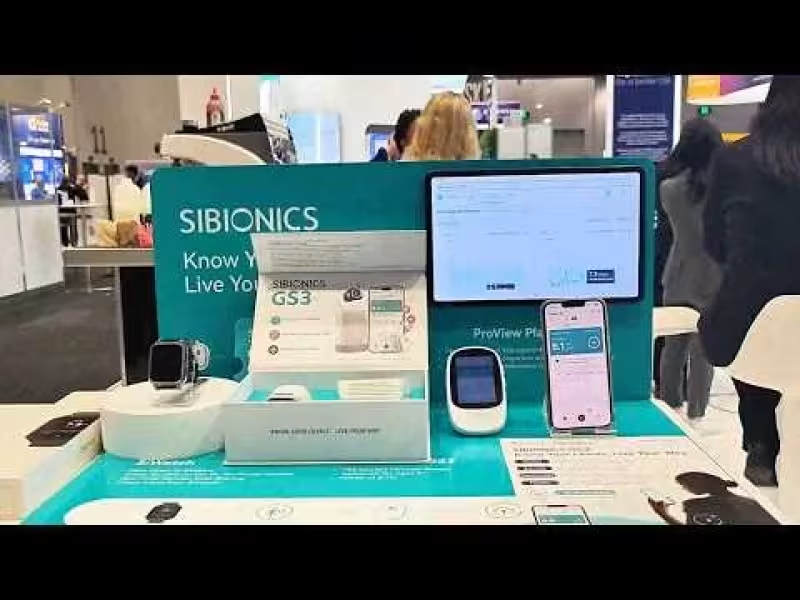
Melbourne – September 04, 2026 -- SIBIONICS showcased its GS3 continuous glucose monitoring (CGM) sensor, integrating artificial intelligence for meal logging, food analysis and glucose trend insights, at the joint IDF-WPR, ADC and Metabolic Diseases 2026 congress held in Melbourne from August 18 to 21.
SIBIONICS repurposes brain-computer interface technology for a 14-day glucose sensor
The GS3 traces its technological origin to SIBIONICS' work on brain-computer interfaces, including a retinal prosthesis designed for patients with severe vision loss from degenerative retinal diseases such as retinitis pigmentosa. The company adapted this high-precision biosensing and signal-processing engineering into the GS3, a factory-calibrated CGM sensor with a 14-day lifespan and a 2.9mm thickness aimed at reducing user discomfort.
Clinical panel outlines integrated CGM, ketone monitoring and AI ecosystem
At a symposium co-organized by SIBIONICS and Air Liquide Healthcare, chaired by Professor Sofianos Andrikopoulos, CEO of the Australian Diabetes Society, three clinical perspectives were presented. Professor David O'Neal of the University of Melbourne, deputy director of the Australian Centre for Accelerating Diabetes Innovations, reviewed new clinical data on continuous glucose and ketone monitoring. Associate Professor Shannon Lin of the University of Technology Sydney examined how CGM can move beyond data visibility toward personalized, predictive support. Professor Wei Qiang, deputy chief physician and deputy director of the endocrinology and metabolism department at the First Affiliated Hospital of Xi'an Jiaotong University, outlined an AI-managed integrated ecosystem combining reliable sensing technologies with contextual learning.
Certified diabetes educators cite AI-assisted spike detection as a key feature
Physicians and diabetes educators visited the SIBIONICS booth throughout the congress to evaluate the GS3's glycemic management functions. In anonymized interviews, certified diabetes educators described the sensor as small, lightweight, comfortable and easy to apply, identifying strong potential in AI-assisted glucose spike detection, simplified meal logging and food analysis linking glucose trends to meal context. Their feedback emphasized the need for personalization, clear carbohydrate intake estimates and clinically useful event timelines, noting that AI should enhance education and decision support rather than replace professional care.
SIBIONICS plans to expand sensing platform into ketone and insulin delivery integration
SIBIONICS said it intends to integrate its sensing platform with continuous ketone monitoring, insulin delivery, AI and other diabetes-related technologies, aiming to build a broader ecosystem that shortens the path from data to understanding and from understanding to action.