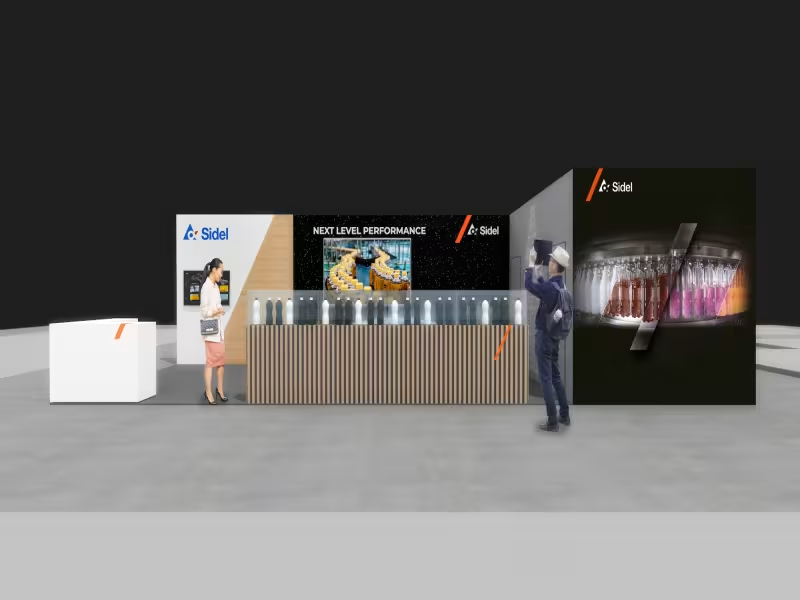
SHERIDAN, WYOMING - March 06, 2026 - Sidel is set to debut at the 52nd Dairy Industry Conference and Exhibition 2026 in New Delhi, using the event to position aseptic PET packaging and digital quality control as practical levers for India's fast-evolving dairy beverage market. From February 12-14 at the Yashobhoomi Convention Centre (Booth F4A), the company plans to showcase its Aseptic Combi Predis™ and its Qual-IS™ digital quality-control platform. The core operating message is straightforward: help producers deliver longer shelf-life dairy and functional beverages with tighter food-safety control, higher line reliability, and a more structured approach to quality oversight as volumes and product variety grow.
Event presence and buyer relevance for India's dairy operations
Sidel's presence is anchored to an on-site booth demonstration format, aimed at dairy and beverage manufacturers evaluating aseptic capabilities in a market described as both the world's largest dairy producer and one of the most rapidly changing. The source links current demand shifts to health awareness, urbanisation, and growing interest in functional dairy beverages, including higher-protein drinks, probiotic formulations, and lower-sugar options that still require convenience and extended shelf life.
For operators, the relevance is less about new product concepts and more about execution: aseptic packaging choices and quality systems influence what can be manufactured consistently, how widely products can be distributed, and how confidently plants can scale without raising food-safety risk.
Aseptic Combi Predis™: integrated blow-fill-cap with dry preform sterilisation
A central focus of Sidel's showcase is the Aseptic Combi Predis™, described as the company's flagship integrated blow-fill-cap solution. The source emphasizes its dry preform sterilisation approach and positions it as a way to improve food-safety performance while lowering resource use.
By sterilising packaging at the preform stage, the system is presented as reducing contamination risk and streamlining production. The source also states that this approach removes the need for empty-bottle handling and storage, supports uninterrupted operation, and advances sustainability goals through reduced water and chemical consumption. It further links aseptic performance to shelf-life extension, which can allow producers to distribute more widely while maintaining freshness.
Aseptic Predis X4™: flexible output and extended continuous production
The source describes Aseptic Predis X4™ as the latest evolution of the Aseptic Combi Predis™ range, designed to advance aseptic technology through enhanced design and digitalisation capabilities. It also positions the system for sensitive beverages packaged in PET bottles, with an emphasis on careful handling requirements and Sidel's long-standing focus on aseptic packaging.
Operationally, the product claims in the source are oriented around throughput flexibility and sustained runtime. The source states the Predis X4™ supports multiple production speeds and product types and includes QSense filling, described as "the safest valve" for aseptic PET packaging of teas, juices, nectars, isotonics and liquid dairy, including UHT and soy milk, and that it can run up to 240 hours of continuous production without stopping for cleaning or sterilisation.
For plant leaders, the practical evaluation typically centers on how continuous operation claims translate into scheduling, planned downtime, staffing, and sanitation validation-especially in multi-SKU environments where changeovers and controls can become the real bottleneck.
Qual-IS™: digital quality control for traceability, HACCP, and multi-site consistency
Sidel is also presenting Qual-IS™, described as a digital quality-control platform designed to centralise core quality functions into a single interface available across mobile devices, desktop, and production-line human-machine interfaces. The source lists functions including sampling plans, laboratory management, traceability, HACCP oversight, calibration records, and overall quality status.
For producers entering aseptic, the platform is positioned as an "intuitive way" to manage the shift with more confidence. For established producers, the stated value is a real-time, consistent method to oversee multiple sites and streamline decision-making. In operational terms, this is a governance proposition: standardise how quality work is planned, executed, documented, and reviewed-so scaling output does not dilute control.
Local leadership positioning: food safety, efficiency, and confidence
"As demand surges for safer, longer-lasting and value-added dairy products across the region, Sidel will demonstrate how its aseptic technologies are helping producers raise food-safety standards, unlock new growth opportunities and deliver the next generation of dairy beverages with greater efficiency, reliability and confidence with highest safety," comments Harbinder Kathuria, Vice President South Asia, Sidel.
What decision-makers should assess at the booth
Based on the source, Sidel is framing its event presence around three operator questions that typically decide aseptic investments: food-safety assurance, production continuity, and quality-system scalability. Practical buyer takeaways to validate on-site include:
- How dry preform sterilisation is implemented operationally and what it changes in handling and storage steps
- How continuous production claims are supported in practice, including what drives stoppages and how they are managed
- How Qual-IS™ integrates quality planning, traceability, and HACCP oversight into daily workflows across roles and sites
- How aseptic line choices support expansion into longer-shelf-life dairy and functional beverage formats without destabilising quality control