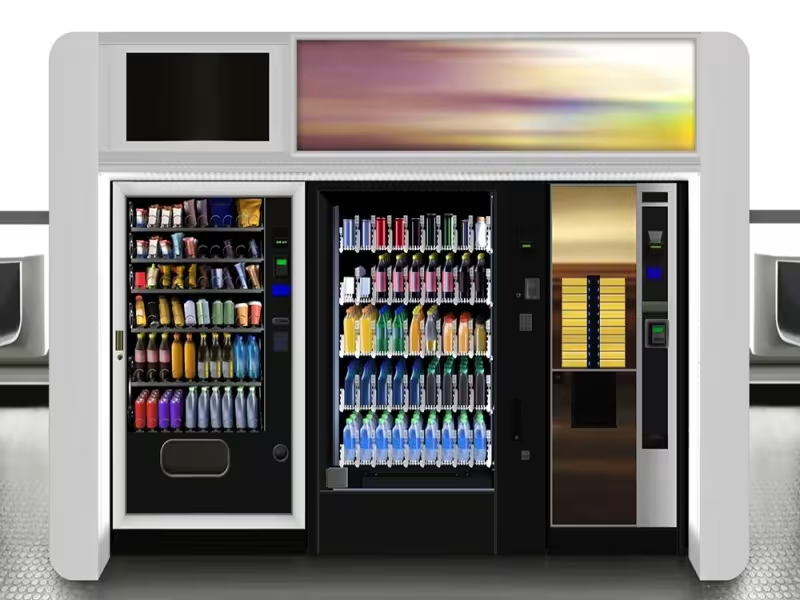
Global – October 28, 2026 -- The global intelligent vending machine market is projected to grow from $11 billion in 2025 to more than $53 billion by 2034, a compound annual growth rate of 18% from 2026 to 2034, according to Fortune Business Insights. Rising use of cashless payments and wider adoption of IoT and connected technologies drive the expansion.
Smart modules replace multi-vendor hardware integration in vending machine design
Smart modules combine high-performance computing with wireless connectivity in a single unit. Traditional modules require extensive development of external hardware and software, and manufacturers must work with multiple vendors to integrate different technologies. Telit Cinterion, which sells smart modules, says the embedded design reduces physical footprint, shortens development cycles and cuts time to market.
The modules target devices with complex human-machine interfaces. Built-in computing and graphics processing support high-end multimedia and IoT edge devices.
Sensors and cloud links feed operator analytics on machine status and transactions
IoT-enabled machines use sensors to capture machine status and storage conditions, and to record transactions and customer interactions. Operators analyze the data to streamline operations. Cloud connectivity supports personalization.
AI and machine learning could extend this to product recommendations based on customer habits, dynamic advertising tied to user profiles and locations, and faster technician diagnostics that reduce repair times. Predictive analytics could also improve payment processing and fraud detection, while computer vision could reduce theft and unauthorized access.
Contactless, QR and biometric options broaden payment and age-verification choices
Machines accept digital wallets such as Apple Pay and Google Pay through near-field communication (NFC), as well as QR code payments via mobile banking apps or e-wallets. Encryption and payment tokenization secure these transactions. Fingerprint-based biometrics may support age verification for age-restricted products. Voice-activated, hands-free payments remain an emerging technology.
Deployment sites cited include train stations, airports, entertainment venues, college campuses, beaches and outdoor concert venues.