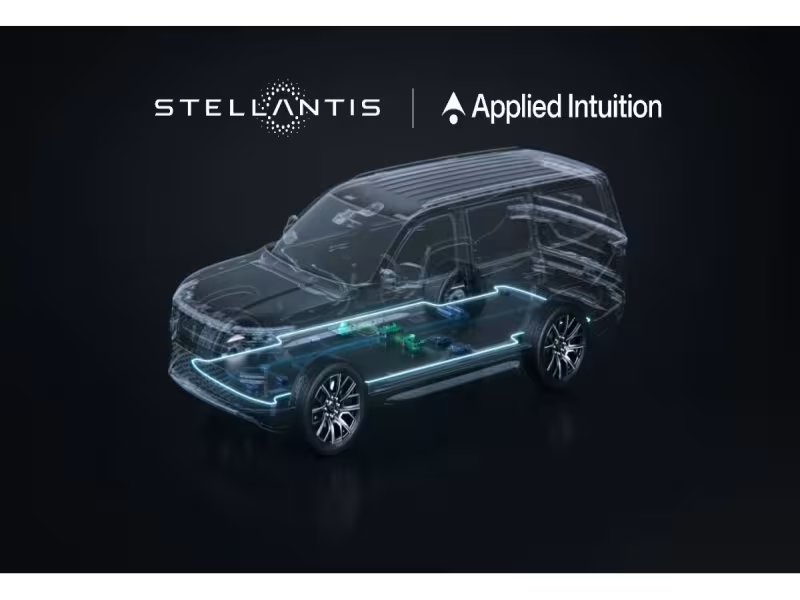
SHERIDAN, WYOMING - May 22, 2026 - Stellantis is expanding its strategic collaboration with Applied Intuition to accelerate development of the STLA Brain intelligent vehicle platform and broaden software capabilities across its vehicle portfolio. The expanded agreement extends the companies' existing work on STLA SmartCockpit into core vehicle software systems, including Vehicle OS, autonomy systems and cabin intelligence technologies. Stellantis said the collaboration is intended to improve software development, simulation, validation and deployment across vehicle programs while supporting faster feature delivery and continuous platform improvement. The initiative reflects the automotive sector's increasing reliance on centralized software architectures and AI-defined vehicle systems to manage performance, connectivity and customer experience at scale.
STLA Brain becomes a broader software integration platform
The expanded collaboration centers on STLA Brain, Stellantis' software platform designed to simplify system integration and support ongoing software updates throughout the vehicle lifecycle. By extending its relationship with Applied Intuition into this environment, Stellantis is broadening the role of software infrastructure across core vehicle operations.
The companies stated that the collaboration is intended to accelerate development cycles while improving deployment efficiency across multiple vehicle programs. Centralized software platforms are increasingly becoming foundational elements for automakers seeking to standardize digital architectures across brands and product segments.
For vehicle manufacturers, software-defined systems also create opportunities to streamline integration between cockpit technologies, connectivity functions and autonomy features. Stellantis positioned the expanded partnership as part of a wider effort to build a common software foundation across its technology platforms.
Applied Intuition expands role beyond STLA SmartCockpit
The agreement builds on prior collaboration between the companies on STLA SmartCockpit, where Stellantis and Applied Intuition have already worked together on in-vehicle software experiences. The expanded scope now extends into broader vehicle operating systems and autonomy-related capabilities.
Applied Intuition said it will support software development, simulation, validation and deployment across core vehicle systems. The company's Vehicle OS platform is intended to provide an AI-defined software foundation designed to shorten development timelines and improve time to market.
The move reflects the growing importance of simulation and validation technologies in modern automotive software development. As software complexity increases, automakers are placing greater emphasis on scalable testing and deployment frameworks that can support multiple vehicle architectures and operational environments.
AI-defined vehicle architectures continue to evolve
Both companies framed the expanded partnership within the broader transition toward AI-defined vehicles. Applied Intuition described the collaboration as a step toward bringing production-scale vehicle operating systems and autonomy systems to market across multiple brands and platforms.
The automotive sector is increasingly shifting toward centralized compute and software-driven architectures capable of supporting continuous feature updates, connected services and advanced user experiences. This transition is also changing how automakers approach software integration, lifecycle management and platform scalability.
For Stellantis, the partnership supports efforts to improve the delivery speed of new digital features while maintaining consistent software foundations across vehicle lines. The company also linked the initiative to customer experience improvements and long-term software evolution within vehicles.
Software development efficiency becomes operational priority
Stellantis emphasized the operational importance of speed, scalability and quality as new technologies are introduced into future vehicle programs. The collaboration with Applied Intuition is intended to help streamline development processes while supporting broader deployment efficiency across the automaker's technology ecosystem.
Simulation and validation capabilities are becoming increasingly critical as vehicle software systems expand in complexity and functionality. Integrated development environments can help reduce engineering bottlenecks while supporting faster iteration cycles and more consistent deployment workflows.
The companies also highlighted the role of continuous improvement throughout the vehicle lifecycle. Software-centric vehicle architectures allow automakers to update and refine systems over time rather than limiting enhancements to model-year refresh cycles.
Partnership reflects broader automotive software transition
The expanded collaboration highlights how automakers are deepening partnerships with software and AI infrastructure providers as vehicles become more technology-driven. Vehicle operating systems are increasingly central to how manufacturers manage connected services, digital interfaces and advanced driver capabilities.
Applied Intuition's involvement across operating systems, autonomy and simulation technologies demonstrates the growing convergence between software engineering and vehicle platform development. For automotive manufacturers, these partnerships are becoming strategic components of long-term digital transformation efforts.
The agreement also reflects increasing industry focus on scalable software foundations that can support multiple brands and vehicle segments within a single architecture. As software-defined vehicles become more common, development speed and platform consistency are emerging as major operational considerations for OEMs.
Collaboration framework leaves room for future expansion
The companies stated that the agreement establishes a framework for continued collaboration while allowing each organization to pursue additional software partnerships independently. Final scope and implementation details remain subject to subsequent agreements between the parties.
The structure of the collaboration reflects the flexible partnership models increasingly used within automotive software ecosystems. Automakers are frequently combining internal software platforms with specialized external technologies to accelerate deployment while maintaining platform adaptability.
For Stellantis, the expanded partnership with Applied Intuition represents another step in the company's broader effort to integrate advanced software capabilities across its global vehicle portfolio. The initiative also reinforces the growing role of AI-enabled infrastructure in next-generation automotive development strategies.