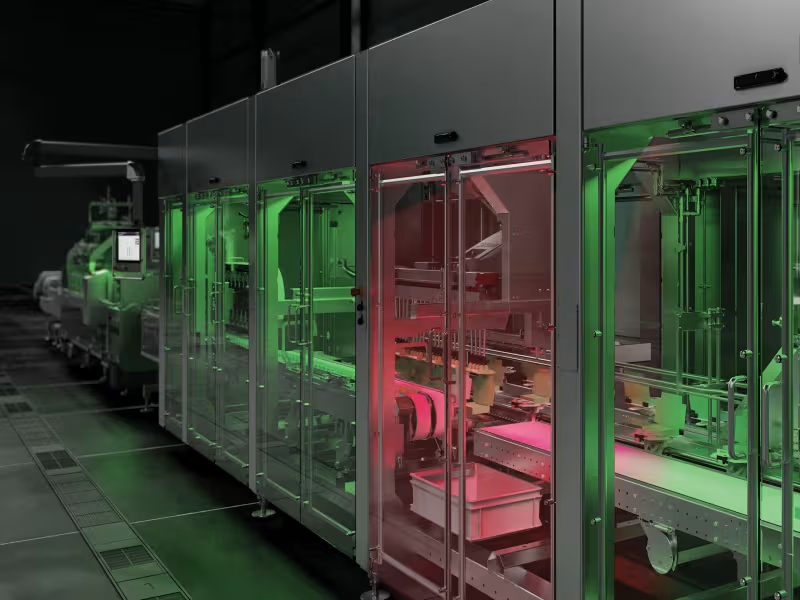
SHERIDAN, WYOMING - May 10, 2026 - Syntegon has introduced its neXt system architecture, an integrated automation platform designed for modern food packaging lines. Showcased at the interpack 2026 exhibition, this operational ecosystem links new machinery with cloud software and autonomous robots. It directly addresses acute labor shortages, increasing safety requirements, and rising production costs across the manufacturing sector. By eliminating repetitive manual tasks, the framework allows factory personnel to focus on higher-value facility operations. The initial rollout features two main hardware components: the HFX platform for flow-wrapping and the TRX system for topload cartoning.
Standardizing Machine Operations
Packaging lines now require much faster changeover times to handle a growing variety of package sizes. To meet this demand, the neXt architecture utilizes uniform interfaces and standardized workflows across all connected equipment. Operators benefit from simplified format changes that significantly reduce training requirements. On the new TRX topload cartoner, automated processes enable complete format changeovers in just ten minutes with fewer interchangeable parts. These guided workflows make everyday work significantly easier, especially for less experienced operators entering the workforce. This minimizes investment costs for new formats and reduces costly downtime. A visual Guide-by-Light system further assists floor workers by displaying the real-time status of multiple production lines from a distance.
Data-Driven Production Monitoring
Beyond the physical hardware, the platform integrates software tools to track machine output and product quality. The system connects the packaging equipment directly to Synexio cloud software and local logbook functions. Plant managers can access 3D error views and use artificial intelligence for automatic quality control. This digital visibility allows technicians to monitor equipment remotely and fix mechanical deviations before they cause major delays. Consequently, production managers can make fast, targeted decisions based entirely on real-time operational data. Optimal data availability is also provided on mobile devices and the new MyHMI interface. Access to this data improves overall equipment effectiveness (OEE) and reduces material waste.
Deploying Autonomous Material Handling
To maintain continuous production without human input, the system incorporates advanced touchless automation. The architecture eliminates manual loading by using autonomous mobile robots (AMRs) to deliver supplies. These robots independently insert cardboard blanks and film reels directly into the packaging units. By automating these recurring, non-value-adding activities, companies can dramatically reduce the physical workload on their staff. Additionally, the HFX flow-wrapping platform uses a high-performance splicing mechanism to keep the packaging film running without interruption. Together, these features enable the line to operate for hours without any direct intervention from operators.
Modular Hardware and Sustainability
The HFX and TRX platforms feature a modular design built for long-term scalability. Manufacturers can easily retrofit these machines with new digital tools or extra automation modules as their needs evolve. This modular approach ensures that the initial capital investment remains future-proof. The hardware also supports sustainable manufacturing goals by processing materials that comply with the Packaging and Packaging Waste Regulation (PPWR). Paired with energy-efficient technologies, this flexibility helps food producers meet strict environmental compliance targets while maintaining high output.
Lifecycle Services and Corporate Scale
Syntegon backs this new machinery with flexible service agreements designed to secure long-term equipment availability. These packages cover preventive maintenance, guaranteed response times, and reliable spare parts delivery. Drawing on over 160 years of industrial engineering expertise, the business plays a vital role in the global pharmaceutical, biotech, and food sectors. The company currently supports an active global installed base of more than 70,000 systems. Driven by 7,300 employees across 49 locations, the technology provider reported total sales of 1.75 billion euros in the 2025 fiscal year.