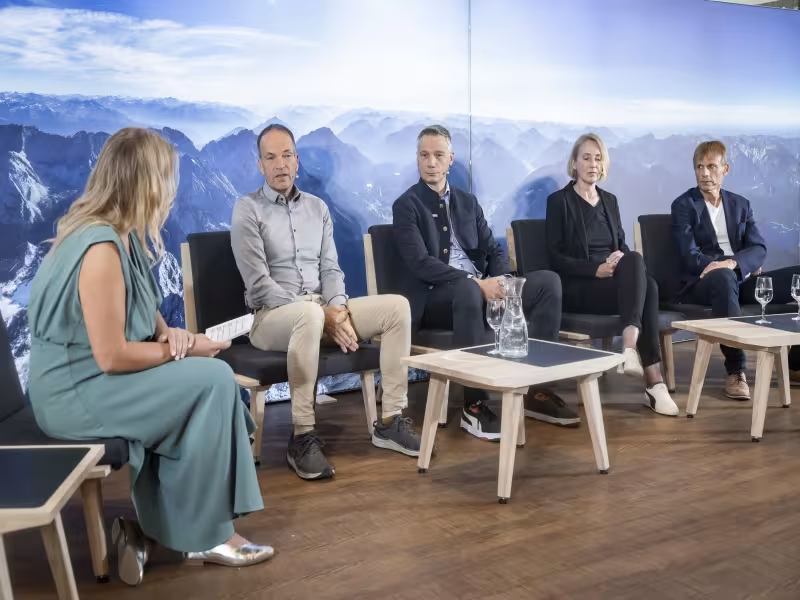
SHERIDAN, WYOMING — July 03, 2026 — The Zugspitze hosted the third edition of the AlpenKlimaGipfel from June 23 to 24, 2026, bringing roughly 200 participants and around 40 experts together across 14 panels to move beyond climate data toward implementable projects for the Alpine region. The summit's organizers, led by the Lebensraum Tirol Gruppe and the Tiroler Zugspitz Arena tourism board, used the event to debut the Alps Future Award, recognizing initiatives that actively shape change in the Alps rather than simply responding to it. Discussions spanned energy independence, infrastructure risk, tourism transformation, sports events, and agriculture, framed around a single question: how research findings translate into responsibility and action.
Glaciologists and Climate Scientists Set the Opening Tone
The summit opened with a panel of researchers examining how current climate data and findings can be converted into concrete risk and action strategies. Participants included specialists from Eurac Research, GeoSphere Austria, and the WSL Institute for Snow and Avalanche Research, alongside a futures researcher and a live-connected representative from Austria's federal ministry for agriculture, forestry, climate, and environmental protection. The composition reflected the summit's stated goal of connecting scientific findings directly to policy and industry decision-making rather than keeping them siloed in academic circles.
Tourism Leaders Position the Summit as a Platform for Shared Responsibility
Representatives from the Tiroler Zugspitz Arena tourism board and the Lebensraum Tirol Gruppe both described the summit as a responsibility the region has taken on to host dialogue about Alpine change where that change is most visible. Both organizations framed their role as offering a platform where tourism, science, business, and politics can develop shared solutions rather than operating separately, with the Lebensraum Tirol Gruppe's leadership specifically pointing to the goal of turning ongoing dialogue into visible, step-by-step change over time.
Second Day Brought Global Tourism Trends Into the Alpine Context
The event's second day featured contributions from international speakers, including a representative from UN Tourism who addressed the scale of global travel growth expected by 2030 and the resulting responsibility on the tourism sector to prioritize sustainability. Alpine-focused research groups also presented tourism observatory work from Tyrol and South Tyrol, examining how success in the sector might be measured differently going forward. A meteorologist from GeoSphere Austria addressed the practical realities facing ski resort operators, pointing to elevation ranges better suited to snowmaking and the distinct challenges glacier ski areas face compared with grass-covered terrain.
Panels Tackled Infrastructure, Safety, and Habitat Trade-Offs
A dedicated panel on Alpine transformation models brought together representatives from cable car associations in Switzerland and Tyrol, regional business groups, and Tyrol's environmental ombudsman to discuss how research findings get translated into actual decisions. Separate sessions addressed shifting safety expectations in the mountains, including observations about a growing expectation of full protection among mountain visitors, and proposals to better align vacation timing with changing seasonal patterns. A panel on Alpine sports events under climate stress covered everything from insurance implications to the athlete's perspective, drawing on input from a former Austrian ski racing team member.
Communication and Storytelling Emerged as a Recurring Theme
Several sessions focused specifically on how sustainability messaging can succeed with the public. A futures researcher argued that when the future is framed mainly around fear, people tend to withdraw rather than engage, and called instead for communication that lets people experience the future as something they can actively shape. That argument was reinforced through a series of "True Impact Stories" drawn from agriculture, research, and entrepreneurship, featuring speakers from a regional agricultural machinery cooperative, a sustainability-focused startup, and the environmental organization Protect Our Winters.
Alps Future Award Winners Closed the Summit With a Speed-Dating Format
The summit concluded with finalists and winners of the newly introduced Alps Future Award presenting their projects directly to attendees in a speed-dating format, reinforcing the event's action-oriented theme. The award, presented the evening before the main summit sessions in two categories, was initiated jointly by the Alpine-wide tourism network AlpNet and the Lebensraum Tirol Gruppe to recognize initiatives that combine ecological reasoning, economic innovation, and social impact. The AlpenKlimaGipfel was again organized under the "Green Event Tirol basic" sustainability criteria.