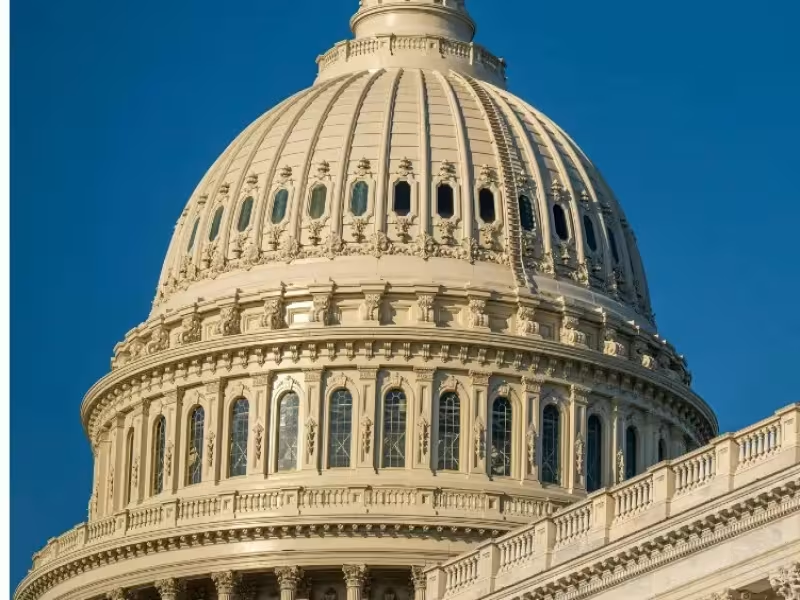
SHERIDAN, WYOMING - April 12, 2026 - The U.S. Senate passed legislation reauthorizing the Small Business Innovation Research (SBIR) and Small Business Technology Transfer (STTR) programs, which had lapsed on September 30, 2025, cutting off competitive grant access for early-stage medtech companies. AdvaMed, the Medtech Association, publicly supported the Senate vote and called on the House of Representatives to act swiftly on passage. The programs channel competitive grants through 11 federal agencies - including the National Institutes of Health, the National Science Foundation, and the Department of Defense - directly to small medtech businesses at the most capital-constrained stages of product development. Restoring authorization removes a period of funding uncertainty that had stalled R&D planning across hundreds of early-stage medical device companies.
Why SBIR and STTR matter to medtech startups
Small businesses and startups generate a disproportionate share of medtech innovation but face structural barriers to early-stage financing that larger corporations do not. The SBIR and STTR programs address this gap by providing non-dilutive, competitive grant funding that does not require founders to surrender equity, making it particularly valuable during the pre-revenue phase when clinical and regulatory costs begin to accumulate.
A survey of AdvaMed Accel members - the division representing the association's emerging and small business segment - found that 89 percent had applied for SBIR or STTR grants, and 31 percent had successfully secured funding. The majority of AdvaMed's more than 600 member companies fall into the emerging and small business category, making program continuity a direct operational concern for the bulk of the association's membership base.
Program lapse and its effect on the pipeline
Authorization for both programs expired at the end of the federal fiscal year on September 30, 2025. The gap in authorization introduced uncertainty for startups that had structured multi-year R&D timelines around expected grant cycles. Companies in early product development phases - where SBIR funding often bridges the gap between proof-of-concept work and private investment rounds - faced delays in hiring, laboratory spending, and regulatory preparation.
Congressional reauthorization restores the legal basis for federal agencies to issue new SBIR and STTR awards, allowing startups to resume grant applications with confidence that funding decisions will be honored. The restoration also signals continued federal commitment to domestic medtech innovation at a time when global competition in health technology development has intensified.
Legislative path and bipartisan support
Senate passage followed bipartisan committee action led by Sen. Joni Ernst, chair of the Senate Committee on Small Business and Entrepreneurship, and Sen. Ed Markey, the committee's ranking member. On the House side, Rep. Roger Williams (chairman of the House Committee on Small Business), Rep. Lydia Velázquez (ranking member), Rep. Brian Babin (chairman of the House Committee on Science, Space and Technology), and Rep. Zoe Lofgren (ranking member) were recognized by AdvaMed for their roles in advancing the legislation.
Following Senate passage in early March 2026, the House passed S. 3971, the Small Business Innovation and Economic Security Act, on March 17, 2026, bringing the legislation to its final stage before presidential action. The bipartisan composition of the supporting coalition reduces the risk of the legislation stalling on procedural or partisan grounds, which had been a concern given the compressed legislative calendar.
Business impact
Venture and seed-stage investment teams evaluating medtech portfolios can now treat SBIR and STTR grant eligibility as a live variable in startup valuations again. Companies that had paused grant application timelines during the authorization gap can reactivate those efforts, which directly affects burn rate management and the timing of Series A fundraising rounds. For investment managers with positions in early-stage medical device companies, restored program access may delay the need for bridge financing by six to eighteen months, altering capital deployment schedules into 2026 and beyond.
Procurement leads and R&D program managers at health systems and device manufacturers sourcing from the early-stage pipeline should expect renewed upstream activity as startups resume funded development cycles. Technology roadmap decisions that were deferred pending program restoration - particularly in diagnostics, digital health, and implantable devices - can now be advanced on a clearer timeline. Organizations tracking next-generation device categories for 2027 and 2028 procurement windows should reassess which emerging suppliers regain development momentum as grant disbursements resume across NIH, NSF, and DoD channels.