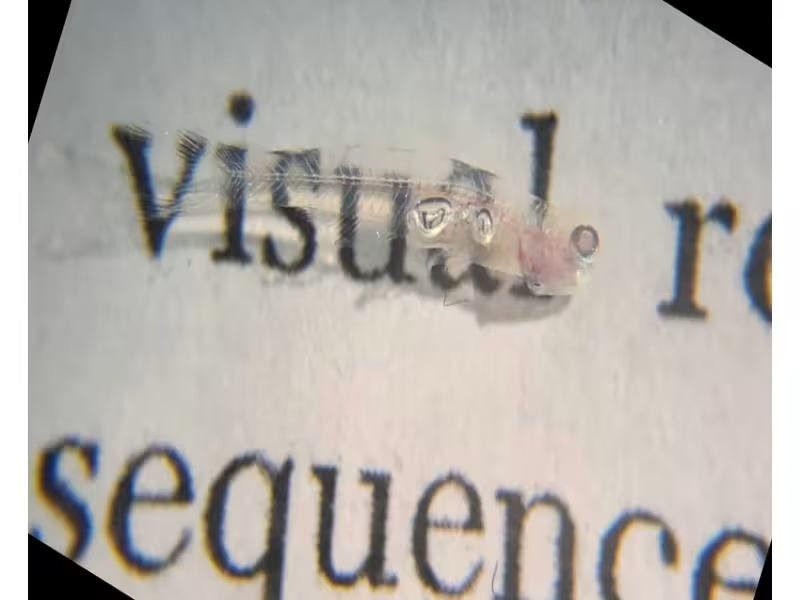
CAMBRIDGE, Mass. – October 30, 2026 -- Whitehead Institute researchers have profiled more than 600,000 cells from the transparent fish Danionella cerebrum to build the first comprehensive whole-body single-cell atlas of an adult vertebrate, according to a study published in Science on October 29.
Atlas links gene activity to cell location across the whole animal
The map is a single-cell transcriptome atlas, a record of which genes are active in which cell. The team used single-cell RNA sequencing on cells collected from the brain, spinal cord, eyes, internal organs, fins, head and trunk. It paired those data with spatial methods that place cell types and gene activity patterns in their tissue locations. The atlas captures even exceptionally rare cell populations.
The data give researchers a baseline for testing how injury, aging, drugs or other changes affect cells across the whole animal.
Body length of about one centimeter makes whole-animal profiling feasible
Size has been the main barrier to whole-body atlases of adult vertebrates, because profiling larger animals is technically demanding and expensive. Danionella is barely one centimeter long. Its close relationship to zebrafish lets researchers draw on genetic tools built for that model organism. The species was adopted for neuroscience research in 2018 and formally described in 2021.
Kutay Deniz Atabay led the work as a postdoctoral researcher in the lab of Whitehead Member Peter Reddien. Atabay became interested in the fish in early 2019 while looking for a small, transparent animal in which to watch the nervous system regenerate. The team found broad regenerative capacity, including in the brain and fins. Reddien's lab had already used a whole-animal cell atlas in planarians, regenerative flatworms small enough to make one possible.
Neurons cluster by region and fibroblasts keep body-patterning genes active
In the nervous system, neurons from the same region often had more similar gene activity than neurons using the same neurotransmitter in different regions. Similar patterns have been seen in other vertebrates, including mammals. The researchers say this indicates regional and developmental identity may be an important organizing feature of vertebrate nervous systems.
Fibroblasts, a type of connective-tissue cell, kept region-specific activity of genes best known for establishing body parts during development. Cells in the pectoral and pelvic fins retained gene programs linked to forelimb and hindlimb development in other vertebrates. The function of these signals in adult Danionella is unknown.
Forebrain injury study traces regeneration from wound response to new neurons
The team used the atlas as a reference after injuring the telencephalon, a forebrain region. The missing neurons regenerated. The researchers traced the sequence from early wound and immune response to neural stem-cell activity and the production and maturation of new neurons.
DigiFish portal opens the dataset to outside researchers
The atlas is publicly available through DigiFish, an interactive resource for exploring cell types and gene activity across the animal. Combined with the fish's transparency and growing experimental toolkit, it can help researchers identify cells and genes to manipulate and then follow their activity in the living animal.
Reddien, also a professor of biology at MIT and a Howard Hughes Medical Institute Investigator, called a transcriptome for every cell type "a big turning point" in how the biology of an organism can be investigated.