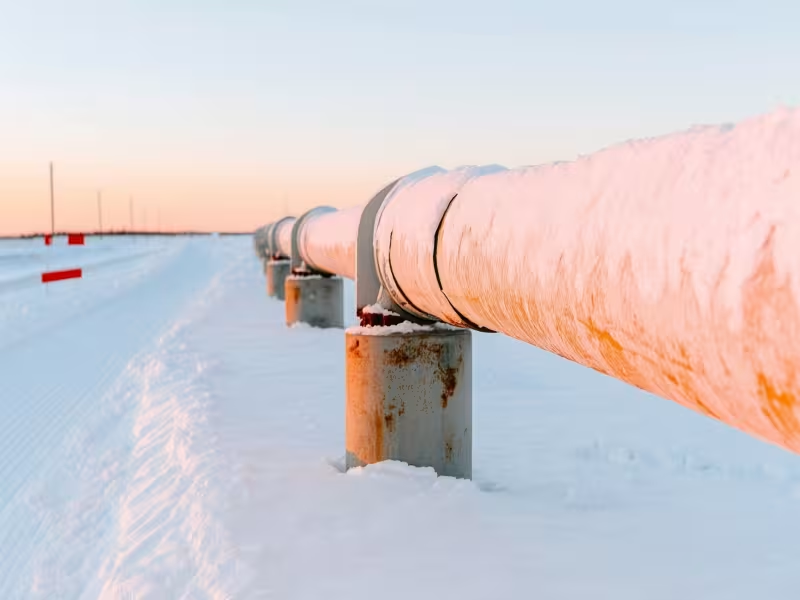
SHERIDAN, WYOMING - April 03, 2026 - Gas network users across the Danish entry-exit zone face unverified cost exposure through non-transmission tariffs covering the upstream Baltic Pipe, as the EU Agency for the Cooperation of Energy Regulators (ACER) has determined that insufficient data prevents full compliance assessment of Energinet's proposed reference price methodology under EU rules.
What Energinet proposed
Energinet, Denmark's transmission system operator (TSO), submitted a reference price methodology (RPM) for assessment against the EU Network Code on Harmonised Transmission Tariff Structures (NC TAR). The proposal applies a uniform postage stamp approach with an ex-post entry-exit split and includes discounts for gas storage facilities. Under the structure, users pay capacity-based tariffs - charges tied to booked network capacity rather than actual gas volumes transported - which eliminates volume risk for the TSO but places that risk exposure on network users.
The proposal also maintains the existing joint market zone, which integrates the upstream section of the Baltic Pipe - the pipeline linking Norwegian gas fields to Poland via Denmark - into the Danish entry-exit zone. Costs for this upstream infrastructure are not recovered through standard transmission tariffs but through a separate non-transmission tariff charged to network users. Two non-transmission services remain in place: the upstream Baltic Pipe infrastructure and an emergency gas supply mechanism. The methodology also continues ex-ante discounts for interruptible capacity in 5% increments, allowing users to book additional capacity at reduced rates subject to interruption when firm-capacity holders require network access.
Where ACER found compliance gaps
ACER concluded that the proposed methodology satisfies EU requirements on transparency, non-discrimination, and volume risk allocation. However, compliance with cost-reflectivity rules, cross-subsidisation avoidance, and cross-border trade distortion prevention could not be fully assessed because Energinet did not provide sufficient detail on the upstream infrastructure underpinning the Baltic Pipe costs being passed through to network users.
The agency also identified a structural classification problem with the emergency supply tariff. That charge funds a security-of-supply service delivered directly to end users - not to network users - placing it outside the NC TAR framework entirely. Applying network code rules to a tariff that serves a different user class creates a compliance ambiguity that regulators must resolve before the methodology is adopted. Additionally, ACER flagged that the interruptible capacity discount formula used by Energinet does not align with the network code calculation methodology, meaning discounts may not accurately reflect actual interruption risk.
ACER's recommendations to the Danish regulator
ACER directed its recommendations to DUR, the Danish national energy regulator, which holds authority over the final methodology decision. The agency identified three corrective actions DUR must take before approving the RPM. First, the upstream Baltic Pipe section must be subject to the same level of transparency and regulatory scrutiny as the main transmission network, given that its costs are borne by transmission network users through non-transmission tariffs. Without equivalent oversight, users cannot verify whether those charges are cost-reflective or whether cross-subsidisation is occurring.
Second, the emergency gas supply tariff must be separated from standard network fees and handled under a different regulatory framework, since it serves end users rather than network users and falls outside NC TAR scope. Third, Energinet must recalibrate interruptible capacity discounts using the network code formula to ensure that price reductions accurately reflect the probability and magnitude of service interruption rather than applying uniform 5% steps that may misprice interruption risk in either direction.
Business impact
Procurement leads and energy buyers operating within the Danish entry-exit zone face a direct consequence: they are currently paying non-transmission tariffs that cover upstream Baltic Pipe costs without the regulatory guarantee that those costs are justified, cost-reflective, or free from cross-subsidisation. Until DUR adopts a revised methodology incorporating ACER's transparency requirements, these users have limited recourse to challenge or verify the charges embedded in their capacity contracts.
Operations directors and supply chain officers routing gas from Norway through Denmark to Poland via the Baltic Pipe should factor the regulatory uncertainty into 2026 sourcing and infrastructure planning. If DUR mandates a reclassification of the emergency supply tariff or requires greater cost disclosure on upstream infrastructure, Energinet's allowed revenue structure and the associated capacity tariff levels could shift - altering the commercial terms of existing and future capacity bookings. Compliance teams at network users active in the Danish market should also monitor whether the interruptible capacity discount recalculation changes the economic case for booking interruptible versus firm capacity, particularly as European gas demand patterns continue to evolve through the energy transition.