MIND

MIND Automates Fixes for Exposed Data at Rest

Image

MIND Automates Fixes for Exposed Data at Rest

Global – October 23, 2026 -- MIND can automatically apply a company's remediation policies when it detects an exposure issue in data at rest, or it can route the fix to a human reviewer first.

MIND targets three gaps that leave sensitive data exposed

The vendor says manual labeling of sensitive data is burdensome, error-prone and creates security gaps. Sensitive elements often go undetected, so compliance and security risks persist unnoticed. "Anyone with a link" sharing can bypass controls and give unauthorized users access to sensitive files without detection or restriction.

MIND classifies data using company-specific business context

The platform maintains a catalog of resources, users, authorizations, file activities and metadata. MIND says this catalog is meant to keep at-rest security policies effective over time.

MIND Targets Agentic AI Data Security Blind Spot With New DLP

Image
MIND Targets Agentic AI Data Security Blind Spot With New DLP

Global – October 23, 2026 -- MIND is marketing a data loss prevention (DLP) offering aimed at autonomous AI agents, arguing that a single misconfigured agent can reach sensitive information and spread it across workflows or to external tools within seconds.

AI agents run inside SaaS platforms, custom workflows and third-party services

MIND says agents are no longer standalone tools. They are embedded across enterprise systems, often act autonomously and work at machine speed. Embedded and third-party agents operate beyond traditional security visibility, and because they touch multiple systems, they widen exposure of sensitive enterprise data.

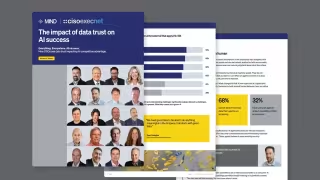
Only 20% of AI Initiatives Hit KPIs as CISOs Doubt Data Controls

Image
Only 20% of AI Initiatives Hit KPIs as CISOs Doubt Data Controls

SEATTLE – October 23, 2026 -- Only 20% of enterprise AI initiatives meet their intended KPIs, and 65% of CISOs lack confidence in their data security controls, according to new research from data security vendor MIND and the CISO Executive Network.

The report, "The Impact of Data Trust on AI Initiative Success," finds that 90% of organizations already run enterprise GenAI at scale. Security governance has not kept pace with that deployment.

Survey of 124 CISOs finds policies without machine-speed enforcement

The study combines a survey of 124 CISOs with twenty in-depth interviews drawn from the same group. Organizations have AI policies but struggle to enforce them at machine speed, the report says. Data estates remain unclassified and ungoverned, and security frameworks were built for human behavior rather than autonomous systems.

MIND Targets DLP False Positives With AI Data Classification

Image
MIND Targets DLP False Positives With AI Data Classification

Global – October 23, 2026 -- MIND is marketing a cloud-native platform that connects to existing systems in minutes and classifies sensitive data across SaaS applications, on-premise file shares, endpoints and email, with the stated aim of sharply reducing false positive alerts.

MIND says legacy RegEx and tagging leave gaps in data security

The company argues that sensitive data is scattered across four environments: SaaS apps, on-premise file shares, endpoints and email systems. Many data security tools cover only narrow areas, creating silos and gaps where risk can build. Pattern matching, RegEx and user tagging, it says, produce incomplete views and excessive false positives.

MIND also points out that each business holds unique sensitive data beyond common identifiers such as credit card or social security numbers.