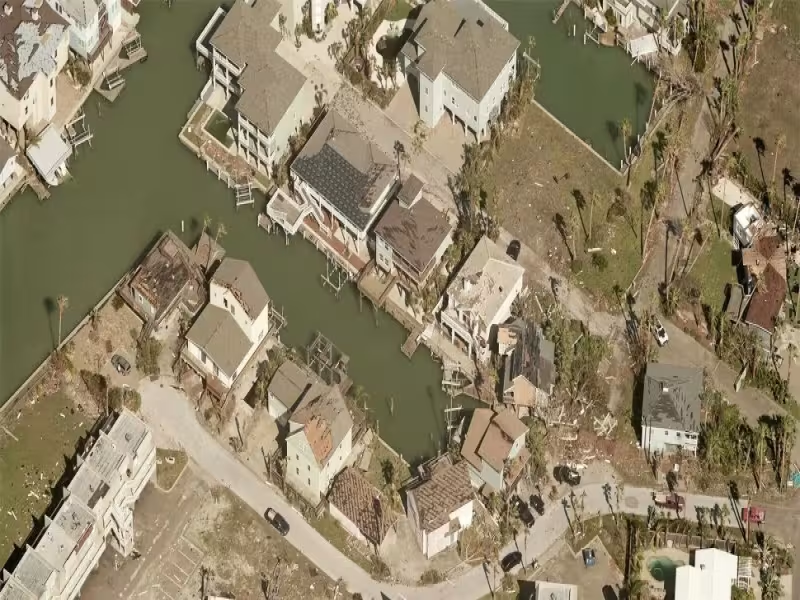
Global – October 27, 2026 -- Eagleview, which has supplied aerial imagery and property intelligence to insurers for more than two decades, argues that carriers should measure operational efficiency by how much they know before sending anyone into the field, not by expense reduction alone. Patrick Gill, the company's Senior Vice President and General Manager for Insurance & Commercial Solutions, outlines the case in a new commentary.
AI queries compress weeks of data science work into minutes
Gill says AI lets carriers merge large volumes of disparate data and query it in natural language within minutes. Claims leaders can ask which older roofs sit inside a hail path, which insured properties were already deteriorating before a storm, and where experienced adjusters should deploy first. He says these decisions directly affect claim severity, customer satisfaction and operating expense.
Insurers can pre-position resources before a hurricane makes landfall
Combining weather projections with portfolio-level property data lets insurers identify vulnerable policyholders before a storm hits, Gill writes. Indicators include older roofs, existing deterioration and structural traits tied to higher damage potential. Claims staffing, independent adjuster placement and customer communications can then be adjusted ahead of peak demand.
Post-event triage routes complex claims to experienced adjusters
After a severe hail event, insurers can screen policies in force for older roofing, poor historical condition and storm intensity. Experienced adjusters then focus on likely high-loss claims, while lower-complexity claims move through streamlined processes.
Historical imagery feeds reserving and capital allocation
Repeated observation of properties over many years shows how roofs age and conditions change across hundreds of thousands or millions of insured properties. Gill says carriers can use this to spot segments with aging roofs nearing replacement and regions with accelerated weather-driven deterioration. He says it supports forecasting, reserving, planning and capital allocation beyond historical loss ratios.
Gill also points to claim prevention. Property analysis can flag roof deterioration, tree overhang and emerging maintenance issues that homeowners cannot see from the ground, giving insurers a way to engage policyholders before damage occurs.