Rochester, N.Y. – October 27, 2026 -- Eagleview has responded to 17 severe weather events across 10 U.S. states since December 2025, as its Disaster Response Program (DRP) marks 25 years amid a sharp rise in billion-dollar climate disasters.
U.S. disaster counts run 2-3x above the long-term average
The U.S. recorded 28 major climate disasters in 2023, 17 in 2024 and 21 in 2025. NOAA puts the long-term average at roughly nine. Each of these events costs roughly $1 billion, and many, including forest fires, cost far more.
Even in years with fewer predicted weather events, organizations remain exposed to elevated risk from any single event.
Unverified damage data pushes insurers and agencies back to manual inspection
Recovery is often slowed because responders, insurers and industry partners cannot gauge the true severity of damage. Aerial imagery shows how likely a roof is to fail, how much storm damage a property has taken, and the real condition of an asset. When that data is not trusted enough to act on, the fallback is manual verification, which costs time and raises inspection costs for insurers, contractors and government personnel.
Program grew from one 2001 flight over the World Trade Center site
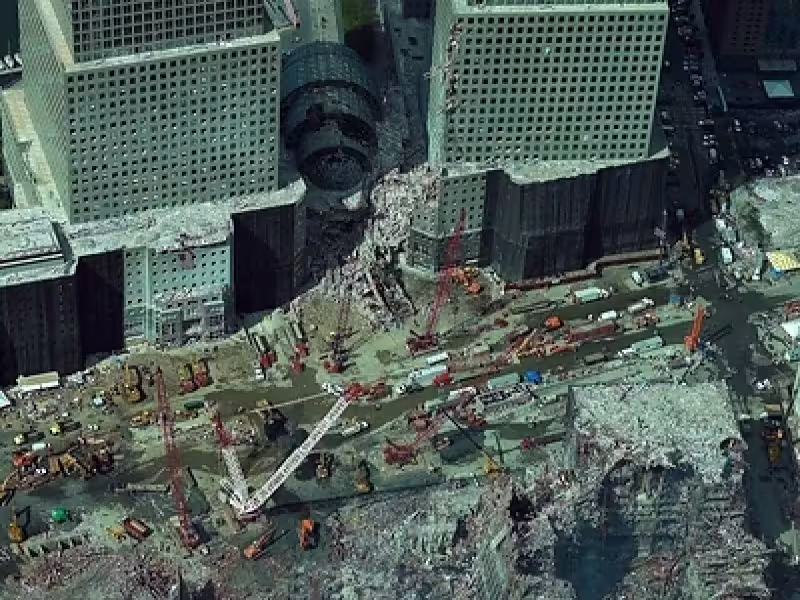
In 2001, Eagleview was a small Rochester-based startup. It captured aerial imagery of the World Trade Center site in the weeks after the September 11 attacks and gave it to responders on the ground. No formal program existed at the time.
Hurricane Katrina tested the model at scale. Eagleview's existing pre-event imagery of Orleans Parish, Louisiana, allowed a direct pre- and post-storm comparison and supported the parish's recovery for years. The company formalized the program in that period and began offering it as a function customers could rely on.
DRP has since supported government agencies, insurers and infrastructure operators after hurricanes, wildfires, tornadoes, floods and earthquakes in the United States, Canada and Haiti. In the past two years it responded to tornadoes in Illinois and Oklahoma, flooding in Hawaii and Kentucky, and wildfires in California and Washington. The team handled more than one active response at once, including Hurricanes Helene and Milton.
Fleet of more than 100 aircraft supports parallel responses
Eagleview operates more than 100 aircraft and holds baseline imagery coverage across the United States and Canada. It positions dedicated, geographically distributed aircraft and personnel to cut response time when several events overlap.
"Our customers don't experience disasters one at a time anymore, and neither can we," said CEO Piers Dormeyer.
Robert Locke, President of Government Solutions, said the disaster workflow mirrors normal capture operations but runs on a compressed timeline. The team monitors developing events, defines the area of interest, builds flight plans and moves aircraft into position as soon as weather allows. Dedicated staff now handle emergencies year-round rather than only when a single event demands it.