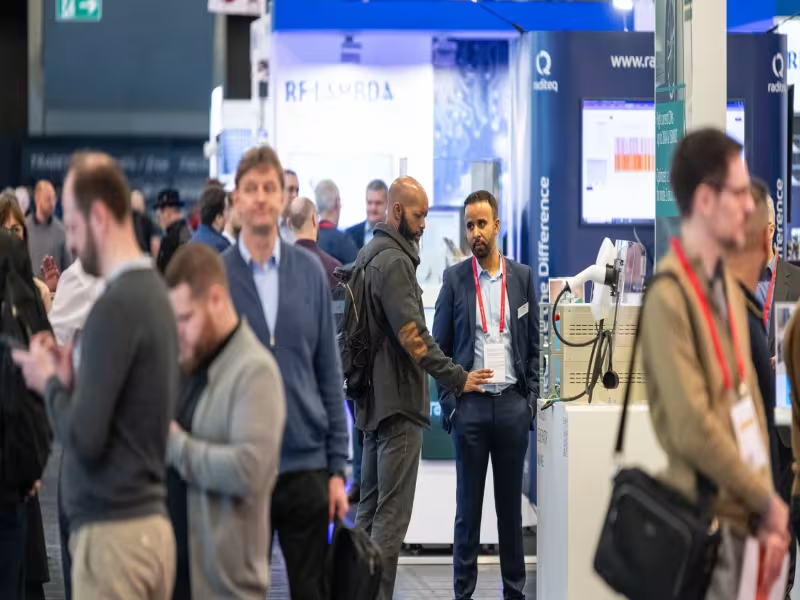
SHERIDAN, WYOMING - March 24, 2026 - EMV 2026, the international conference and exhibition for electromagnetic compatibility, opens today in Cologne with a three-day program running from March 24 to 26. The event combines a technical congress featuring over 30 peer-reviewed presentations across six themed sessions with a parallel workshop program of 20 specialist courses and a dedicated exhibition in Hall 10.2. Anchored by a keynote on AI, radio, and EMC from Germany's Federal Network Agency, the conference addresses pressing engineering challenges in automotive EMC, power electronics, 5G/6G exposure measurement, and functional safety - topics of direct operational relevance for product developers, test engineers, and compliance managers.
Keynote Positions AI as Both Opportunity and Regulatory Question for EMC
The conference opens with a keynote by Taras Holoyad from the Bundesnetzagentur (Federal Network Agency for Electricity, Gas, Telecommunications, Post and Railways) titled "AI, Radio and EMC: Potentials and Regulatory Aspects." This is followed by a panel discussion on the technical possibilities and limitations of AI in EMC applications. The framing signals that artificial intelligence is moving beyond theoretical interest in the EMC community and into territory where regulatory frameworks and practical engineering constraints must be addressed together. For product development teams and compliance departments, the sessions offer early orientation on how AI-driven tools may intersect with existing EMC validation and certification workflows.
Congress Sessions Span Automotive, Power Electronics, and Measurement Innovation
The congress program is organized into twelve thematic sessions across three days, held in Congress Halls 2 and 3. Tuesday's sessions cover testing and measurement methods alongside EMC in power electronics, with presentations addressing topics such as novel magnetic core characterization for automotive applications, in-situ EMC measurement of photovoltaic balcony power plants, and PWM-correlated active compensation of common-mode disturbance pulses in motor inverters. Wednesday expands into interference coupling in large systems, filters, numerical EMC analysis, and time-efficient emission measurement. Thursday concludes with sessions on human exposure in electromagnetic environments, digital filtering in power electronics, and functional safety in the context of 5G and 6G systems.
Electromobility and SiC Switching Drive Technical Depth
Several presentations target the specific EMC challenges arising from electromobility. Topics include the influence of rotor position on emissions from permanent-magnet axial flux machines, conducted emissions from motor inverters with passive motor replicas, and directional coupler measurement of conducted EMC emissions from electric vehicles during DC charging. The interplay of silicon carbide switching parameters and EMI generation in half-bridge LLC resonant inverters also features in the program. These sessions address engineering problems that directly affect vehicle homologation timelines and component specification decisions for automotive suppliers and OEMs.
5G and 6G Exposure Measurement Enters the Agenda
Thursday's Session 6a on functional safety and personal safety in 5G/6G environments reflects growing industry attention to exposure compliance. Presentations from TU Ilmenau cover the current state and outlook for exposure measurement at 5G and 6G mobile base stations, as well as the influence of channel-dependent transmission rank on 5G massive MIMO immission measurement. Mercedes-Benz contributes a presentation on advanced measurement techniques for ICNIRP-compliant current assessment in complex electromagnetic environments. For operators deploying next-generation wireless infrastructure and automotive manufacturers integrating connectivity systems, these sessions provide technical reference points for compliance strategy.
Twenty Workshops Offer Hands-On Engineering Training
The parallel workshop program runs across all three days with 20 sessions covering practical EMC design, simulation, regulatory compliance, and measurement techniques. Topics range from EMC design fundamentals and resonance analysis at component and system level to virtual vehicle design based on EMC simulation led by BMW's Sergey Kochetov. International market access requirements are addressed in sessions on FCC and ISED regulations for the U.S. and Canadian markets, as well as a workshop on EMC, radio, and product safety requirements for global market entry. Specialist workshops cover single pair Ethernet design with power over data line under EMC aspects, ESD optimization at system level through measurements and simulations, and EMC changes for medical devices under IEC 60601-1-2. Presenters include engineers from Rohde and Schwarz, Würth Elektronik, Nexperia, Endress+Hauser, and multiple German universities.
Best Paper Award and Industry Roundtables Close the Program
The final day features the Best Paper and Young Engineer Award ceremony in the exhibition forum in Hall 10.2, recognizing outstanding contributions from the congress program. Roundtable discussions in the exhibition forum cover interference suppression, simulation, EMC career development bridging education and industrial application, and EMC management. A management-focused discussion panel on Wednesday addresses product validation between full-cost optimization and risk management, a topic that connects technical EMC work directly to business decision-making for engineering managers and program directors.