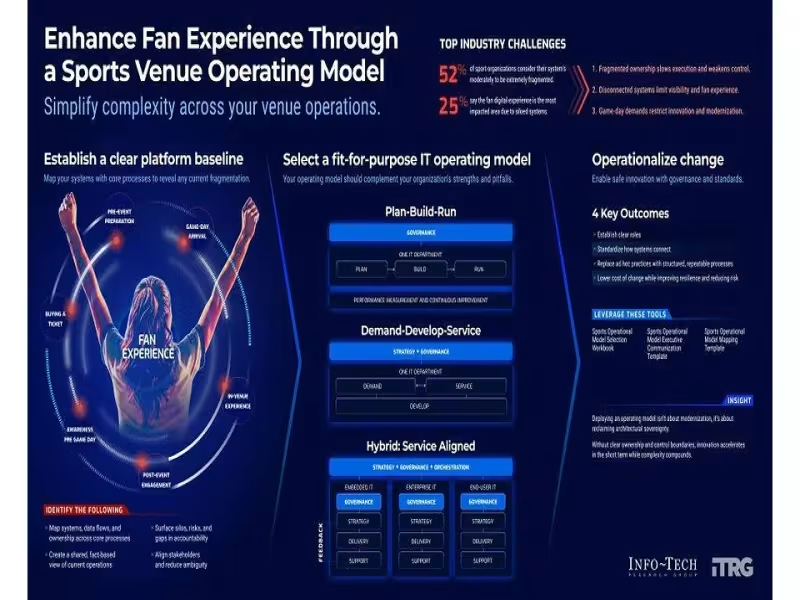
Arlington, Va. – September 07, 2026 -- Info-Tech Research Group has published a new blueprint, Build a Venue Platform Operating Model, addressing a structural gap between accountability and authority that leaves sports CIOs responsible for game-day fan experience despite lacking control over the systems that deliver it.
CIOs Answer for Systems They Do Not Control
Sports organizations rely on ticketing, mobile apps, access control, point-of-sale, sponsorship platforms, and fan data to function as one connected environment, even though these capabilities are split across teams, venues, leagues, and vendors. Michael Adams, senior research analyst at Info-Tech Research Group, said this accountability-authority gap is where delays, inconsistent decisions, and operational fragility take hold.
Three Obstacles Block Unified Venue Operations
Info-Tech's blueprint identifies fragmented ownership and unclear decision rights as a primary barrier, forcing cross-entity negotiation for even routine changes. Disconnected systems and inconsistent data ownership add cost and complexity with every new integration, while near-zero tolerance for game-day downtime discourages modernization and deepens reliance on legacy technology.
Blueprint Sets Out Three-Phase Governance Method
The methodology moves organizations through mapping and assessment of systems and data across the fan journey, followed by framing and selecting an operating model based on ownership structure and game-day requirements. The final phase assigns decision rights, clarifies capability ownership, and prepares executive communications to support the transition.
Supporting tools include a selection instrument for evaluating seven operating model archetypes, a mapping template for current and future ownership, and an executive communication template for stakeholder alignment.
Local Flexibility Can Coexist With Shared Standards
Adams said a strong venue platform can preserve local flexibility while making shared responsibilities explicit, with certain capabilities requiring enterprise-wide consistency and others remaining closer to individual teams or venues. Clear boundaries, he noted, allow innovation to proceed without relying on informal coordination or compromising game-day reliability.