Arlington, Va. – September 15, 2026 -- Casino operators are losing visibility into total player value because core systems for gaming, hospitality, and loyalty were built to process isolated transactions rather than track a single guest identity, according to a new blueprint from Info-Tech Research Group.
Fragmented systems create duplicated profiles and blind spots in guest value
The firm's report, Design a Unified Guest Experience Strategy, finds that guest relationships are often scattered across casino management, loyalty, hotel, gaming, dining, entertainment, point-of-sale, and digital systems, as well as external partners. This fragmentation produces duplicated profiles, inconsistent interactions, and limited visibility into total value generated across both gaming and nongaming activity. Info-Tech cites high modernization costs, dependence on external partners, and internal resistance as factors that push operators toward isolated channel fixes rather than enterprise-wide transformation.
"Omnichannel has long been an aspiration in hospitality, but achieving it historically required changes many organizations were not ready to undertake," said August Hummelbrunner, research analyst at Info-Tech Research Group. He noted that successful transformation requires treating physical and digital touchpoints as part of one guest value stream rather than separate revenue drivers.
Blueprint maps four stages from multichannel to real-time orchestration
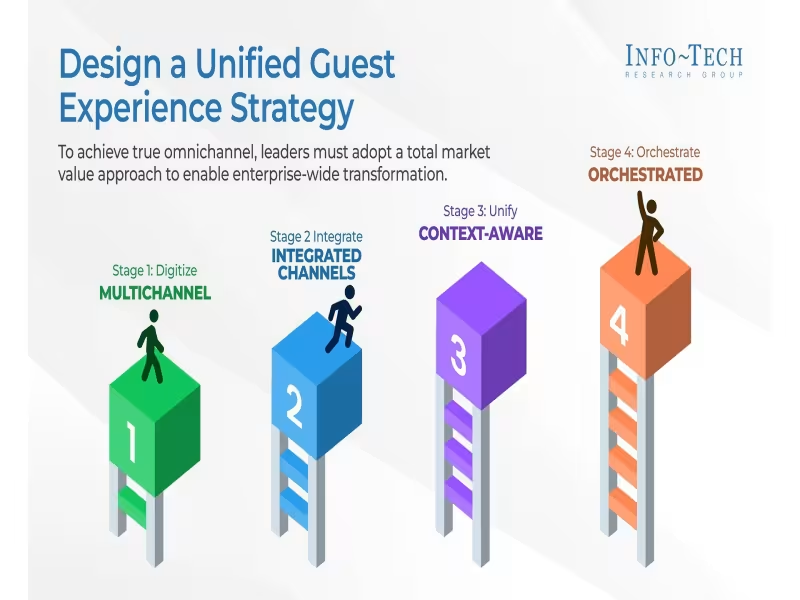
Info-Tech outlines four progressive stages for casino operators. In Stage 1 (Digitize), mobile apps, websites, loyalty platforms, and on-property systems operate independently with separated guest data. Stage 2 (Integrate) connects core systems for data sharing across specific workflows, though guest views remain fragmented and staff visibility stays limited outside their own departments.
Stage 3 (Unify) introduces a shared identity that lets operators recognize the same player across systems and touchpoints, informing preferences and loyalty context, though coordination still relies on predefined rules rather than real-time decisions. Stage 4 (Orchestrate) has systems and teams functioning as one ecosystem using real-time data, continuously updating context so guests can move between physical and digital interactions without repeating information.
Firm advises maturity assessment across five operational areas
Info-Tech recommends operators first assess current maturity across identity, integration, decisioning, personalization, and coordination. From there, organizations can define experience principles, map target-state guest journeys, identify capability gaps, and convert requirements into prioritized people, process, and technology initiatives.
The firm states that grounding technology requirements in target-state journeys can help IT teams reduce integration complexity, technical debt, scope changes, and rework, while a shared roadmap can strengthen loyalty and improve visibility into total player and guest value across gaming and nongaming channels.