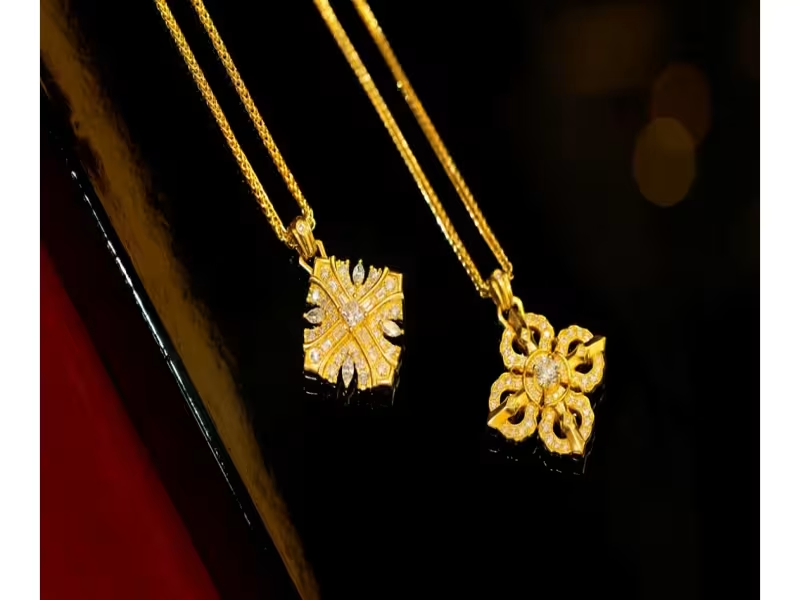
Beijing – September 12, 2026 -- Chinese jewellery brand Laopu Gold outsold the jewellery division of Swiss luxury conglomerate Richemont Group in the Chinese market in 2025, a milestone that has drawn scrutiny from European luxury researchers.
Laopu Gold ranks first globally in store sales efficiency
Industry data cited by Professor Stéphane JG Girod of IMD business school shows Laopu Gold ranked first globally among luxury brands in both single-store sales efficiency and floor-area efficiency in 2025 and from January to June 2026. Within the jewellery category, its per-store performance was several times higher than that of other international jewellery brands. The company is currently the only Chinese brand present in the high jewellery segment of the luxury market.
24K gold strategy diverges from Western 18K standard
Laopu Gold builds its product line exclusively on 100% solid 24K gold, a departure from the 18K gold commonly used by Western jewellery houses. Girod noted this raises margin-management complexity for the brand but delivers stronger long-term value-retention for buyers -- a factor increasingly weighted by Chinese consumers reassessing branded jewellery amid a broader global luxury slowdown.
Brand shifts pricing model from gold-weight to fixed prices
Rather than pricing by metal weight, Laopu Gold has moved to fixed pricing across its collections, a change Girod says has helped the brand anchor consumer trust in creativity and craftsmanship rather than commodity value alone. Store design modeled on Ming- and Song-dynasty study rooms reinforces this positioning, replacing standardized Western retail formats with an immersive, culturally rooted experience.
Product range splits between daily jewellery and high-end goldware
The brand operates a multi-tiered portfolio spanning everyday wearable accessories, purchased predominantly by middle-class women, and artistic goldware -- including objects of virtu -- aimed at high-net-worth collectors. Girod described the goldware segment as carrying distinct Chinese cultural heritage with design appeal he believes could extend to international connoisseurs.
Analysis frames shift away from Western luxury symbolism
Girod's research attributes Laopu Gold's rise to a broader pivot among Chinese consumers away from brand-logo-driven purchasing toward evaluations based on material quality, craftsmanship and authentic value. He argues that price hikes and aggressive expansion by Western luxury houses over the past decade diluted brand equity and widened the gap between price and perceived product value in China.