GLOBAL – October 27, 2026 -- Only 22% of organizations have applied sovereignty or residency requirements to AI models, against 60% for data, according to a global 2025 survey cited in a new analysis of sovereign AI architecture.
Sovereignty controls thin out higher in the AI stack
The same survey found that 46% of organizations applied such requirements to infrastructure and 32% to applications. The decline leaves a structural blind spot: protecting enterprise data has limited value if the model processing it operates outside the intended control framework.
Research across nearly 2,000 organizations finds sovereignty necessary for about one-third of AI initiatives
The degree of localization varies even within those workloads. Some need only local data residency and standard enterprise security controls. Others require restrictions across infrastructure, models, encryption and administrative access, and in some cases physical isolation. The architecture must support these differences without a separate AI environment for every use case.
RAG workloads can leave the control boundary while source data stays compliant
In a typical Retrieval-Augmented Generation application, source documents remain in an approved region while retrieved information goes to an external model endpoint for inference. Embeddings may be generated by another service and stored in a separate vector database. Conversation history, monitoring data and model logs may be retained in further environments.
Generative and agentic AI add nine asset types alongside traditional records, including prompts, fine-tuning datasets, embeddings, retrieved context, agent memory and audit logs. Each can contain or encode sensitive enterprise information.
Five-layer stack extends control from infrastructure to agent execution
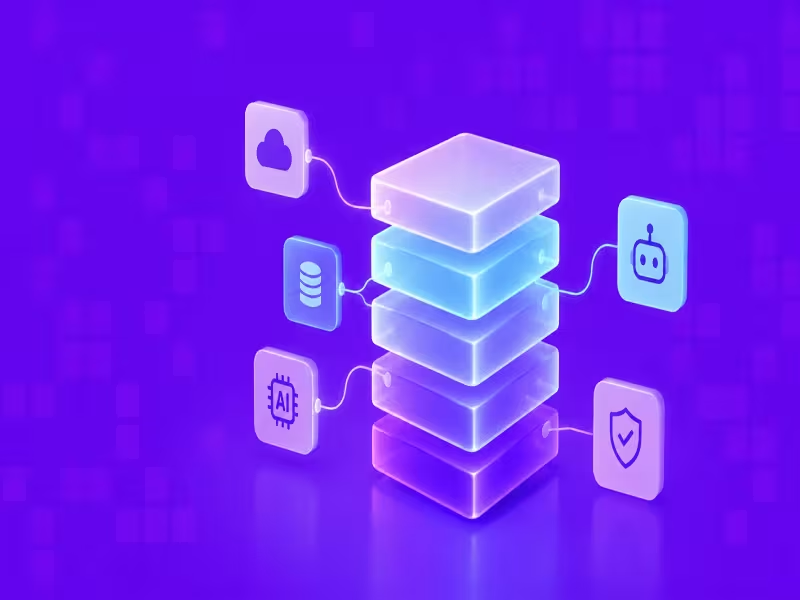
The analysis divides enterprise AI sovereignty into five layers: infrastructure and compute; data and enterprise knowledge; models; applications, integrations and agents; and security, governance and observability. Restrictions set in ERP, CRM, HR or finance systems must remain in force when the same information is accessed through an AI interface.
An AI agent can retrieve enterprise data, select a model, invoke an API, communicate with another agent and initiate an action. Because the architecture then governs execution rather than only information access, agentic AI governance emerges as a distinct requirement rather than an extension of existing AI policy.