Data Governance

Heritage Werks Launches NetX AuthorityAI With 4X Inference Efficiency

ATLANTA – October 31, 2026 -- Heritage Werks Group (HWG) has made NetX AuthorityAI commercially available, an "Authority Layer" for enterprise AI that grounds answers in an organization's proprietary knowledge and claims up to 4X greater inference energy efficiency.

Platform builds a governed knowledge network with cited answers

NetX AuthorityAI connects proprietary knowledge, archives, digital assets, enterprise data and verified external sources into a single governed network. It ranks, scores and validates information, then returns fully cited answers traceable to their original sources. It also surfaces related photographs, documents and videos.

HWG positions the product against general-purpose platforms such as ChatGPT, Claude and Gemini, which it says draw on internet-scale data where fact, opinion and misinformation coexist.
Context Labs Launches AI Distillery for Sovereign Enterprise AI

Image
Context Labs Launches AI Distillery for Sovereign Enterprise AI

ABU DHABI – November 01, 2026 -- Context Labs B.V. launched the AI Distillery, a Context Engine that converts an enterprise's operational and business data into a governed, customer-owned Context Package. The package works with any frontier or open-weight model and runs inside the customer's own environment. The product is available now through the Microsoft Marketplace.

Gartner and McKinsey data frame the AI-readiness gap

Gartner predicts organizations will abandon 60% of AI projects unsupported by AI-ready data through 2026. It also expects over 40% of agentic AI projects to be canceled by the end of 2027. McKinsey reports that eight in ten companies cite data limitations as the barrier to scaling AI agents.

Sparkplug B vs Plain MQTT: Architects Weigh Shared Contract Costs

Image
Sparkplug B vs Plain MQTT: Architects Weigh Shared Contract Costs

Global – October 30, 2026 -- Industrial architecture teams choosing between Sparkplug B and plain MQTT are really comparing the cost of maintaining a custom application contract with the cost of adopting and operating a shared one. Sparkplug B defines industrial conventions on top of MQTT. It does not replace MQTT or turn a broker into a historian.

Plain MQTT leaves naming, typing and state to the application

MQTT provides client-to-broker publish/subscribe messaging, topic names, topic filters, QoS choices, retained messages, sessions and a Last Will mechanism. The specification does not require JSON, a device model, metric names, data types or an industrial topic namespace.

Teams using plain MQTT must therefore define five things themselves:

MQTT Topic Hierarchies Need Governance Before Second-Plant Rollout

Image
MQTT Topic Hierarchies Need Governance Before Second-Plant Rollout

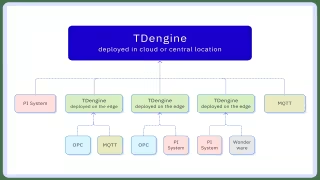
Global – October 30, 2026 -- An MQTT topic convention that works in a pilot can become unmanageable after a second plant, a new equipment vendor or the first external integration, according to new TDengine guidance. Inconsistent paths make subscriptions overbroad, access rules hard to review and equipment identity ambiguous downstream.

Six-level namespace separates stable identity from changing values

The illustrative structure is industrial/{site}/{area}/{line}/{equipment_id}/{message_class}, with classes such as telemetry, event and health. It is an organizational convention, not a protocol-mandated industrial schema. Values such as pressure, mode or batch number belong in the payload. Putting a transient device state into the path, as in plant-a/line-2/filler-07/running/pressure, splits one asset across routes.

Alteryx Pitches Business Logic Layer for AI on Snowflake Data

Image
Alteryx Pitches Business Logic Layer for AI on Snowflake Data

Global – October 29, 2026 -- Alteryx is marketing its platform as the governed business-logic layer on top of Snowflake's AI Data Cloud. It cites a 90% time saving in campaign development at Telenet and a 25% subscriber increase at BODi as proof points.

Alteryx pushes transformation logic into Snowflake while business users own the rules

Alteryx pushes transformation logic down into Snowflake for performance. It gives business users a no-code way to build and govern the rules that turn raw data into decisions. The company's argument is that Snowflake stores and scales data, but a warehouse does not know definitions such as a "qualified pipeline" or an "at-risk account." Without those rules made explicit, an LLM or AI agent querying the data is left to guess, producing inconsistent answers and hallucinations.

Five use cases span finance, procurement, customer success and inventory

Alteryx names five patterns:

Industrial AI Data Platforms Should Be Judged by One Decision

Image
Industrial AI Data Platforms Should Be Judged by One Decision

Global – October 29, 2026 -- Plants selecting an industrial data platform for AI should start with a single operational decision, such as whether a reliability engineer must review a compressed-air pressure drop within an hour, rather than with a list of AI features. That decision defines the required sources, history, context, access controls and response time.

Four data sources feed the compressed-air pilot

The example pilot investigates periods when header pressure falls while compressor energy use rises. It needs PLC compressor state and control values, historian pressure, flow and power trends, IoT vibration readings, and maintenance records. None of these sources has to be replaced; the test is whether the evidence can be found, understood, governed and accessed together at the necessary time scale.

NVIDIA Launches Kumo Graph AI Models Inside Snowflake ML

Image
NVIDIA Launches Kumo Graph AI Models Inside Snowflake ML

Global – October 29, 2026 -- NVIDIA has released Kumo, a family of open models, libraries and tools for predictive AI on structured data, and Snowflake customers can run it on GPU compute without moving data out of their accounts. The release is part of NVIDIA's new Agent Knowledge Foundation, a set of open models and libraries meant to help enterprise agents retrieve evidence, apply consistent business meaning, predict outcomes and optimize actions.

Kumo trains graph neural networks on full relational structure

The NVIDIA Kumo Relational model and NVIDIA Kumo Engine, an open-source package, train graph neural networks across an enterprise's relational graph. Kumo learns from tables, the keys connecting them and the timing of events. Teams do not need to flatten these links into a single wide table.

WonderBotz Adds Data Layer to APM Playbook, Brings in Anthropic

Image
WonderBotz Adds Data Layer to APM Playbook, Brings in Anthropic

Princeton – October 28, 2026 -- WonderBotz has relaunched its Agentic Process Management (APM) playbook with data foundations named as a first-class layer, and added Anthropic and Tungsten Automation to its partner ecosystem. The third edition of the executive framework, which covers how enterprises plan, govern and scale AI agents, people and robots as one operation, is available now.

Data foundation becomes the layer beneath orchestration, fidelity and stewardship

WonderBotz says a year of running agentic operations at client scale showed that the data layer needs explicit treatment. The playbook now places it under the three existing disciplines of orchestration, fidelity and stewardship, as the layer that makes them enforceable.

"You cannot govern an agent whose data you don't trust, and every agent you deploy pays interest on your data debt," said Steve LaValle, Co-Founder and Co-CEO of WonderBotz.

TDengine MQTT Ingestion Needs a Schema Contract Before Mapping

Image
TDengine MQTT Ingestion Needs a Schema Contract Before Mapping

Global – October 27, 2026 -- An MQTT message is only a topic plus a payload, so a usable historian record needs four additions: stable equipment identity, typed measurements, a trustworthy timestamp and a schema that survives device and site growth. Engineers should settle these before configuring ingestion into TDengine TSDB Enterprise. Skipping that step can produce technically successful writes that create tables that are hard to query, compare or maintain.

OPC UA Mapping: Keep NodeId, Asset Key and Display Name Separate

Image
OPC UA Mapping: Keep NodeId, Asset Key and Display Name Separate

Global – October 27, 2026 -- An OPC UA NodeId tells a client which node to read, but not which pump, line or measurement that node represents in the plant. Reliable mapping therefore keeps source identity, browse path, equipment identity and user-facing label connected but stored as separate fields.

Namespace indexes can change between sessions, so URIs must be stored

A NodeId such as ns=4;s=Pump01.DischargePressure uses 4 as an index into the session's NamespaceArray. The OPC UA specification allows that index to change in a later session. A stored ns=4 string without its namespace URI can point to the wrong namespace after the server's table changes. Mappings should retain the endpoint, namespace URI, identifier type and identifier, and resolve the current index at connection time.