Global – October 30, 2026 -- Industrial architecture teams choosing between Sparkplug B and plain MQTT are really comparing the cost of maintaining a custom application contract with the cost of adopting and operating a shared one. Sparkplug B defines industrial conventions on top of MQTT. It does not replace MQTT or turn a broker into a historian.
Plain MQTT leaves naming, typing and state to the application
MQTT provides client-to-broker publish/subscribe messaging, topic names, topic filters, QoS choices, retained messages, sessions and a Last Will mechanism. The specification does not require JSON, a device model, metric names, data types or an industrial topic namespace.
Teams using plain MQTT must therefore define five things themselves:
- Stable equipment identifiers and topic-level meaning.
- Payload encoding, metric names, types, units and timestamps.
- How devices announce available metrics or configuration changes.
- How subscribers judge whether a gateway or device is usable.
- Rules for commands, duplicates, version changes and backward compatibility.
Plain MQTT is not inadequate. A governed schema with a few controlled publishers can be simpler than adopting another specification. The risk appears when every integration invents a slightly different contract and downstream systems must reverse-engineer it.
Sparkplug B adds a namespace, lifecycle messages and typed metrics
Sparkplug B uses MQTT transport and defines a topic namespace, message types, payload conventions and operational behavior. Its concepts include a group ID, an Edge of Network (EoN) node ID, an optional device ID, and standard message classes for data, commands and state changes.
An Edge Node publishes an NBIRTH message after establishing an MQTT session. A broker can publish the node's NDEATH as its Last Will when that session ends unexpectedly. DBIRTH and DDEATH messages cover devices managed by an edge node. These are application-level semantics coordinated with MQTT features, not generic MQTT behavior.
Sparkplug B metric payloads carry metric identity, data type, value, metadata-related structures, timestamps and sequence behavior. They use Protocol Buffers encoding, so JSON renderings in documentation are illustrative rather than the on-wire format. Sparkplug Host Application STATE messages are a separate case and use JSON payloads. The current Eclipse Sparkplug specification is the source of truth for required message flows and version-specific details.
Sparkplug B fits multi-vendor, multi-site lifecycle visibility
Sparkplug B is a strong candidate when several applications must consume metrics from multiple vendors or sites without negotiating a new payload contract for each integration. It can reduce custom adapter work, but only when producers and consumers support the same Sparkplug version, roles and message behavior.
The EoN and device distinction expresses the relationship when one edge gateway represents several downstream devices. Birth messages communicate the metric set expected from each node or device. This standardizes messaging context rather than creating a complete plant ontology.
Ecosystem fit needs verification. A broker that routes MQTT packets does not necessarily understand or validate Sparkplug semantics. A generic MQTT client can connect yet fail to produce compliant Birth, Death, data or command messages. Teams should confirm the capabilities of each gateway, broker, SCADA application and backend consumer.
Plain MQTT holds up where one organization controls both ends
Plain MQTT is often sufficient when one organization controls publishers and consumers, the payload schema is compact and well versioned, and cross-vendor Sparkplug interoperability is not required. Single telemetry flows, constrained devices and platforms with a mature governed schema are typical cases.
That requires a documented topic namespace, a versioned payload contract, stable identifiers, metric types and units, timestamp rules, lifecycle expectations and access-control rules. A custom convention without an owner becomes accidental protocol design.
Historian storage alone is not a reason to adopt Sparkplug B. Neither Sparkplug nor a broker replaces validation, buffering, timestamp policy, data retention or query design.
Five questions frame the decision review
Architecture teams should ask whether multiple independent producers and consumers need a shared metric and lifecycle contract, and whether every required component can implement and test the same Sparkplug version and role. They should also ask whether Birth/Death awareness would replace inconsistent custom behavior, and whether an owner exists for namespace, metric, security and version governance. The last question is whether a documented plain-MQTT contract would meet the same requirements with less operational complexity.
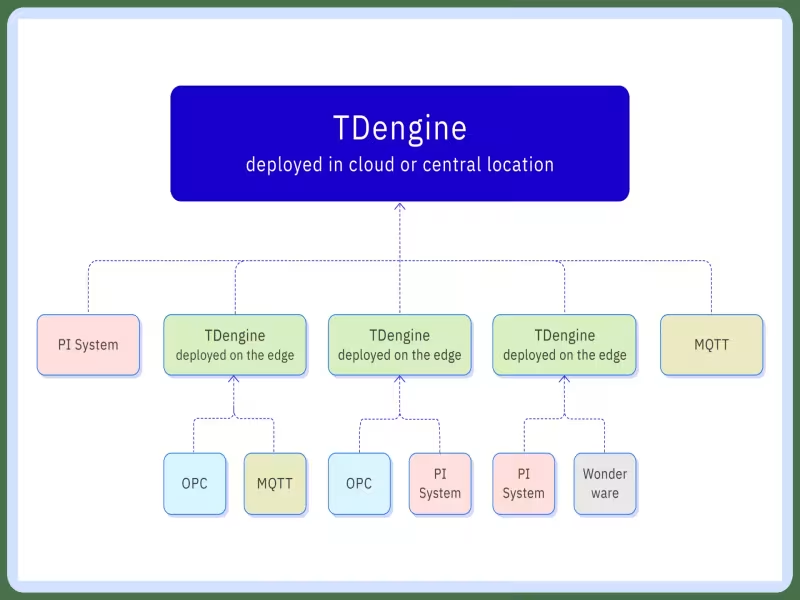
TDengine TSDB Enterprise documents a SparkplugB ingestion connector that subscribes to MQTT brokers and maps incoming data into time-series tables. That is a documented ingestion capability, not a guarantee of complete Sparkplug conformance across all roles, versions or deployments. TDengine IDMP addresses a separate layer, using industrial data modeling and asset trees for equipment context above raw telemetry.