Technical Analysis

Sparkplug B vs Plain MQTT: Architects Weigh Shared Contract Costs

Image
Sparkplug B vs Plain MQTT: Architects Weigh Shared Contract Costs

Global – October 30, 2026 -- Industrial architecture teams choosing between Sparkplug B and plain MQTT are really comparing the cost of maintaining a custom application contract with the cost of adopting and operating a shared one. Sparkplug B defines industrial conventions on top of MQTT. It does not replace MQTT or turn a broker into a historian.

Plain MQTT leaves naming, typing and state to the application

MQTT provides client-to-broker publish/subscribe messaging, topic names, topic filters, QoS choices, retained messages, sessions and a Last Will mechanism. The specification does not require JSON, a device model, metric names, data types or an industrial topic namespace.

Teams using plain MQTT must therefore define five things themselves:
Memory Squeeze Pushes Cellular IoT Makers Toward Embedded Processing

Image
Memory Squeeze Pushes Cellular IoT Makers Toward Embedded Processing

Global – – October 30, 2026 -- Rising memory costs and constrained memory supply are forcing cellular IoT device makers to decide whether their own engineers or the module supplier will requalify components when parts become unavailable, according to Telit Cinterion.

Hosted designs leave memory qualification with the manufacturer

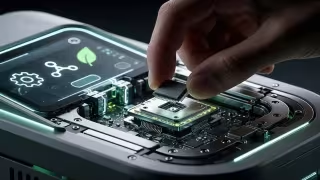
In a hosted architecture, a host processor runs the application software while a separate cellular module provides connectivity. External memory and power management circuitry support the processor. The manufacturer keeps direct control over the application, and less software depends on a specific module, which simplifies switching suppliers.

If the selected memory becomes unavailable, engineers must qualify a replacement and verify its compatibility with the host processor. If it is not fully compatible, they may need to adapt the memory-communication software and revalidate the design.

MQTT Brokers Cannot Replace Historians in Industrial Pipelines

Image
MQTT Brokers Cannot Replace Historians in Industrial Pipelines

Global – October 27, 2026 -- Even QoS 2's exactly-once delivery covers only one MQTT sender-receiver flow, not the subscriber's database transaction, so an MQTT broker cannot serve as an industrial historian. A broker moves messages between publishers and subscribers. A historian keeps time-indexed records that engineers can query, trend and aggregate later.

Broker retention mechanisms fall short of historical storage

A retained message is only the current message for a topic, and a new one normally replaces the prior state. A persistent session preserves subscriptions and eligible queued messages for an offline client. Session expiry, broker capacity, message expiry and administrative policy can all limit what remains.

Broker persistence protects broker state across restarts. It does not define table schemas, engineering timestamps, multi-year retention, SQL queries, aggregates or audit-ready change history.