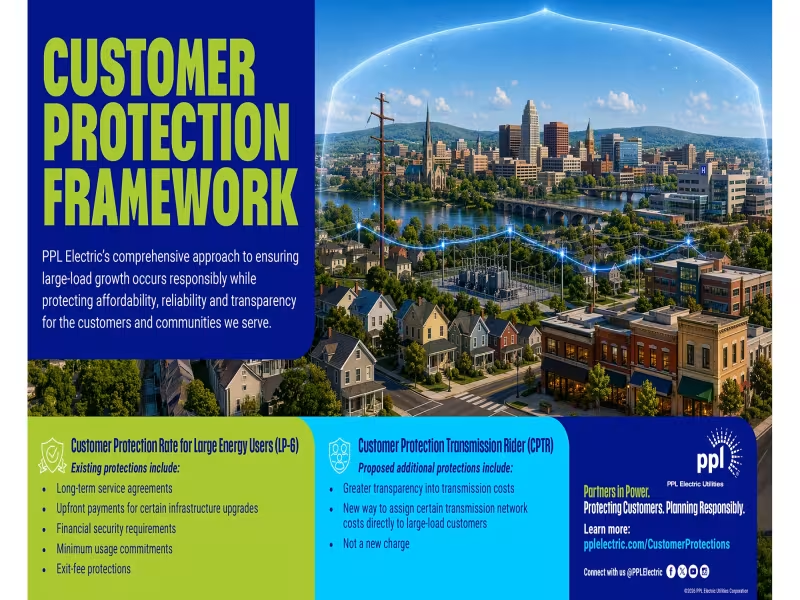
Allentown, Pa. – September 17, 2026 -- PPL Electric Utilities has filed a proposal with the Pennsylvania Public Utility Commission to create a new billing mechanism that would directly assign certain transmission network upgrade costs tied to large energy users, including data centers, to those specific customers rather than spreading them across its 1.5 million residential and business accounts.
New rider replaces existing transmission charge without adding fees
The proposed Customer Protection Transmission Rider (CPTR) would replace the utility's current Transmission Service Charge (TSC). PPL Electric says the change does not introduce a new charge but instead restructures how transmission costs are recovered, making them visible as a dedicated line item on customer bills rather than embedded within supply charges.
Large-load customers under LP-6 rate class face direct cost allocation
The mechanism specifically targets customers served under PPL Electric's LP-6 rate class, a category built for large energy users whose connection to the grid can require substantial infrastructure investment. The proposal builds on the company's existing Customer Protection Framework, which already mandates financial and usage commitments from large-load customers before they can connect to the system.
Pennsylvania utility responds to rising data center demand
PPL Electric cited growing interest from data centers and other large energy users as the driver behind the filing. Christine Martin, president of PPL Electric Utilities, said the proposal would make transmission costs easier to see on bills while assigning certain transmission costs tied to large energy users directly to those customers, calling it a step to support growth while protecting residential and small business ratepayers.
Regulatory approval could shift costs away from residential ratepayers by 2028
If approved, the CPTR is expected to take effect in the first quarter of 2028. PPL Electric projects that residential and small business customers would benefit from an expected reduction in transmission costs as large-load customers begin contributing a larger share of network expenses under the new framework.