SHERIDAN, WYOMING - April 3, 2026 - Beverage and food packaging lines are growing more complex as producers demand higher throughput, greater format flexibility, and tighter sustainability targets simultaneously - and equipment suppliers that cannot demonstrate integrated line mastery at major trade events risk losing specification rounds to competitors who can. Sidel, a global provider of packaging and processing solutions, is using interpack 2026 in Düsseldorf to position its integrated line management capabilities as a direct answer to this convergence of pressures.
Line complexity as the central challenge
Packaging line complexity has increased sharply as manufacturers attempt to run more SKUs, introduce lightweight packaging, and integrate automated quality inspection - all on the same physical line. A single changeover now involves dozens of interdependent machine parameters, and unplanned downtime during format switches carries direct revenue consequences at the scale of modern high-speed filling operations.
Sidel's interpack 2026 presence is structured around demonstrating how its equipment and digital tools address this complexity end-to-end, from primary packaging through to secondary and end-of-line. The company's focus on mastering both packaging formats and full-line integration signals a strategic shift away from selling individual machines toward selling line performance outcomes.
Interpack 2026 showcase scope
Interpack 2026, held in Düsseldorf, Germany, is one of the largest global trade fairs for packaging and processing technology, drawing exhibitors and buyers across food, beverage, pharmaceutical, and consumer goods sectors. Sidel's participation targets beverage producers and contract packagers evaluating line upgrades or new greenfield investments in the near term.
The company's exhibit is expected to highlight solutions spanning stretch blow molding, filling, labeling, and conveying, with an emphasis on how these subsystems are orchestrated through integrated controls and data visibility. Demonstrating cross-system coherence at a venue of interpack's scale gives Sidel an opportunity to compress what would otherwise be multi-visit evaluation processes into a single, concentrated assessment experience for procurement teams.
Technology and operational positioning
The packaging equipment sector is under pressure to deliver digital connectivity alongside mechanical performance. Buyers increasingly require equipment suppliers to provide real-time operational data, predictive maintenance hooks, and remote diagnostics as standard deliverables rather than premium add-ons. Sidel's interpack strategy reflects this expectation by framing line complexity management as both a mechanical and a data challenge.
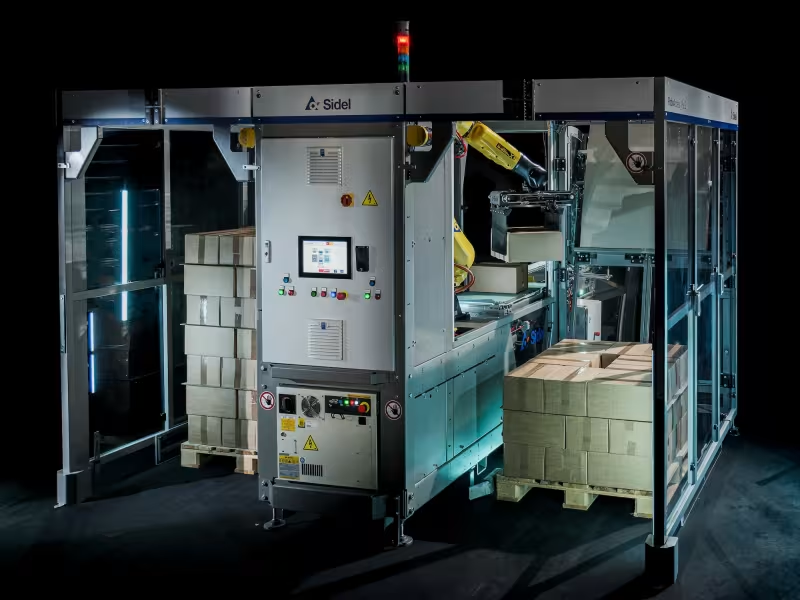
End-of-line automation and secondary packaging integration are also critical evaluation criteria for producers seeking to reduce manual labor dependency. As labor costs rise across European and North American production facilities, the ability to demonstrate fully automated downstream workflows - palletizing, wrapping, and case packing - within an integrated line architecture directly affects total cost of ownership calculations that procurement and engineering teams carry into vendor selection.
Business impact
Procurement leads and capital equipment buyers at beverage and food manufacturers face vendor selection decisions in 2026 against a backdrop of rising operational complexity and constrained capital budgets. Sidel's interpack appearance provides a concentrated evaluation window: buyers who attend can assess integrated line performance claims against live demonstrations rather than relying on reference site visits, compressing due diligence timelines and reducing evaluation costs.
Operations directors and engineering managers evaluating line modernization projects should factor Sidel's integrated line positioning into technology roadmap reviews. Suppliers demonstrating end-to-end line orchestration - rather than point machine excellence - are increasingly preferred in multi-year supply agreements, since they reduce the number of integration interfaces a plant must manage. For producers planning 2026 or 2027 capital expenditure cycles, interpack represents a high-density decision-support event where comparative vendor assessments can be conducted in days rather than months.