Clinical Trial Results

Lupus MSC Therapy Doubles Placebo Response in Phase II Trial

Image

Lupus MSC Therapy Doubles Placebo Response in Phase II Trial

Orlando – November 04, 2026 -- A single infusion of high-dose mesenchymal stromal cells (MSCs) produced treatment responses in nearly half of participants with refractory lupus, more than double the placebo rate, according to a Phase II trial funded by the Lupus Foundation of America (LFA). The results will be presented at the American College of Rheumatology (ACR) Convergence 2026 in Orlando, November 6-11.

MSC trial results support a confirmatory study

The multicenter, double-blind, placebo-controlled study (Abstract #LB17) will be presented by Dr. Gary Gilkeson on November 10. Its findings support further evaluation of high-dose MSCs in a confirmatory trial.

TJ Bio's Plonmarlimab Hits 83.3% Response Rate in Phase 2 MAS Trial

Image
TJ Bio's Plonmarlimab Hits 83.3% Response Rate in Phase 2 MAS Trial

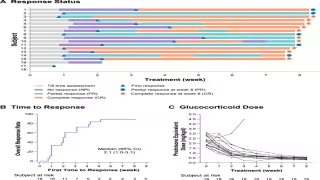
HANGZHOU – November 04, 2026 -- TJ Biopharma's GM-CSF antibody plonmarlimab achieved an 83.3% overall response rate at Week 8 in the Phase 2 PRIME-1 study of macrophage activation syndrome (MAS), according to results now published in the Journal of Hematology & Oncology.

PRIME-1 enrolled 18 patients who had failed high-dose glucocorticoids

The open-label, single-arm, multi-center study treated patients who were refractory to, or had relapsed after, high-dose glucocorticoid therapy. Fifteen of 18 patients achieved a complete or partial response. Median time to response was 2.1 weeks, with the earliest response recorded on Day 5.

NUH, NUS Medicine Test Personalised TMS in Two Brain Studies

Image
NUH, NUS Medicine Test Personalised TMS in Two Brain Studies

SINGAPORE – November 05, 2026 -- Two of the four patients with severe, treatment-resistant obsessive-compulsive disorder (OCD) who completed a personalised transcranial magnetic stimulation (pTMS) trial at National University Hospital (NUH) and NUS Medicine showed substantial symptom reductions, including one patient whose questionnaire score fell to zero six weeks after treatment.

OCD pilot: one patient's symptoms fell 78% in a week

The completed study is one of the first worldwide to guide intermittent theta-burst stimulation (iTBS) with "causal" brain circuits, those in which deep brain stimulation (DBS) is known to relieve OCD symptoms. Four participants enrolled between January and July 2026, and two withdrew before finishing. The other two completed 40 short iTBS sessions over five days.

Ascletis' Oral GLP-1 ASC30 Cuts HbA1c 1.7% in Phase II Diabetes Trial

Image
Ascletis' Oral GLP-1 ASC30 Cuts HbA1c 1.7% in Phase II Diabetes Trial

HONG KONG – October 29, 2026 -- Ascletis Pharma (HKEX: 1672) reported that its oral small molecule GLP-1 receptor agonist ASC30 cut HbA1c by a placebo-adjusted 1.7% at the 40 mg dose, 1.6% at 60 mg and 1.7% at 80 mg in a U.S. Phase II study in type 2 diabetes. The 13-week trial (NCT07321678) met its primary endpoint and all secondary endpoints, the company said.

ASC30 delivers placebo-adjusted weight loss of up to 4.4% with no plateau

Placebo-adjusted body weight reductions at 13 weeks were 4.4% (40 mg, n=20), 3.8% (60 mg, n=29) and 4.0% (80 mg, n=28). No weight plateau was observed. Baseline average body weight was 93.7 kg. The weight results were statistically significant versus placebo (p = 0.001 to 0.003).

Sobi's Pozdeutinurad Hits Phase 3 Gout Endpoint, 69.2% Reach Target

STOCKHOLM – October 29, 2026 -- Sobi's investigational gout drug pozdeutinurad (AR882) met the primary endpoint of the Phase 3 REDUCE-2 study, with 69.2% of patients on the 75 mg dose reaching serum urate (SU) below 6 mg/dL at month 6, against 8.1% on placebo. The company is presenting the late-breaking data at ACR Convergence 2026.

Both pozdeutinurad doses beat placebo on the primary endpoint at month 6

REDUCE-2 randomised 811 gout patients to pozdeutinurad 75 mg, pozdeutinurad 50 mg or placebo. In the 50 mg arm, 56.6% of patients achieved SU below 6 mg/dL at month 6. Both doses were significant versus placebo (p<0.0001).

Pozdeutinurad is a once-daily oral, highly selective URAT1 inhibitor. Sobi is developing it for uncontrolled gout, defined as SU above 6 mg/dL with persistent flares and/or tophi despite oral urate-lowering therapy.

Lynk's Zemprocitinib Sustains 91.8% ACR20 Response Through Week 76

Image
Lynk's Zemprocitinib Sustains 91.8% ACR20 Response Through Week 76

Hangzhou – October 29, 2026 -- Lynk Pharmaceuticals reported that its oral JAK1 inhibitor zemprocitinib sustained a 91.8% ACR20 response rate at Week 76 in rheumatoid arthritis patients who had failed or could not tolerate biologic therapy, with no new safety signals in the pivotal Phase III trial.

Trial met primary endpoint at Week 24 before long-term extension

The double-blind, placebo-controlled study randomized 430 patients with moderate-to-severe active RA and prior bDMARD inadequate response or intolerance; 429 received at least one dose. Patients received zemprocitinib 12 mg twice daily or placebo for 24 weeks. The trial met its primary ACR20 endpoint and key secondary endpoints versus placebo (p<0.0001). Patients then continued or switched to active treatment, with efficacy and safety tracked through Week 76 and a 4-week safety follow-up.

Amgen's Dazodalibep Cuts Sjögren's Disease Activity in Phase 3 Trial

Image
Amgen's Dazodalibep Cuts Sjögren's Disease Activity in Phase 3 Trial

Thousand Oaks – October 29, 2026 -- Amgen's dazodalibep reduced systemic disease activity in Sjögren's disease patients by 5.6 points on the ESSDAI scale at Week 48 in the Phase 3 OASIZ-301 trial, against 3.8 points for placebo. The company will present the late-breaking data at the American College of Rheumatology (ACR) Convergence 2026.

Both dazodalibep regimens beat placebo on the primary endpoint

Patients entered OASIZ-301 with an average ESSDAI score of 10.2. The trial enrolled approximately 621 adults with moderate-to-severe systemic disease activity (ESSDAI of at least 5).

The 1,500 mg every-four-weeks regimen cut scores by a least-squares mean of 5.6 points, 1.8 points better than placebo (adjusted p<0.001). The 3,000 mg every-12-weeks regimen cut scores by 5.2 points, 1.4 points better than placebo (adjusted p=0.010). Treatment effects appeared as early as four weeks.

Vanda's NEREUS Cuts Semaglutide Vomiting 27% in Phase III Trial

Image
Vanda's NEREUS Cuts Semaglutide Vomiting 27% in Phase III Trial

WASHINGTON – October 28, 2026 -- Vanda Pharmaceuticals (Nasdaq: VNDA) reported that NEREUS (tradipitant) cut the incidence of semaglutide-induced vomiting by 27% in a Phase III trial. Vomiting occurred in 43.0% of treated participants (61/142) versus 58.5% on placebo (96/164), with a p-value of 0.006.

The company plans to discuss the data with the U.S. Food and Drug Administration (FDA). It intends to file a supplemental New Drug Application (sNDA) for preventing vomiting associated with GLP-1 receptor agonist therapy.

NEREUS lowers combined vomiting and severe nausea by 35% in key secondary endpoint

The key secondary endpoint combined any vomiting with worst nausea of 3 or higher. It occurred in 33.1% of participants on NEREUS (47/142) versus 50.6% on placebo (83/164), a 35% relative reduction (p=0.002).

Henlius Serplulimab Posts 12.4-Month Median OS in U.S. SCLC Study

SHANGHAI – October 27, 2026 -- Henlius' serplulimab combined with chemotherapy delivered a median overall survival (OS) of 12.4 months versus 10.2 months for atezolizumab plus chemotherapy in the U.S. ASTRIDE study of first-line extensive-stage small cell lung cancer (ES-SCLC). The company presented the data at the European Society for Medical Oncology (ESMO) Congress 2026.

ASTRIDE shows a numerical OS edge but no formal superiority test

The hazard ratio was 0.82 (95% CI, 0.56-1.20), at a median follow-up of 14.1 months and a data cutoff of February 18, 2026. The trial was descriptive, with no formal hypothesis testing for superiority or noninferiority planned.

One-year OS rates were 52.4% for serplulimab and 41.4% for atezolizumab. Two-year OS rates were 32.2% and 17.6%, respectively. The serplulimab arm had more patients with liver metastasis (49.5% vs 40.0%).

Cadrenal's CAD-1005 Cuts Thrombotic Events 25% in HIT Phase 2

PARIS – – October 27, 2026 -- Cadrenal Therapeutics (Nasdaq: CVKD) reported that its 12-lipoxygenase inhibitor CAD-1005 reduced new or worsening thrombotic events by more than 25 percentage points versus placebo in a Phase 2 trial in heparin-induced thrombocytopenia (HIT), with 50% of treated patients affected versus more than 75% on placebo. The data were presented as one of three late-breaking abstracts at the ISTH 2026 Congress in Paris.

Trial is first randomized, blinded, placebo-controlled study in HIT

Principal Investigator Dr. Steven E. McKenzie delivered the oral presentation, which Cadrenal describes as the first randomized, blinded, placebo-controlled trial in HIT patients. CAD-1005 was formerly known as VLX-1005. The study was not sufficiently powered for statistical significance.