Research Findings

Energy per token fails to predict cost per correct AI answer

Image

Energy per token fails to predict cost per correct AI answer

California – November 02, 2026 -- A local-inference benchmark on an AMD Strix Halo machine found that gemma-3-27b delivers a correct answer for 729 joules at 98% accuracy, while the faster, leaner trinity-nano needs 1,004 joules at 39% accuracy.

The test covered 27 local models on 190 small tasks with checkable answers, each run under two prompts, with a power meter running. Energy was priced at California summer rates of 34 cents per kilowatt-hour off-peak and 58 cents on-peak. The rank correlation between energy per token and energy per correct answer is +0.27, close to no relationship.


Asthma Campaign Drew 95,000 Views, 62% From Just Four U.S. States

Image
Asthma Campaign Drew 95,000 Views, 62% From Just Four U.S. States

Fairfax, Va. – November 02, 2026 -- Nearly 95,000 social media views of Allergy & Asthma Network's Oral Corticosteroids (OCS) Overexposed campaign were recorded, and 62% of them came from four large states, according to research the nonprofit will present at the American Public Health Association (APHA) 2026 Annual Meeting and Expo in San Antonio, Texas.

Selected states with higher asthma burden and greater barriers to healthcare accounted for smaller shares of views. The campaign educates patients about the risks of repeated oral corticosteroid use and encourages informed conversations with healthcare providers.

Navigation Use in Sinus Surgery Rises to 41% From 29% Since 2018

Image
Navigation Use in Sinus Surgery Rises to 41% From 29% Since 2018

United States – October 27, 2026 -- Computer-assisted navigation was used in 41.0% of endoscopic sinus surgeries in 2026, up from 29.2% in 2018, a 40.4% relative increase, according to a Truveta Data analysis of adult patients.

Navigation used in 35.5% of 98,971 procedures over the study period

The analysis covered endoscopic sinus surgeries performed between January 1, 2018, and August 31, 2026. Visits within 90 days of a prior surgery code were counted as a single procedure. Navigation was identified through a specific add-on CPT code.

CGM Users on Basal Insulin Show 45% Lower One-Year Mortality Risk

Image
CGM Users on Basal Insulin Show 45% Lower One-Year Mortality Risk

Europe – October 27, 2026 -- Continuous glucose monitoring (CGM) was associated with a 45% lower risk of death at one year among adults with type 2 diabetes on basal insulin, according to a study presented at the 2026 European Association for the Study of Diabetes (EASD) Annual Meeting.

The analysis used Truveta Data to track nearly 28,000 adults with type 2 diabetes receiving basal insulin therapy. Researchers combined longitudinal electronic health record (EHR) and mortality data in a target trial emulation that compared CGM users with non-users.

CGM users show 36% lower two-year mortality risk

At one year, CGM users had a 45% lower risk of death from any cause than non-users. At two years, the reduction was 36%.

Antibiotic Use Tied to 1.5x Higher IBS Odds at Age 24, Study Finds

Image
Antibiotic Use Tied to 1.5x Higher IBS Odds at Age 24, Study Finds

Barcelona – October 19, 2026 -- Young adults who received antibiotics from childhood onward had 1.5 times the odds of irritable bowel syndrome (IBS) at age 24 (95% CI 1.0–2.2), according to a study presented at UEG Week 2026.

Study tracks 2,853 Swedish participants from age 9–11

Researchers analysed data from 2,853 participants in the Swedish BAMSE birth cohort. Antibiotic prescriptions came from the Swedish Prescribed Drug Register, covering 2005, when participants were aged 9–11, until one year before IBS was assessed at age 24.

At 24, 10.0% of participants had IBS. Antibiotic exposure was higher among those with IBS, at 87.8%, versus 80.2% among those without. The 1.5-times odds ratio was adjusted for sex and family socioeconomic status.

MUSC Virtual Nursing Scales to 57 Units, Frees 10.2 FTEs of Capacity

Image
MUSC Virtual Nursing Scales to 57 Units, Frees 10.2 FTEs of Capacity

South Carolina – October 17, 2026 -- The Medical University of South Carolina (MUSC) expanded its virtual nursing program from five inpatient units to 57 units across four regions in about two and a half years, and estimates $2.4 million in savings from reduced nurse turnover on early adopter units, according to research from its Telehealth Center of Excellence.

MUSC program freed capacity equal to 10.2 full-time nurses

Across more than 23,500 virtual nursing encounters, the program generated capacity equivalent to approximately 10.2 full-time nursing positions. The program runs on the ThinkAndor® platform.

Of the bedside nurses surveyed, 87% reported a decrease in overall workload. Seventy-six percent said they spent less time documenting admissions and discharges, and 68% reported more time for patient rounding.

Local LLM Cost per Right Answer Jumps Up to 64x on Hard Questions

Image
Local LLM Cost per Right Answer Jumps Up to 64x on Hard Questions

Southern California – October 15, 2026 -- The cheapest local language model for easy questions costs 37 times more per correct answer on hard questions, according to power-metered tests of 27 models on a Strix Halo system. The model, qwen3-30b-a3b-instruct, delivers right answers at 3.6 cents per thousand on easy work. On hard questions the price rises to $1.35 per thousand. Two other models in the 11-model comparison only doubled in cost over the same jump.

Difficulty tax ranges from 2x to 64x across 11 models

The tester ran 11 of the 27 models on both an easy suite and hard questions, and calls the cost ratio between the two the "difficulty tax." It runs from 2x to 64x. The easy suite has 190 checkable tasks across seven categories, including a 20-step stack-and-total exercise. The hard set is the first 100 of 198 GPQA Diamond questions, which are expert-written physics, chemistry and biology problems.

MAPPA Survey: Over Half of PID Patients Diagnosed After Age 18

Image
MAPPA Survey: Over Half of PID Patients Diagnosed After Age 18

Maastricht – October 14, 2026 -- More than half of respondents to the MAPPA patient survey received a primary immunodeficiency (PID) diagnosis after age 18, and 28% reported permanent damage at the time of diagnosis, according to preliminary findings Kedrion Biopharma and AIP APS will present at ESID 2026.

MAPPA survey expands from Italy to Portugal, Spain and Turkey

The survey was developed by AIP APS, the Italian Association for Primary Immunodeficiencies, in collaboration with Kedrion. It collects real-world data on the experiences of people living with PIDs across Europe. The expansion from Italy to Portugal, Spain and Turkey is expected to provide new evidence on patient pathways, diagnostic journeys and unmet needs.

AIP APS President Alessandro Segato said that turning patient experiences into evidence helps identify shared needs that might otherwise remain unseen, and can strengthen diagnosis, care and support at a European level.

Purina Study: Lean Labradors Lived 1.8 Years Longer

Image
Purina Study: Lean Labradors Lived 1.8 Years Longer

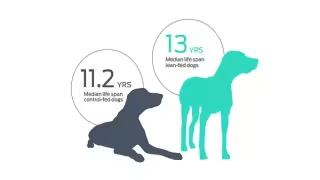
St. Louis – October 13, 2026 -- Labrador Retrievers kept lean from puppyhood lived a median of 1.8 years longer than heavier matched littermates, according to findings from the 14-year Purina Life Span Study, which the Purina Institute is revisiting on the study's 25th anniversary.

Lean-fed dogs reached a median life span of 13.0 years versus 11.2 years for controls

The study followed 48 Labrador Retrievers from seven litters. Each pair of matched littermates received the same complete and balanced diet, but one dog was fed 25% less food than its sibling to maintain lean body condition. The sibling served as the control. The Purina Institute describes it as the first-ever canine lifelong dietary study.

The 1.8-year gap equals a 15% extension in median life span. Lean-fed dogs also stayed free of treatment for age-related chronic conditions for longer, reaching 12.0 years before treatment was required versus 9.9 years for control-fed dogs.

Resero Bio Urine Test Predicts Bladder Cancer Treatment Response

Image
Resero Bio Urine Test Predicts Bladder Cancer Treatment Response

San Carlos, Calif. – October 05, 2026 -- A non-invasive urine test can now predict whether bladder cancer patients will respond to immunotherapy before treatment even begins, according to a Stanford-led study published in Nature Medicine and announced by Resero Bio.

Study analyzed 683 urine samples to validate cell-free RNA platform

Researchers from Stanford Cancer Institute and the VA Palo Alto Health Care System used uRARE-seq, Resero Bio's proprietary targeted cfRNA sequencing method, to analyze 683 urine samples from bladder cancer patients and controls. The platform distinguished low-grade from high-grade tumors and non-muscle invasive from muscle-invasive disease, determinations that currently require tissue biopsy or surgical resection.