autonomous_systems

Leidos Autonomous Vessels Log 200,000 Miles in Navy Deployments

Image
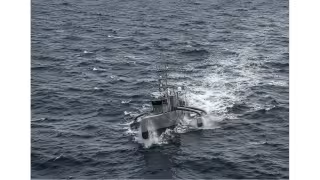
Leidos Autonomous Vessels Log 200,000 Miles in Navy Deployments

Reston, Virginia – September 12, 2026 -- Leidos-built autonomous surface vessels Sea Hunter and Seahawk have logged more than 200,000 nautical miles and 14,000 hours of autonomous operation across the company's maritime portfolio, marking over a decade of at-sea autonomy development.

Sea Hunter completes 2,000-nautical-mile autonomous transit during RIMPAC 2026

Sea Hunter served as the exercise's only Medium Unmanned Surface Vessel (MUSV), operating autonomously from Pearl Harbor, Hawaii, to San Diego, California, a distance exceeding 2,000 nautical miles. The vessel demonstrated autonomous surveillance and manned-unmanned teaming, functioning both as part of a larger naval force and as a stand-alone platform.

Iwa Robotics Launches HAWK, CANARY, PELICAN Drone Fleet for Wildfires

Los Angeles – September 09, 2026 -- Iwa Robotics, Inc. has introduced a three-platform autonomous drone fleet designed to detect, diagnose and suppress urban wildfires, unifying the aircraft under a single operating framework called the Discovery and Resolution Fleet (DRF).

Three specialized aircraft cover the full wildfire response lifecycle

The Los Angeles-based autonomous field systems company unveiled HAWK, a long-endurance reconnaissance aircraft for early detection; CANARY, a sensing platform that diagnoses fire behavior and optimizes crew engagement; and PELICAN, a self-guided aerial suppression aircraft built to resolve hot spots and establish fire lines through continuous drenching.

Military Robots Market to Triple to $128.92B by 2031

Image
Military Robots Market to Triple to $128.92B by 2031

Delray Beach, Fla. – September 08, 2026 -- The global military robots market is projected to grow from USD 42.15 billion in 2026 to USD 128.92 billion by 2031, a 25.1% compound annual growth rate, according to MarketsandMarkets. Unit volumes are forecast to climb from 74,817 in 2026 to 109,010 by 2031 as armed forces expand deployment of unmanned ground, air and maritime systems.

Marine systems post the steepest growth rate through 2031

The marine segment is set to register the highest CAGR at 26.7% between 2026 and 2031, driven by naval demand for unmanned surface and underwater vehicles used in mine detection and underwater threat identification. The Royal Navy is introducing autonomous vessels for mine hunting, while the US Navy is expanding unmanned maritime systems for mine countermeasures to reduce personnel exposure in high-risk waters.