Cybersecurity

Cyolo Launches AI Tool to Flag Risky OT Remote Sessions in Real Time

Image

Cyolo Launches AI Tool to Flag Risky OT Remote Sessions in Real Time

Miramar, Fla. – September 30, 2026 -- Cyolo has launched Live Risk Detection, an AI-powered capability that monitors active remote sessions in operational technology (OT) environments and alerts security teams within seconds of detecting cyber or operational risk.

Cyolo targets the gap between login verification and session-long threat monitoring

The company, a provider of secure connectivity for critical infrastructure and OT, said the tool addresses a scaling problem: as employees, vendors, and OEMs increasingly perform critical OT work remotely
Ransomware Shifts to Directory Destruction, Bypassing 47.8% of Scans

Image
Ransomware Shifts to Directory Destruction, Bypassing 47.8% of Scans

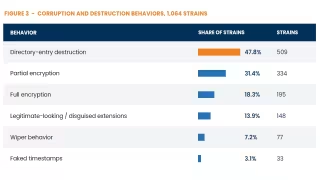
Holmdel, N.J. – September 30, 2026 -- Index Engines' CyberSense Research Lab found that 47.8% of 1,064 ransomware strains detonated in the first half of 2026 relied on directory-entry destruction, more than double the 18.3% that used full encryption, marking a shift away from techniques that trigger standard security scans.

Attackers now suppress the telltale signs security tools rely on

The lab documented new ransomware built to preserve file extensions and timestamps, maintain low entropy, and encrypt only selected sections of files slowly enough to avoid detection thresholds. One variant, Encoder, destroyed file content while leaving names, sizes, timestamps, and entropy readings unchanged, according to Jim McGann, CMO of Index Engines. A surface scan would report that data as clean, McGann said, while CyberSense identified the corruption by analyzing file content and structure directly.

CUJO AI Launches Tool to Pinpoint Proxy-Hijacked Home Devices

Image
CUJO AI Launches Tool to Pinpoint Proxy-Hijacked Home Devices

Los Angeles – September 30, 2026 -- CUJO AI has introduced a new network intelligence capability that identifies the exact device inside a subscriber's home being used as a residential proxy, closing a detection gap that previously left operators able only to flag suspicious IP addresses without knowing which device was compromised.

New tool pairs device-level detection with remediation guidance and real-time alerts

The capability runs at the home gateway, identifying which subscriber network is hosting proxy activity and pinpointing the specific device generating it. It classifies the activity type, such as ad fraud or malware, and delivers device-specific remediation steps alongside real-time notifications to operators.

TrendAI Expands Claude Compliance API Integration for AI Agent Oversight

Image
TrendAI Expands Claude Compliance API Integration for AI Agent Oversight

Dallas – – September 29, 2026 -- TrendAI, the AI security business unit of Trend Micro Incorporated (TYO: 4704; TSE: 4704), has expanded its integration with Claude's Compliance API inside TrendAI Vision One, giving security teams visibility into AI agent prompts, responses and tool calls alongside existing security telemetry.

Integration now covers Claude Code and Cowork session transcripts

The expanded integration pulls in session records for Claude Code and Cowork from Claude Enterprise, each tied to a verified user. It builds on the initial TrendAI-Anthropic integration announced in June 2026, extending coverage to how engineering and knowledge-work teams use AI agents on a daily basis.

InventHelp Client Offers INTRACE Security Tech for Licensing

Image
InventHelp Client Offers INTRACE Security Tech for Licensing

Pittsburgh – September 29, 2026 -- A California-based inventor has developed INTRACE, a security control plane designed to verify identity and generate tamper-evident records for every digital interaction rather than only at login. InventHelp, the Pittsburgh-based invention-services firm, announced the technology is now available for licensing or sale to manufacturers and marketers.

INTRACE targets unverified requests across AI, payments, and connected devices

Billions of digital requests occur every second across apps, payment systems, and AI-driven interactions, with most trusted automatically, according to the inventor. INTRACE is built to authenticate the origin of each request and flag unauthorized or disputed activity as it happens, rather than relying solely on perimeter checks.

Arctic Wolf CEO Nick Schneider Joins Yardstik Board After $30M Raise

Image
Arctic Wolf CEO Nick Schneider Joins Yardstik Board After $30M Raise

Minneapolis – September 29, 2026 -- Yardstik, a Minneapolis-based workforce trust platform, has appointed Nick Schneider, President and CEO of cybersecurity firm Arctic Wolf, to its board of directors, weeks after closing a $30 million Series B round led by Harbert Growth Partners.

Schneider brings two decades of cybersecurity scaling experience to Yardstik's board

Schneider has led Arctic Wolf since 2021, growing it into one of the largest privately held cybersecurity companies and a Forbes Cloud 100 and Fortune Cyber 60 honoree. Under his tenure, Arctic Wolf launched the Aurora Agentic SOC and was named a Leader in the 2026 IDC MarketScape for Worldwide Managed Detection and Response Service for Midmarket. He previously ran North American sales at Code42 and held senior sales roles at Compellent Technologies through its IPO and acquisition by Dell.

Threat Intelligence Market to Double to $26.68B by 2031

Image
Threat Intelligence Market to Double to $26.68B by 2031

Delray Beach, Fla. – – September 29, 2026 -- The global threat intelligence market is projected to grow from $13.15 billion in 2026 to $26.68 billion by 2031, a 15.2% compound annual growth rate, according to MarketsandMarkets. The market stood at $11.55 billion in 2025, reflecting accelerating enterprise and government spending on AI-driven detection and proactive risk management amid rising cyberattack volumes.

TrendAI Launches AI Vulnerability Scanner Backed by ZDI Bug Bounty Research

Image
TrendAI Launches AI Vulnerability Scanner Backed by ZDI Bug Bounty Research

Dallas – – September 29, 2026 -- TrendAI, the enterprise AI security unit of Trend Micro (TYO: 4704; TSE: 4704), has entered private preview with TrendAI Vision One Autonomous Vulnerability Discovery, a service that pairs an agentic AI engine with validation from the Zero Day Initiative (ZDI), described as the world's largest vendor-agnostic bug bounty program.

Engine outperforms rivals on CyberGym leaderboard

The service runs on an agentic system code-named AESIR, built primarily on Anthropic models, and deployed and operated on Amazon Bedrock from Amazon Web Services. When tested against the CyberGym benchmarking framework, the engine scored higher than both single-model and other agentic systems on the leaderboard. TrendAI states internal benchmarking shows its models identify more true-positive vulnerabilities with fewer false positives than leading vulnerability scanning and static analysis tools.

IGEL Enters Latin America Via Distribution Deal With Adistec

Image
IGEL Enters Latin America Via Distribution Deal With Adistec

Fort Lauderdale, Fla. – – September 29, 2026 -- IGEL has signed a strategic distribution agreement with Adistec to bring its Adaptive Secure Endpoint Platform into Latin America, the companies announced at Omnissa ONE 2026. The deal marks IGEL's formal market entry into the region and adds Adistec as a new regional distribution partner tasked with technical enablement, training, and go-to-market support for resellers, system integrators, and technology service providers.

Leidos Launches AI Agents to Triage Federal Cyber Alerts 24/7

Image
Leidos Launches AI Agents to Triage Federal Cyber Alerts 24/7

Reston, Va. – – September 29, 2026 -- Leidos (NYSE:LDOS) unveiled UpHold EffectTM Agentic SOC Automation, a new capability using AI agents to triage cybersecurity alerts around the clock for federal security operations center teams, addressing a surge in alert volume driven by automated adversary attacks.

AI agents investigate threats while analysts retain final control over actions

The system works continuously to triage incoming alerts, gather contextual data and assemble findings for human analyst review. Customers determine the scope of AI authority, deciding whether the technology can only recommend actions or is permitted to execute them directly, based on mission requirements and risk tolerance.

Every AI decision generates an auditable record documenting what the system observed, concluded and proposed or executed, according to Leidos.