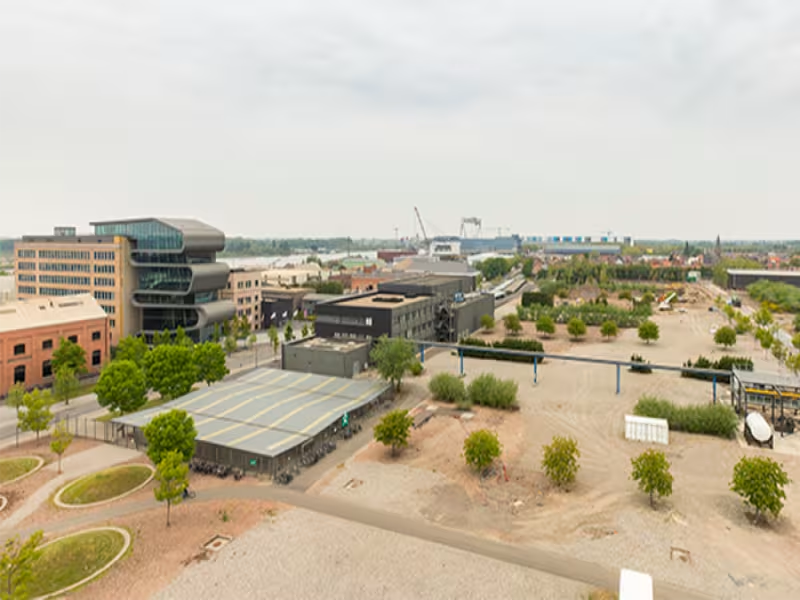
SHERIDAN, WYOMING - April 13, 2026 - Umicore's Hoboken refinery in Belgium has completed a multi-decade environmental and operational transformation that repositioned one of the world's largest metal recycling facilities from a source of community health concern to a benchmark for sustainable industrial co-existence. With origins dating to 1887, the site now processes several hundred thousand tons of materials annually, extracting more than 20 metals through closed-loop processes that directly address global raw material scarcity - a strategic pivot with measurable consequences for battery supply chains, urban mining economics, and industrial permitting models across Europe.
From urban polluter to circular economy hub
The Hoboken site sits along the river Scheldt in a residential district of the Belgian town of the same name, a proximity that created serious public health challenges over more than a century of industrial operation. The refinery processes gold recovered from cell phones, palladium from automotive catalytic converters, and cobalt destined for electric vehicle batteries - materials that would otherwise require virgin mining or end up in landfills or hazardous waste streams. Each year, the site recycles hundreds of thousands of tons of complex secondary materials into purified metals ready for re-entry into high-tech manufacturing.
The shift to a closed-loop business model in 2001 marked a decisive strategic inflection point, predating mass electric vehicle adoption and the resulting explosion in battery-metal demand by more than a decade. That early commitment to recycling-led operations now positions Hoboken as a critical node in European critical mineral supply chains at a moment when regulators and automakers are under intense pressure to reduce dependence on primary extraction.
Lead contamination and the road to remediation
Blood tests in the late 1970s revealed dangerously elevated lead levels in children living closest to the plant, triggering a structured governmental and corporate response. The Flemish environmental authorities established twice-yearly voluntary blood lead monitoring for children in the surrounding area and began systematic air quality measurement and public reporting around the Hoboken perimeter.
Between 2006 and 2008, Umicore and Belgian authorities executed a comprehensive remediation program covering both the plant and surrounding residential areas, including soil cleaning, house decontamination, and the introduction of advanced emission-control technologies. By autumn 2023, average blood lead values in children near the site reached a record low of 2.25 µg/dl - below the 2.9 µg/dl record set in 2019, and below the U.S. Centers for Disease Control reference value of 3.5 µg/dl that has been globally adopted as a benchmark.
Weather, logistics dust, and the green zone response
An unexpected spike in average blood lead values during summer 2020 complicated the narrative despite plant emissions remaining within legal limits. Subsequent analysis attributed the increase to prolonged drought and high wind speeds that mobilized metal-bearing dust from logistics areas on the site, compounded by COVID-19 lockdowns that kept children at home near the perimeter for extended periods.
The episode accelerated a previously shelved initiative: the creation of a five-hectare green zone between the plant boundary and the nearest residential streets. Umicore began purchasing adjacent homes on a voluntary basis, with independent estimators setting offer prices. Construction of the green zone was expected to begin in 2024. Separately, Umicore planted one hectare of vegetation on the neighborhood-facing side of the site and closed a public road running through the facility, rerouting it for safety. These measures establish a physical buffer that reduces dust exposure risk without requiring operational curtailment.
Business impact
Procurement leads and battery materials sourcing teams evaluating secondary-metal supply in Europe should treat Hoboken's operational model as a direct procurement alternative to primary cobalt, palladium, and gold extraction. With global critical mineral supply chains under regulatory and geopolitical stress in 2026, the facility's capacity to process complex scrap into specification-grade output narrows the cost and risk gap between recycled and mined inputs - forcing sourcing decisions that previously defaulted to primary suppliers back onto the table.
Environmental compliance officers and industrial permitting teams at peer smelting and refining operations face an elevated regulatory baseline. The Hoboken trajectory - from permit violations and community health liability to sub-CDC blood lead benchmarks and a voluntary residential buyout program - now functions as a reference case that Flemish and EU environmental regulators can cite when setting permit conditions and community impact requirements for comparable facilities. Operations directors at European refining sites planning capacity expansions in 2026 budget cycles must factor green-zone land acquisition, voluntary remediation commitments, and enhanced dust-suppression infrastructure into capital planning, as regulators increasingly expect these measures as standard rather than voluntary.