BYD

EV Market to Reach $1.31 Trillion by 2035 as Battery Costs Fall

Image

EV Market to Reach $1.31 Trillion by 2035 as Battery Costs Fall

Delray Beach – October 19, 2026 -- The global electric vehicle market will grow from USD 794.59 billion in 2026 to USD 1,312.73 billion in 2035, a 5.7% CAGR, according to MarketsandMarkets. The forecast rests on falling battery costs, faster charging and rising fuel prices that improve EV running economics.

EVs reached one in four new cars sold in 2025

More than 20 million electric cars were sold worldwide in 2025, up 20% year on year, according to the International Energy Agency (IEA). That equals 25% of new car sales. The IEA projects the share will reach 29% in 2026, driven by a strong second quarter.

Fuel prices are adding to demand. The IEA estimates that 2026 oil price increases raised annual fuel savings from driving an EV in the European Union by 35% compared with 2025.
Coherix AI System Cuts Auto Assembly Downtime, Saves $22,500 Weekly

Image
Coherix AI System Cuts Auto Assembly Downtime, Saves $22,500 Weekly

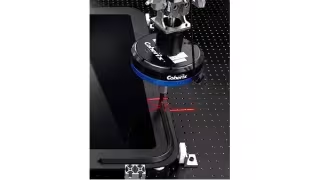
Ann Arbor, Michigan – September 11, 2026 -- Coherix has launched GlassMaster Tracker, a 3D AI-based inspection system that has eliminated up to five hours of weekly assembly line downtime for several automotive customers, generating estimated savings of $22,500 per week.

System tracks parts in real time during adhesive dispensing, not after

Unlike conventional inspection tools that only flag defects post-dispensing, GlassMaster Tracker continuously monitors windshield and battery-cover parts as adhesive is applied, automatically adjusting the robot's dispensing path in real time to compensate for part-to-part variation in glass shape and battery-cover geometry.

BYD's 20-Year Chip Bet Pays Off as China Pushes Auto Semiconductor Localization

Taipei – September 09, 2026 -- A new DIGITIMES Intelligence report finds that BYD's Xuanji A3 smart-driving system-on-chip has entered scaled production on a 4nm automotive-grade process, marking the culmination of a semiconductor strategy the company began building more than two decades ago.

BYD's chip roadmap moved from power devices to 4nm smart-driving silicon

BYD's semiconductor efforts started with IGBT and silicon carbide (SiC) power devices for electric-vehicle control systems, according to the report. That foundation has since expanded into higher-compute automotive SoCs, positioning the Xuanji A3 as a flagship product of a vertically integrated manufacturing model spanning chip design, wafer fabrication and mass production across multiple in-house fabs.

BYD Cracks Top 5 Among German EV Buyers, Registrations Up 141%

Image
BYD Cracks Top 5 Among German EV Buyers, Registrations Up 141%

Frankfurt – September 07, 2026 -- BYD has climbed to fifth place among the most attractive electric vehicle brands for German consumers actively planning a purchase within the next three years, up from 11th place in the general population, according to a new BearingPoint study.

BYD outperforms among active buyers while legacy brands hold overall lead

Across the full sample, Volkswagen leads brand attractiveness at 31%, followed by Audi at 29% and BMW at 28%. Among the subset of consumers with concrete purchase intent, BMW tops the ranking at 44%, ahead of Audi at 31% and Volkswagen at 30%. BYD scores 20% in this group, surpassing Kia, Hyundai, Ford, Tesla and Skoda.

China's NEV Brands Hit 77.4% Domestic Share on Full-Chain Tech

Beijing – September 03, 2026 -- Chinese-brand passenger vehicles captured 77.4 percent of the domestic market in July 2026, up from 40.3 percent in 2023, as full-chain technology integration and automated "super factories" reshape the global electric-vehicle industry.

China NEV Penetration Hits 65.1% as 100+ New Models Launch in H1 2026

Beijing – September 03, 2026 -- China's auto market posted more than 100 all-new models in the first half of 2026, with gasoline-powered vehicles accounting for less than 20 percent of new launches, as new-energy vehicles (NEVs) cemented their dominance over combustion engines.

NEV retail penetration hits 65.1 percent in July, sustaining a shift begun in late 2025

Monthly NEV retail penetration crossed 50 percent at the end of 2025 and stayed above 60 percent from April through July 2026, reaching 65.1 percent in July. More than 80 percent of gasoline-car owners now choose an NEV when replacing their vehicle, even as gasoline-vehicle prices have been cut sharply.