Digital Transformation

deviceWISE Links NVIDIA VSS Blueprint Video AI to Factory Controls

Image
deviceWISE Links NVIDIA VSS Blueprint Video AI to Factory Controls

Global – October 29, 2026 -- The deviceWISE Intelligence Suite now integrates NVIDIA Metropolis Video Search and Summarization (VSS) Blueprint, feeding camera detections directly into live machine data and automated response workflows on production lines.

Platform connects PLCs, robots and CNCs to video analysis

The suite deploys industrial AI agents at the operational edge and links PLCs, robots, CNCs and enterprise systems into one real-time operational picture. NVIDIA VSS Blueprint adds accelerated computer vision, vision-language models including NVIDIA Cosmos, and large language models to analyze live and recorded video.

The Model Context Protocol (MCP) and NVIDIA NIM microservices connect the visual insights to machine state and process history. NIM matches each task to the most effective model to speed agent deployment.


Valmet to Buy Tieto's MES Unit With EUR 32M Annual Revenue

Espoo – October 29, 2026 -- Valmet has agreed to acquire Tieto's manufacturing execution system (MES) business, which generates annual revenues of about EUR 32 million and runs at roughly 300 pulp and paper production sites worldwide. Closing is expected in the second quarter of 2027, subject to customary closing conditions. The release did not disclose the purchase price.

Deal covers TIPS MES and Order to Cash for pulp, paper and fibre

The transaction includes the AI-powered TIPS MES for production planning and execution, plus the Order to Cash solution for the pulp, paper and fibre industry. TIPS MES combines Tieto Indtech's MES and Order to Cash products. It links production planning with manufacturing operations so manufacturers can manage and optimize output in real time. The web-based system is available as software as a service (SaaS). Its generative AI capabilities are meant to complement Valmet's own AI development.

Missed Calls Cost Small Practices Up to $500K a Year, IntelePeer Says

Image
Missed Calls Cost Small Practices Up to $500K a Year, IntelePeer Says

United States – October 29, 2026 -- A three-doctor orthopedic practice with a 12% call abandonment rate loses more than $500,000 in revenue a year, while a three-doctor dermatology practice loses roughly $175,000, according to IntelePeer's analysis of healthcare phone access.

The figures exclude the lifetime value of patients who switch providers after a failed call, the company says.

29% of healthcare calls go unanswered, and 85% of held patients do not call back

Across healthcare, the average unanswered call rate is 29%, based on 2023 Accenture and Dental Intelligence data cited by IntelePeer. In dental practices the rate reaches 37%. When patients are put on hold, 60% hang up within a minute, and 85% of those do not call back.

IntelePeer: Seven Myths Stall Healthcare AI as Medical Debt Tops $220B

Image
IntelePeer: Seven Myths Stall Healthcare AI as Medical Debt Tops $220B

United States – October 29, 2026 -- U.S. medical debt exceeds $220 billion, patient collection rates sit at 48% and health systems lose one in three calls after hours, according to a new IntelePeer whitepaper. The vendor argues that healthcare AI adoption is stalling on seven misconceptions, not on technology limits.

IntelePeer says enterprise AI buying decisions will be made within 12 to 18 months

The company says category leaders in healthcare AI are forming now. In its view, the organizations pulling ahead are not better resourced, only better informed about the evidence behind each objection.

Whitepaper covers seven misconceptions, from safety trade-offs to staff resistance

Named topics are safety, workflow complexity, patient preference, sensitive-conversation handling, EHR and scheduling integration, and staff resistance. A seventh is left undisclosed. Each is paired with a documented deployment.

TDengine Maps Three OPC UA Collection Modes to Historian Needs

Image
TDengine Maps Three OPC UA Collection Modes to Historian Needs

Global – October 29, 2026 -- Industrial historians should default to data-change subscriptions for continuously monitored OPC UA process variables and reserve polling for explicitly periodic records, according to collection guidance tied to TDengine TSDB-Enterprise.

Polling leaves a blind spot between reads

A polling client issues Read requests at a fixed interval, so a ten-second poll fetches the latest value every ten seconds whether or not it changed. If a motor status flips from 0 to 1 and back to 0 inside that window, both surrounding polls return 0. A shorter interval cuts the risk but raises load, and it never removes the gap between samples.

Polling fits periodic reporting, slow-changing values that need regular records, and servers with weak subscription support. A quality report requiring one temperature record per minute, including unchanged periods, is a polling case.

OPC UA Historians Should Store Source Time and Receipt Time

Image
OPC UA Historians Should Store Source Time and Receipt Time

Global – October 29, 2026 -- Choosing the wrong OPC UA timestamp can reorder events, hide network delay or place valid data outside the historian query window, so most process analysis should use a trustworthy SourceTimestamp as event time and keep collector receipt time as a separate field.

SourceTimestamp stays fixed as data passes through servers

The OPC UA specification defines SourceTimestamp as the time a data source applies to a value, ideally the last change of the value or status, generated as close to the source as possible. It does not change when the value passes through another OPC UA server. That makes it the best fit for sequence-of-events work, batch analysis and calculations tied to when the process changed.

Historians Dropping OPC UA StatusCodes Risk Skewed Process Data

Image
Historians Dropping OPC UA StatusCodes Risk Skewed Process Data

Global – October 29, 2026 -- Industrial historians that store an OPC UA value and timestamp without the accompanying 32-bit StatusCode can pass stale, substituted, or Bad readings into averages, alarm reviews, and production calculations as ordinary process measurements.

StatusCode carries more than a Good, Bad, or Uncertain label

Every OPC UA DataValue can contain a value, timestamps, and a StatusCode. The severity class is Good, Uncertain, or Bad. The remaining bits can carry a specific subcode and information bits, such as monitored-item queue overflow, limit state, or changed semantics.

The SemanticsChanged bit can indicate that metadata such as engineering units changed and should be re-read before processing. A value of 100 is not comparable with the previous day's 100 if the unit or scale changed in between.

TransCore Launches Open-Road Tolling at DRJTBC's New Hope Bridge

Image
TransCore Launches Open-Road Tolling at DRJTBC's New Hope Bridge

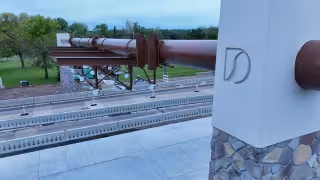
Nashville – October 29, 2026 -- TransCore has launched open-road all-electronic tolling (AET) at the New Hope-Lambertville Toll Bridge (U.S. Route 202), the first of the Delaware River Joint Toll Bridge Commission's (DRJTBC) seven legacy toll bridges to complete the conversion.

Toll plaza infrastructure is eliminated at the crossing

The system replaces cashless tolling run through existing toll plaza infrastructure with full open-road AET. Motorists now pass through the crossing without stopping. TransCore says this improves roadway safety and cuts long-term maintenance requirements.

Gartner: Half of GenAI Pilots Die Before Production

Image
Gartner: Half of GenAI Pilots Die Before Production

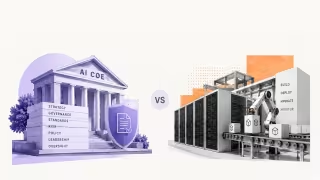
Global – October 29, 2026 -- Roughly 50% of generative AI proof-of-concept projects will be scrapped before reaching production, according to Gartner. Enterprises are responding with a two-function operating model that pairs an AI Center of Excellence (CoE) with an AI Factory.

Unclear ownership, not model quality, drives the failures

The causes are rarely the models themselves. Unclear ownership, inconsistent governance, fragmented data and the lack of a repeatable path from prototype to deployed system stall most projects, according to AppsTek, the IT services provider that published the framework guide.

Enterprise AI Stalls at Pilot Stage as Operating Models Lag

Image
Enterprise AI Stalls at Pilot Stage as Operating Models Lag

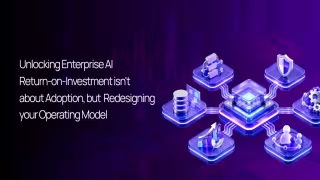
Global – October 29, 2026 -- Only 25% of enterprises have moved 40% or more of their AI experiments into production, according to Deloitte's 2026 State of AI in Enterprise study. S&P Global Market Intelligence reports that 42% of companies abandoned most of their AI initiatives in 2025, up from 17% a year earlier.

The author argues the gap is an organizational problem, not a technology one. Workflows are still built for human handoffs, decision rights are fragmented, and incentives reward the old way of working.