Noah Medical's Galaxy System Hits 100% Tool-in-Lesion Accuracy in Trial
Image
Noah Medical's Galaxy System Hits 100% Tool-in-Lesion Accuracy in Trial

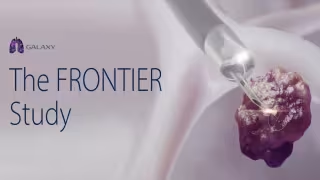
San Carlos – October 12, 2026 -- Noah Medical's Galaxy System robotic bronchoscopy platform achieved 100% tool-in-lesion accuracy and 100% successful navigation to small peripheral lesions in its first-in-human FRONTIER Study, according to final results published in the Official Journal of the Asian Pacific Society of Respirology.

FRONTIER Study reports diagnostic yield of 89.5% to 94.7%

The trial measured diagnostic yield at 89.5% under a strict definition and 94.7% under an intermediate definition. The results are attributed to the platform's TiLT+ Technology.

Interventional pulmonologists at Macquarie University Hospital in Sydney, Australia, conducted the study. It assessed whether the system could reach peripheral pulmonary nodules while maintaining patient safety during bronchoscopy and for up to seven days afterward.
Noah Medical Cites 94.7% Diagnostic Yield for Galaxy at AABIP 2024

Image
Noah Medical Cites 94.7% Diagnostic Yield for Galaxy at AABIP 2024

San Carlos – October 12, 2026 -- Noah Medical will present published results showing 100% tool-in-lesion accuracy and diagnostic yield of 89.5% (strict) to 94.7% (intermediate) for its Galaxy System robotic bronchoscopy platform at AABIP 2024 in Charlotte, North Carolina, August 22-24.

Published data show 100% navigation to small peripheral lesions

Results from Saghaie et al. (2024) report 100% successful navigation to small lesions in the lung periphery. The Galaxy System combines proprietary integrated tomosynthesis (TiLT+ Technology) with augmented fluoroscopy and tool-in-lesion confirmation.

Noah Medical's Galaxy System Tops 5,000 U.S. Bronchoscopy Procedures

Image
Noah Medical's Galaxy System Tops 5,000 U.S. Bronchoscopy Procedures

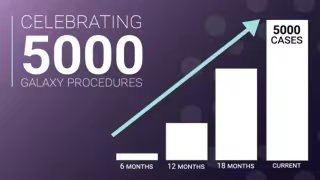
San Carlos, Calif. – October 12, 2026 -- Noah Medical has completed 5,000 procedures with its Galaxy System in the United States, roughly two years after the platform's first U.S. case in early 2023.

Dr. Abhinav Agrawal of Long Island Jewish Medical Center in New Hyde Park, NY, performed the milestone procedure. The company describes the Galaxy System as an image-integrated robotic-assisted bronchoscopy platform for early lung cancer detection.

Published data show 100% navigation success to small peripheral lesions

Results published by Saghaie et al. in 2024 reported 100% successful navigation to small lesions in the lung periphery and 100% tool-in-lesion accuracy. Diagnostic yield ranged from 89.5% under a strict definition to 94.7% under an intermediate definition.

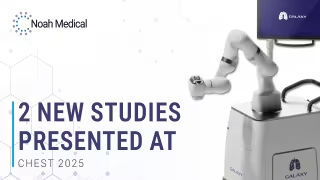
Noah Medical's Galaxy System Hits 96.7% Diagnostic Yield in CHEST Data

Image
Noah Medical's Galaxy System Hits 96.7% Diagnostic Yield in CHEST Data

San Carlos, Calif. – October 12, 2026 -- Noah Medical's Galaxy robotic bronchoscopy platform delivered a 96.7% strict diagnostic yield in a 31-patient multi-center study, and an 89% yield with a cost-benefit ratio above 1 in a separate community hospital series, according to two data sets presented at the CHEST 2025 Annual Meeting in Chicago.

MATCH 2 study reports 100% procedural success across 31 patients

The prospective multi-center MATCH 2 study was led by Dr. Amit "Bobby" Mahajan of Inova Fairfax Medical Center in Virginia and Dr. Krish Bhadra of CHI Memorial in Tennessee. Investigators evaluated the Galaxy System's digital tomosynthesis and augmented fluoroscopy algorithms for real-time lesion localization in patients with peripheral pulmonary nodules.

Results across the 31 patients:

MATCH 2 Study Reports 96.7% Diagnostic Yield for Noah Medical Robot

Image
MATCH 2 Study Reports 96.7% Diagnostic Yield for Noah Medical Robot

San Carlos – October 12, 2026 -- Noah Medical's Galaxy System achieved a 96.7% overall diagnostic yield under a strict definition in the MATCH 2 study, now published online ahead of print in the peer-reviewed journal Respiratory Medicine.

Study tested imaging-guided targeting in 31 patients with peripheral nodules

Thirty-one patients with peripheral pulmonary nodules underwent robotic-assisted bronchoscopy (RAB) with the Galaxy System. Researchers evaluated three-dimensional targeting accuracy using embedded digital tomosynthesis (DT) and integrated augmented fluoroscopy (AF). Cone-beam computed tomography (CBCT), which provides volumetric lung imaging during procedures, was used to confirm tool-in-lesion (TIL) placement.

Noah Medical Names Stanford's Krish Bhadra Chief Pulmonary Advisor

Image
Noah Medical Names Stanford's Krish Bhadra Chief Pulmonary Advisor

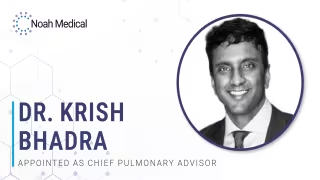
San Carlos, Calif. – October 12, 2026 -- Noah Medical has created a Chief Pulmonary Advisor role and filled it with Krish Bhadra, MD, an interventional pulmonologist at Stanford Medicine who has performed more than 2,300 robotic-assisted bronchoscopy procedures.

Bhadra to steer clinical education, evidence strategy and product development

In the newly created position, Bhadra will guide Noah Medical's clinical education, evidence strategy and product development. The medical robotics company said the aim is to expand access to advanced robotic bronchoscopy for the millions of patients at risk for lung cancer.

Noah Medical CEO Jian Zhang said the company is scaling the impact of its Galaxy System and called Bhadra "exactly the partner we need" for that effort.

Noah Medical Launches Galaxy II Bronchoscopy Software With Dual-Mode Imaging

Image
Noah Medical Launches Galaxy II Bronchoscopy Software With Dual-Mode Imaging

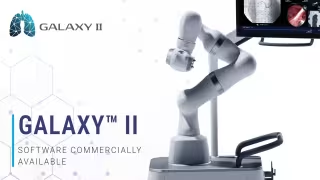
San Jose – October 12, 2026 -- Noah Medical has commercially launched Galaxy II software for its robotic-assisted bronchoscopy (RAB) platform, adding Dual-Mode Imaging that lets physicians switch between High-Definition Digital Tomosynthesis (HD-DT) and Cone-Beam CT (CBCT) at any point in a procedure. The company says the update requires no added capital, complexity, or radiation.

Dual-Mode Imaging gives physicians a choice between HD-DT and CBCT mid-procedure

HD-DT covers the vast majority of cases, and CBCT is available within the same platform when a case demands it. Based on published literature, HD-DT provides effective imaging for most cases at up to 10 times lower radiation dose than CBCT. Physicians can reserve CBCT for cases that need it, which limits radiation exposure for patients and staff.

Noah Medical Completes First Commercial Galaxy Procedure in Asia

Image
Noah Medical Completes First Commercial Galaxy Procedure in Asia

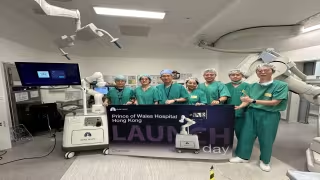
San Carlos – October 12, 2026 -- Noah Medical has completed its first commercial procedure in Asia with the Galaxy System at Prince of Wales Hospital in Hong Kong, moving the robotic bronchoscopy platform from clinical study to routine hospital use in the region.

Hong Kong hospital moves Galaxy from clinical study to commercial use

The hospital performed the first clinical use of the platform in Asia in December 2023. The new procedure marks the transition from clinical investigation to commercial integration, according to the company.

Thoracic surgeon Dr. Calvin S. H. Ng, a Professor at the Chinese University of Hong Kong and Consultant Thoracic Surgeon at Prince of Wales Hospital, performed the procedure. Dr. Ng took part in early development of the Galaxy System, and the company says his input shaped its design.

DOCOMO First to Deploy Nokia Multi-Vendor Base Stations Commercially

Image
DOCOMO First to Deploy Nokia Multi-Vendor Base Stations Commercially

Tokyo -- NTT DOCOMO began commercial operation on September 9, 2026 of Nokia's latest O-RAN ALLIANCE-compliant base station equipment, becoming the world's first operator to run it in a multi-vendor configuration, according to DOCOMO's own research as of that date.

Levante and Ponente cards connect to radio units from multiple vendors

The equipment uses Nokia's Levante baseband card for data processing and Ponente card for control processing. It connects to O-RAN-compliant radio units from different suppliers. DOCOMO says this lets it match radio units to each area's traffic demand: high-power units for wide coverage, and compact units for dense urban sites with limited installation space and for event venues.

NTT Cuts Microalgae CO2 Measurement Error From 3,300% to 8%

Image
NTT Cuts Microalgae CO2 Measurement Error From 3,300% to 8%

Tokyo – October 12, 2026 -- NTT, Inc. has cut the maximum relative error of sensor-based CO2 absorption monitoring in microalgae cultures from approximately 3,300% to approximately 8%, measured against the conventional titration method.

The technology calculates dissolved inorganic carbon (DIC) concentrations from CO2 and other sensor readings. It does not require sampling the culture fluid for each measurement. The results were published in the journal Algal Research on August 12, 2026.

Titration is accurate but cannot deliver continuous data

Evaluating microalgal CO2 absorption means tracking DIC, which exists in culture fluid as dissolved CO2, bicarbonate ions and carbonate ions. Titration measures DIC accurately, but every reading requires a fluid sample and takes time and effort, so it does not suit continuous data acquisition.