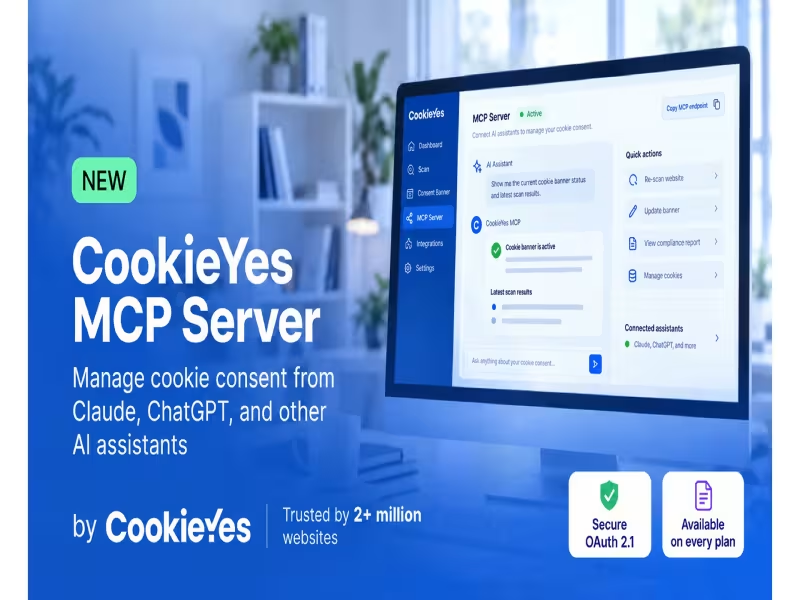
Milton Keynes, England – September 19, 2026 -- CookieYes, a consent management platform used by more than 2 million websites, has launched a Model Context Protocol (MCP) server that lets customers manage cookie banners directly from AI assistants such as Claude and ChatGPT.
MCP server links AI assistants to consent dashboards without switching tools
The MCP server connects AI assistants to CookieYes accounts so users can retrieve information and execute tasks through conversational prompts instead of navigating dashboard menus. Developers can pull installation code and verify whether a banner is live, marketers can review scan results ahead of campaigns, and agencies can check banner status across multiple client websites in a single request.
Ten tools split between read-only access and approval-gated actions
The server offers ten tools in total. Seven are read-only, covering banner status checks and scan reviews. The remaining three — which trigger scans or alter banner settings such as colours, layouts, positions, and preference-centre styles — require user approval before execution.
OAuth 2.1 authentication blocks access to personal and billing data
Authentication runs on OAuth 2.1 with PKCE, and MCP access must be explicitly enabled by the account owner. Connected AI assistants can read limited banner configuration and scan metadata but cannot access personal data, consent records, cookie values, credentials, billing information, or account member details. Account owners retain the ability to disable MCP access entirely or disconnect individual AI clients at any time.
"We built the MCP server to give customers a simpler way to check their websites, find what needs attention, and make updates from the AI tools they already use,