Tucson – September 13, 2026 -- Delta Development Team (DDT) has launched BloodCOMM®, a cloud-based blood management platform designed to digitize and automate blood supply chain tracking for hospitals, blood centers, EMS agencies, and air medical providers.
Platform creates digital identity for every blood unit from collection to disposition
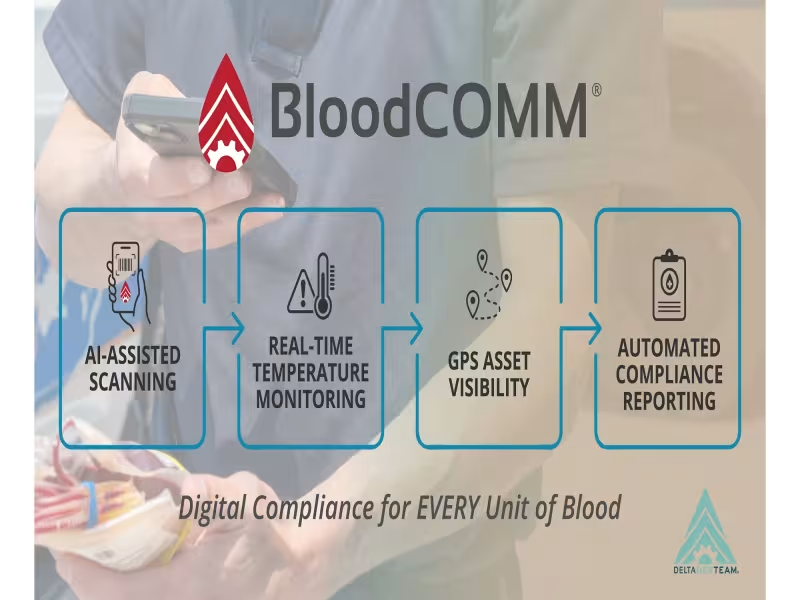
BloodCOMM® uses barcode scanning, AI-powered label recognition, and automated event tracking to monitor blood unit location, temperature, expiration status, inspections, transfers, and excursions throughout the product lifecycle. The system builds a digital cold chain of custody record, capturing patient identifiers, product details, and deviation history as events occur rather than reconstructing them from paper logs or spreadsheets after the fact.
Automation replaces manual chain-of-custody documentation and audit preparation
The platform automatically records chain-of-custody events, detects temperature excursions, generates alerts, and assembles blood unit histories without manual data entry. When a unit is transfused or returned, configured alerts notify program participants, and PDF reports can be shared with external stakeholders on demand. Given that blood program records may require multi-year retention and transfusion events demand thorough review, DDT positions the automated record-keeping as a way to avoid assembling documentation under audit pressure.
Dashboards target inventory waste reduction and program funding decisions
Administrator dashboards provide visibility into blood utilization, inventory trends, expiration management, and program performance, which DDT says can help organizations reduce waste and support funding initiatives.
GPS-enabled devices extend tracking across transportation and field deployment
Unlike monitoring tools focused solely on refrigeration equipment temperature, BloodCOMM® connects blood units, smart storage devices, blood banks, hospitals, EMS agencies, air medical programs, and regional leadership within a single cloud environment. Premium-enabled devices add GPS tracking, allowing organizations to monitor enrolled devices and blood products during transportation, deployment, and storage.
Research cited links trauma survival to intervention quality, not just speed
DDT references prehospital trauma research finding that once the type and number of on-scene interventions were accounted for, prehospital time alone was no longer independently associated with mortality, while hemorrhage-control measures were tied to significantly better survival outcomes. The company frames reduced administrative burden as a mechanism for giving field teams more time for intervention quality and operational readiness rather than paperwork.
Framework in Trauma Surgery & Acute Care Open cited for EMS coordinator roles
As EMS blood programs formalize dedicated coordinator roles to manage program complexity, per a recent framework published in Trauma Surgery & Acute Care Open, DDT argues a unified system across devices and agencies can reduce variability compared with reconciling data across separate tools.