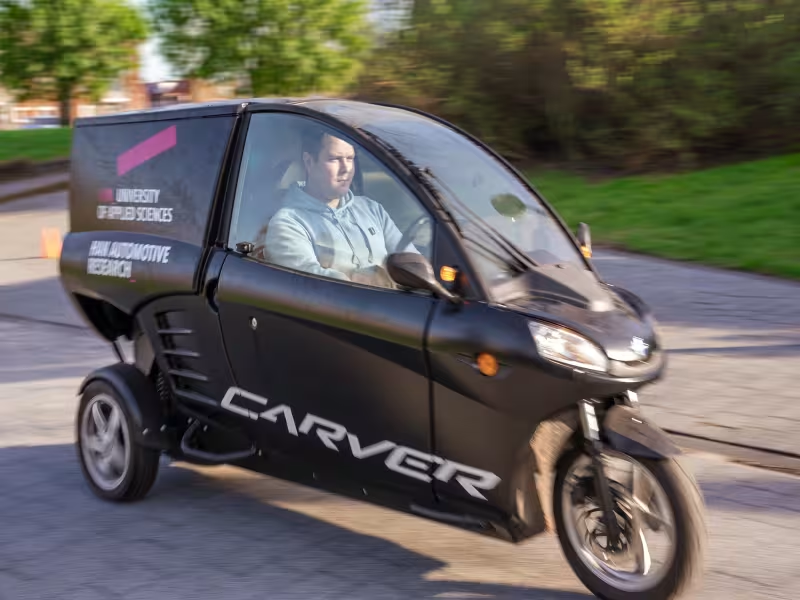
Breda, Netherlands – September 22, 2026 -- Light electric vehicles (LEVs) such as e-scooters, e-cargo bikes and fatbikes could reduce car dependency in the Netherlands but are simultaneously raising cycling accident risk on the country's shared bike paths, according to research from Breda University of Applied Sciences (BUas).
Dutch cycling network faces new pressure from electric micro-mobility
The Netherlands operates the world's most extensive cycling infrastructure, with 22 million bicycles serving 18 million residents across a 153,000-kilometre network. Bikes account for 28% of all trips nationally, a model increasingly studied and replicated by cities globally. That system is now being tested by a growing volume of LEVs entering the same narrow cycle paths.
Survey of nearly 2,000 residents shows strong demand for LEVs
Data from the LEVERAGE project, a joint initiative of BUas and partner organizations, found that a quarter of nearly 2,000 surveyed residents are considering purchasing a small LEV in the near term. Three-quarters of respondents said they expect to reduce car use as a result. Demand was consistent across both suburban and rural areas, indicating LEVs could extend bike-based mobility beyond regions historically underserved by conventional cycling.
Eye-tracking data links accident risk to rider behavior, not vehicle type
Using eye-tracking, skin-conductance sensors and cyclist surveys, BUas researchers determined that fatbikes and other LEVs draw more visual attention on shared paths than standard bicycles. However, that heightened attention did not correlate with measurable stress or feelings of unsafety when LEV riders maintained predictable, legal speeds. Even cyclists who held negative prior attitudes toward LEVs reported no unsafe encounters when riders behaved calmly.
"It is not the vehicle itself that creates danger, it is how it's used," said Paul van de Coevering, professor of Urban Mobility Planning at BUas.
Separated infrastructure produces higher safety perception among cyclists
The research also found that physically separated cycle paths consistently generated higher feelings of safety compared to shared-use routes. This points to infrastructure design as a direct lever for managing risk as LEV adoption scales.
Researchers back behavioral rules over vehicle bans
BUas researchers concluded that enforcing behavioral standards -- including age limits, speed controls and predictable riding conduct -- is more effective and draws greater public support than banning specific LEV categories outright. Combined with continued investment in separated infrastructure, these measures are positioned as the mechanism for keeping the Dutch cycling model functional as it absorbs a new generation of electric vehicles.