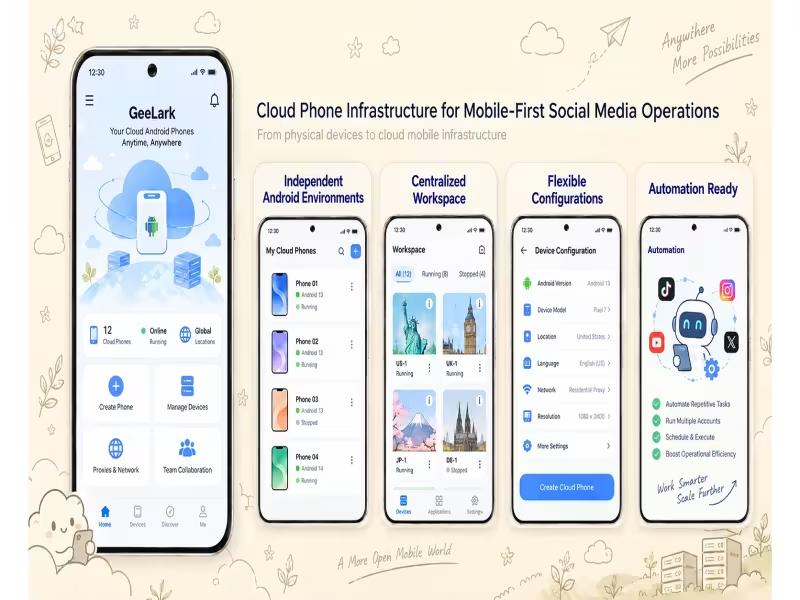
Singapore – September 11, 2026 -- GeeLark has advanced its cloud phone infrastructure to let social media agencies and content teams run multiple Android environments remotely without adding physical devices, addressing a scaling problem that has grown alongside mobile-first platforms like TikTok, Instagram, and YouTube.
Physical device fleets create hidden operational costs for growing teams
As agencies and brands manage more clients, campaigns, and regional operations, the number of Android environments they must maintain multiplies. Teams traditionally addressed this by purchasing additional physical smartphones, a model that requires hardware replacement, charging, OS and app updates, network configuration, and tracking which device belongs to which client or project. Large collections of such devices are sometimes referred to as a "phone farm," though the core issue for legitimate teams is the accumulating maintenance burden rather than the hardware itself.
GeeLark converts Android environments into software-managed cloud resources
GeeLark's platform turns each Android environment into a remotely accessible, cloud-hosted instance with its own storage, app data, login sessions, and network configuration. Teams can configure environments by Android version, device model, language, location, and proxy settings, then group them by client or project inside a centralized workspace. This removes the need to physically pass devices between employees or keep them tethered to a specific office location.
Automation layer reduces manual, repetitive publishing tasks
Beyond remote access, GeeLark pairs cloud phones with automation tools designed for mobile workflows. Teams can deploy ready-made automation templates, build custom in-app workflows using RPA, or connect cloud phones to internal systems via APIs. Content teams can prepare material in advance, assign workflows across multiple cloud phone environments, schedule publishing tasks, and review execution results without operating each device manually.
Technical teams gain API-level integration with existing content systems
For teams with more specialized processes, RPA converts repeated Android app actions into reusable workflows, while APIs allow cloud phone operations to connect directly with scheduling tools, internal dashboards, and existing content management scripts. GeeLark positions this as a shift from scaling mobile operations through added hardware and manual steps toward managing environments and workflows entirely through software.