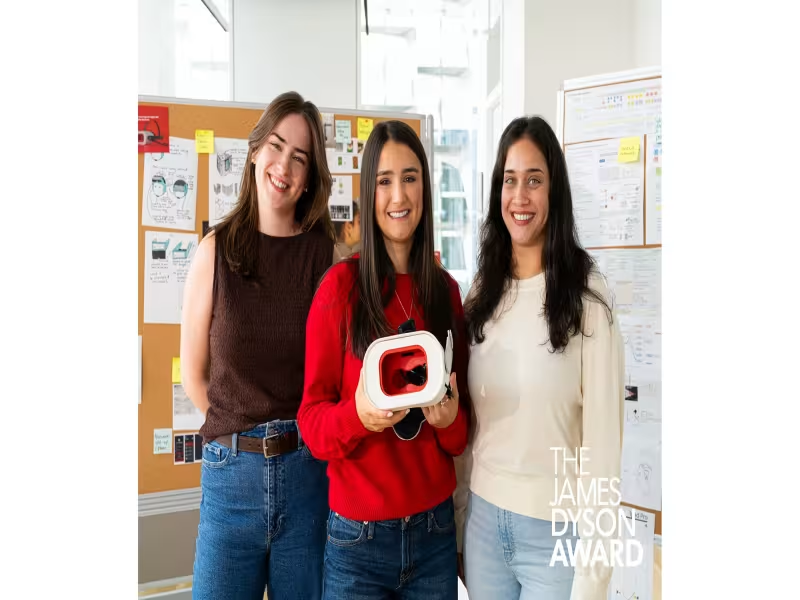
Boston – September 18, 2026 -- Three Harvard University students have won the U.S. National title at the James Dyson Award 2026 for Rumble Rims, an infrared eye-tracking headset designed to screen young athletes for possible concussions in about 60 seconds. Radhika Saran, Cleo Pontone, and Sophia DeVito take home $6,500 in national prize money to fund further development of the device.
Device targets a gap between costly clinical systems and subjective sideline checks
Rumble Rims pairs a portable infrared headset with a coach-facing mobile display and a post-game recovery dashboard. The headset uses infrared cameras and hot mirrors to track how an athlete's eyes follow, fixate, and move during an oculomotor task, translating the data into real-time guidance on whether a player should be pulled from competition and referred for medical evaluation. The recovery dashboard supports repeat testing over time to build an objective record ahead of return-to-play decisions, though the team stresses the device is a screening tool, not a diagnostic one, with final clearance remaining with qualified healthcare providers.
CDC data underscores scale of youth concussion burden
According to CDC figures cited by the team, roughly seven in 10 emergency department visits for sports- and recreation-related traumatic brain injuries and concussions involve children aged 17 and under, with contact sports accounting for approximately 45% of those visits. A separate CDC analysis of the 2017 Youth Risk Behavior Survey found 15.1% of U.S. high school students -- about 2.5 million -- reported at least one sports- or activity-related concussion in the prior 12 months.
Clinical input from a physical therapist shaped the sideline-first design
Feedback from certified physical therapist and former collegiate athlete Matthew McTague informed the headset's design, based on his observation that concussion symptoms may not surface during rest but emerge once heart rate, balance, and eye tracking are challenged under exertion. The team tested multiple form factors, including helmets, mouthguards, and enclosed screening rooms, before settling on a head-mounted design that keeps the screen separate from the athlete's face while remaining simple for coaches to operate under sideline pressure.
Team plans clinical validation and school pilots
Saran, Pontone, and DeVito intend to build a higher-fidelity prototype, refine the oculomotor test, and validate the system with athletes, coaches, trainers, and medical advisors. Longer term, they plan to pilot Rumble Rims with schools and youth sports programs and pursue medical-device validation pathways.
Two other U.S. entries advance alongside Rumble Rims
BiliRoo, a wearable phototherapy sling for infant jaundice developed by University of Michigan medical student Daniel John, and Preta, a carbon-capture material platform from Harvard Design Engineering students Hana Khurshid and Steffek Rainey, were named U.S. national runners-up. BiliRoo targets more than six million infants annually who lack phototherapy access in limited-resource settings, while Preta converts agricultural waste into carbon-storing materials for furniture and architectural applications. All three entries advance to the James Dyson Award's international Top 20 shortlist, to be announced October 14, with global winners selected by James Dyson on November 4.