Shenzhen, China – September 29, 2026 -- i2Cool has expanded its passive radiative cooling fabric line with two electricity-free products, i2Umbrella Fabric-Hyber and i2Tarpaulin, that lower surface temperatures without power or refrigerants.
New umbrella fabric cuts ambient temperature by 5.2°C without electricity
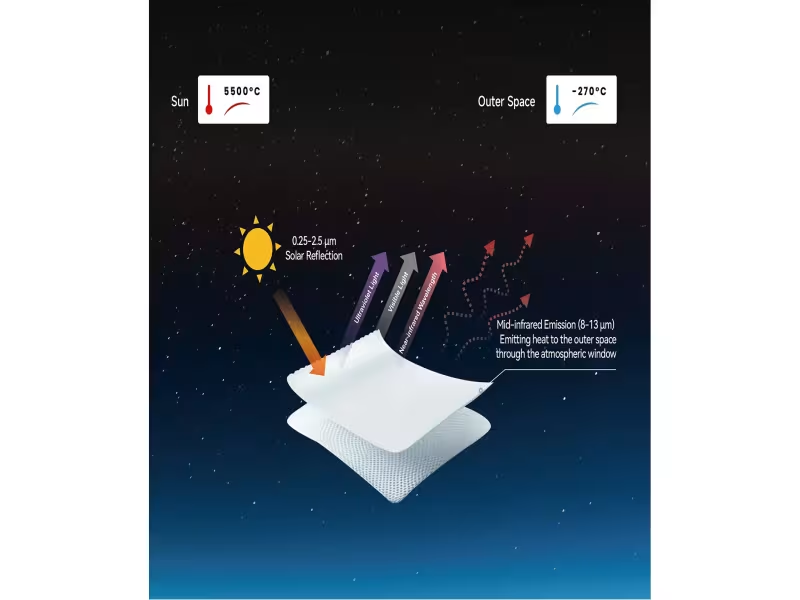
i2Umbrella Fabric-Hyber, engineered for umbrellas, patio shades and outdoor canopies, achieves solar reflectivity of up to 76% and mid-infrared emissivity of up to 96%. In controlled outdoor testing, the fabric produced internal temperatures 5.2°C cooler than unshaded areas and 2.4°C cooler than conventional silver-coated sun-protection fabrics. The material also blocks 99% of UV radiation and offers full blackout capability with high water repellency.
Heavy-duty i2Tarpaulin cuts greenhouse cooling energy use by 28.7%
For industrial-scale shading, i2Tarpaulin delivers solar reflectivity up to 85% and mid-infrared emissivity up to 95%, targeting greenhouse roofs, parking canopies and membrane-structure pavilions. A field deployment at an agricultural greenhouse in Kashgar, Xinjiang, recorded a peak internal temperature reduction of 8.3°C, averaging 5.4°C lower, translating into an estimated 28.7% reduction in facility cooling energy consumption. The tarpaulin is rated for over 10 years of outdoor use and meets China B1 and Europe M2 fire-retardant standards.
Kashgar greenhouse operator reports immediate temperature drop after installation
A representative of the Kashgar greenhouse project said cooling expenses fell significantly while crop yields were protected during peak summer heat, adding that internal temperatures dropped immediately upon installation.
Fabrics build on nanoparticle cooling layer published in Science
Both products integrate an electricity-free cooling nanoparticle layer with protective and blackout structures, adapting i2Cool's radiative cooling research—originally published in Science—into flexible, weather-resistant textiles. The company positions the two fabrics as part of a single materials platform spanning portable consumer goods, outdoor canopies, tents and smart-agriculture shading systems.